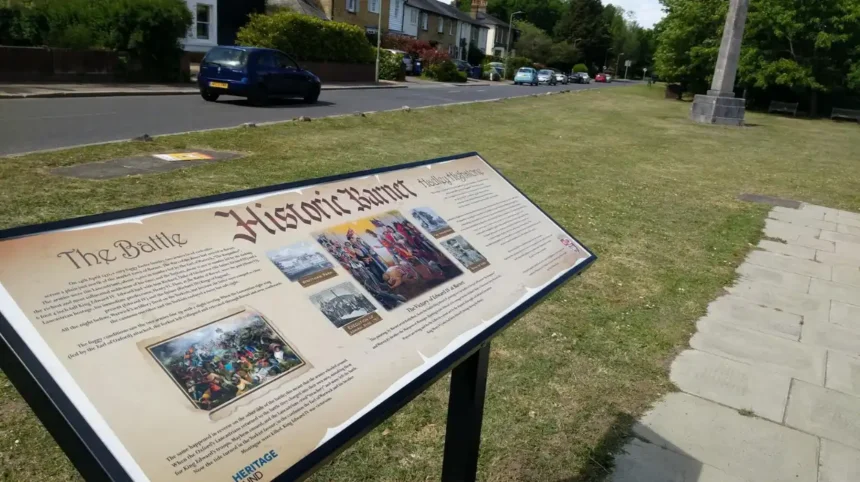
Barnet is connected with historical figures from medieval monarchy, the Wars of the Roses, astronomy, aviation, literature, music, animation and military history. Edward IV, Richard III, Henry VI, Richard Neville, Nevil Maskelyne, John Parr and Lotte Reiniger are among the notable figures with documented links to the area.
- Which medieval kings are connected with Barnet?
- How is Richard Neville, Earl of Warwick, connected with Barnet?
- What connection did Elizabeth I have with Barnet?
- Why is Nevil Maskelyne important to Barnet history?
- Which historical figures are connected with Barnet’s religious history?
- Which historical military figures are connected with Barnet?
- Which famous women are connected with Barnet?
- How are George Michael and Amy Winehouse connected with Barnet?
- Which local historical figures are less well known?
- Where can visitors explore Barnet’s historical connections?
- Why does Barnet have so many historical connections?
- How can Barnet’s historical figures help visitors understand the borough today?
Which medieval kings are connected with Barnet?
Three kings were connected with the Battle of Barnet in 1471: Edward IV fought for the Yorkist cause, Richard III fought alongside his brother, and Henry VI was Edward’s prisoner during the conflict. Their presence makes Barnet an important location in English medieval history.
The Battle of Barnet was fought on Easter Day, 14 April 1471, during the Wars of the Roses. This series of dynastic conflicts involved rival claims to the English throne from the houses of Lancaster and York.
Edward IV was the Yorkist king. He had taken the throne in 1461 but faced renewed opposition from Richard Neville, Earl of Warwick, who had previously helped him secure power. Warwick later supported the restoration of Henry VI.
The opposing armies met around Barnet at a location traditionally associated with Gladmore Heath. The exact medieval battlefield location remains uncertain, although the area around Hadley is strongly associated with the conflict. The battlefield is protected as London’s only registered battlefield site.
Richard, Duke of Gloucester, was Edward IV’s younger brother and later became King Richard III. He fought for Edward at Barnet. His presence connects the modern London Borough of Barnet directly with one of the most studied royal figures of late medieval England.
Henry VI was the Lancastrian king whom Edward IV had captured before the battle. He was therefore present in Barnet as Edward’s prisoner rather than as an independent commander.
Richard Neville, Earl of Warwick, is equally important. Known as the “Kingmaker”, Warwick had helped Edward IV reach the throne before becoming his opponent. Warwick commanded the Lancastrian army at Barnet and was killed during the battle.
Barnet therefore has an unusually concentrated royal connection. Edward IV, Richard III and Henry VI were all associated with the battlefield on the same day. The event also became a decisive stage in the wider struggle for control of the English crown.
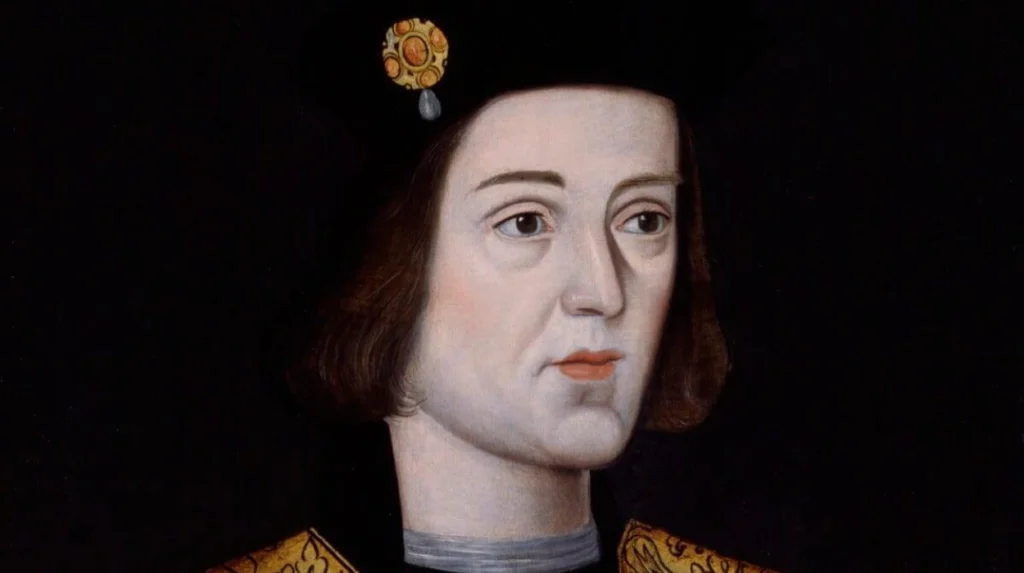
How is Richard Neville, Earl of Warwick, connected with Barnet?
Richard Neville, Earl of Warwick, was the Lancastrian commander at the Battle of Barnet in 1471 and was killed after the Yorkist victory. His death ended the military career of one of the most powerful political figures of the Wars of the Roses.
Richard Neville was born into an influential noble family and became one of the most powerful political figures in 15th-century England. His influence earned him the later historical title of the “Kingmaker”.
Warwick initially supported the Yorkist Edward IV. Political disagreements between the two men eventually destroyed their alliance. Warwick turned against Edward and helped restore Henry VI to the throne for a short period.
Edward returned to England in 1471. His forces confronted Warwick’s army near Barnet on 14 April.
The battle took place in thick fog. Confusion on the battlefield contributed to a significant mistake involving the badges used by opposing forces. Some Lancastrian troops attacked men from their own side after mistaking a badge for an enemy symbol. This contributed to the collapse of Warwick’s army.
Warwick attempted to escape but was killed. His death removed one of the principal military and political figures supporting Henry VI.
The Battle of Barnet therefore represents more than a local military event. It was a major confrontation over the English monarchy. Edward IV’s victory strengthened his position and contributed to the eventual restoration of Yorkist control.
Visitors interested in Warwick can connect the historic battlefield landscape with Hadley Highstone, a monument associated with the battle. The existing stone obelisk dates from 1740 and stands in Chipping Barnet.
What connection did Elizabeth I have with Barnet?
Elizabeth I was associated with Barnet through her journeys between London and Hatfield, while her reign also influenced the area’s educational history. Queen Elizabeth’s School in Barnet was founded in 1573 under royal patronage and remains a significant surviving link with the Elizabethan period.
Elizabeth I became Queen of England in 1558 and ruled until 1603. Her connection with Barnet is linked to movement through the area and the establishment of Queen Elizabeth’s School.
Barnet occupied an important position on routes running north from London. The town developed along an established route towards St Albans, making it a significant stopping point for travellers and royal journeys.
Elizabeth passed through Barnet frequently while travelling towards Hatfield. Her name also became permanently associated with local education.
Queen Elizabeth’s School was opened in 1573. The original school building, now known as Tudor Hall, stands within the Barnet & Southgate College complex. The school was established through royal patronage, while funding came from the local community and the City of London.
The foundation reflects the expansion of grammar-school education during the Tudor period. The institution later moved from its original site and continues as a separate school in Queen’s Road.
The Elizabethan connection gives visitors a way to understand Barnet beyond the Battle of Barnet. Medieval military history and Tudor educational history both survive within the modern townscape.
As you explore the modern site, you are crossing land with a deep heritage. Read about the full [Insert Anchor Text for History Article Here] to understand its origins.
Why is Nevil Maskelyne important to Barnet history?
Nevil Maskelyne was the fifth Astronomer Royal and served as curate of Chipping Barnet before his scientific career developed. His Barnet connection links the town with astronomy, navigation, longitude research and the development of the Nautical Almanac.
Nevil Maskelyne was born in London in 1732 and became one of Britain’s leading astronomers. He served as Astronomer Royal from 1765 until his death in 1811.
Before becoming Astronomer Royal, Maskelyne entered the Church of England and became curate of Barnet in 1755. This established a direct professional connection with the town during the early part of his career.
His later scientific career was significant for navigation. Maskelyne studied methods for determining longitude at sea using astronomical observations. His work involved lunar distances, a technique that used the Moon’s position relative to stars to help establish longitude.
In 1761 he travelled to St Helena to observe the transit of Venus. He subsequently published The British Mariner’s Guide, which explained the lunar-distance method. He also participated in the assessment of John Harrison’s H4 marine timekeeper.
Maskelyne became Astronomer Royal in 1765. He established regular publication of the Nautical Almanac, which provided astronomical information used for navigation. The first volume appeared in the 1760s and the publication became an important reference for navigators.
His scientific work also included an important experiment at Schiehallion in Perthshire. Measurements of gravitational attraction helped scientists estimate the density and mass of the Earth.
Maskelyne’s Barnet connection is particularly valuable because it demonstrates how the town’s history includes scientific figures as well as monarchs and military leaders.
Which historical figures are connected with Barnet’s religious history?
Barnet’s religious history includes Protestant martyr William Hale and Anglican astronomer Nevil Maskelyne. Hale was executed near Barnet during the Marian persecutions, while Maskelyne served as a local curate before becoming Astronomer Royal.
William Hale is associated with Barnet through the religious conflicts of the 16th century. During the reign of Mary I, Protestant dissenters faced persecution as the monarchy attempted to restore Roman Catholicism.
Barnet’s local heritage records state that Hale was burned at the stake close to St John the Baptist’s Church during the religious upheavals associated with Mary I’s reign.
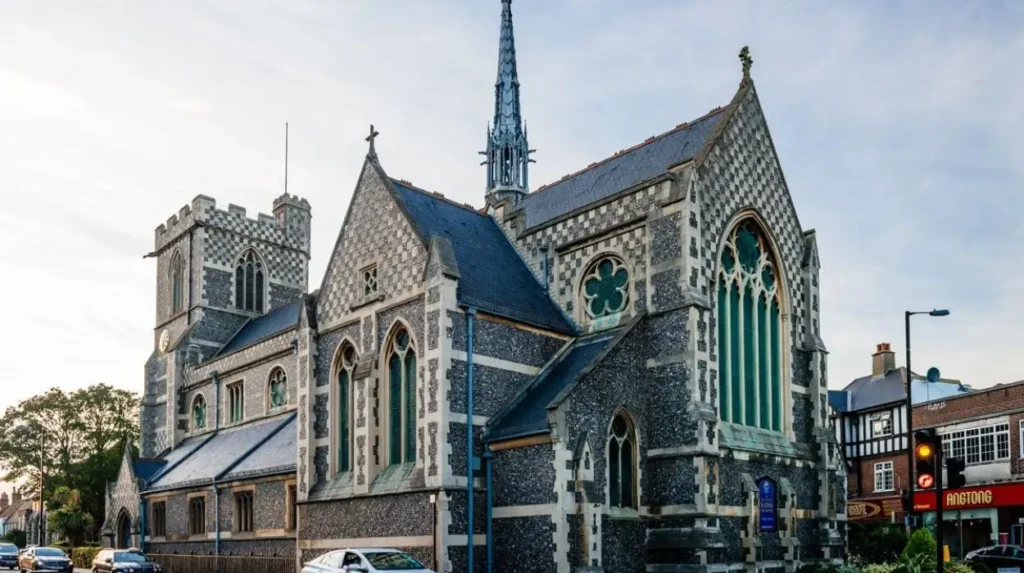
St John the Baptist’s Church itself provides an important historical setting. The building originated as a medieval chapel of ease and contains surviving medieval fabric. The church was later rebuilt substantially during the Victorian period.
The location illustrates the changing religious landscape of England. The Reformation transformed institutions, worship and church ownership across the country. Barnet’s surviving buildings preserve evidence from several phases of that history.
Nevil Maskelyne provides a later connection with the same religious tradition. He was ordained and served as a curate at Barnet before moving towards a career centred on astronomy and scientific research.
Together, Hale and Maskelyne demonstrate that Barnet’s historical figures were not confined to one period or profession.
Which historical military figures are connected with Barnet?
Barnet is connected with military figures from both medieval and modern conflicts. Richard Neville was killed at the Battle of Barnet, while Private John Parr lived in North Finchley and became the first British soldier killed in the First World War.
John Parr provides one of Barnet’s strongest modern military connections.
Parr was born in the Finchley area and lived at 52 Lodge Lane in North Finchley. He joined the Middlesex Regiment as a teenager and was killed in Belgium on 21 August 1914. Barnet Council describes him as the first British soldier to die in the First World War.
Parr was only 17 when he died. His connection with North Finchley remains commemorated locally.
In 2025, Barnet Council installed a commemorative bench near Lodge Lane Car Park, close to his former home. The memorial replaced a Tommy sculpture that had previously commemorated him but was stolen.
Parr’s story also connects Barnet with the wider history of the First World War. The borough’s archives contain extensive material relating to local servicemen, memorials and wartime communities.
Barnet War Memorials Association records hundreds of local memorial sites and has documented the names and service details of people from the borough who died in conflicts.
This makes military history an important part of Barnet’s modern heritage landscape.
Which famous women are connected with Barnet?
Barnet’s historical and cultural figures include women who shaped music, children’s literature and animation. Dame Vera Lynn, Winifred Atwell and Lotte Reiniger are among the women recognised by Barnet’s official Barnet Legends project for their connections with the borough.
The Barnet Legends project provides an important framework for understanding the borough’s more recent cultural history. Launched by Barnet Council, the project commemorates influential people associated with the borough through public artworks placed across 21 locations.
Dame Vera Lynn is one of the most recognisable figures connected with the project. Known as the “Forces’ Sweetheart”, she became closely associated with British popular culture and wartime music.
Winifred Atwell provides another important musical connection. She was a Trinidadian-born pianist who became a major British recording star during the 1950s. Barnet Council records that she lived in Whetstone and became the first Black musician to reach number one on the UK singles chart, with Let’s Have Another Party in 1954.
Her success demonstrates the international character of Barnet’s cultural history. A performer born in Trinidad established a successful career in Britain while living in North London.
Lotte Reiniger is significant for film history. The German animator and artist settled in the borough as a refugee and worked from a studio in New Barnet.
Reiniger created The Adventures of Prince Achmed, released in 1926. Barnet Council describes it as the world’s oldest surviving feature-length animation. Her silhouette animation technique became an important part of early animation history.
Her connection makes New Barnet relevant to visitors interested in cinema, animation and European cultural history.
How are George Michael and Amy Winehouse connected with Barnet?
George Michael and Amy Winehouse are among the modern cultural figures commemorated by Barnet Council’s Barnet Legends project. Their inclusion reflects the borough’s long connection with influential musicians and demonstrates how Barnet’s cultural history extends into late 20th- and early 21st-century popular music.
George Michael became one of Britain’s most successful popular musicians. His inclusion in the Barnet Legends project reflects his connection with the borough and its cultural identity.
Amy Winehouse is also commemorated through the Barnet Legends trail. She became internationally recognised for her distinctive voice, songwriting and recordings.
These figures belong to a different historical period from Edward IV and Richard Neville, but they are important when examining the full range of people associated with modern Barnet.
Barnet Council’s project deliberately combines internationally recognised figures with lesser-known local contributors. The 21-location trail covers areas and institutions across the borough, including the Royal Air Force Museum, Barnet Museum and Finchley Youth Centre.
This approach makes the area’s history accessible beyond conventional political and military narratives.
For visitors, the trail also provides a practical way to connect people with places. The commemorative artworks create physical points of reference across modern Barnet while linking them with achievements in music, art, literature, aviation, commerce and culture.
Which local historical figures are less well known?
Barnet’s history also includes less internationally famous figures whose local influence remains significant. Mrs Daulat Jiwa, Eileen Colwell and other community figures demonstrate the borough’s history of social organisation, education, migration and cultural development.
Mrs Daulat Jiwa is recognised by Barnet Council as a local hero. She founded the Barnet Asian Women’s Association, contributing to the organisation of Asian women and communities in the borough.
Eileen Colwell made an important contribution to children’s reading. She founded the first children’s library in Hendon and helped transform children’s access to books and reading services.
These figures are important because local history is not limited to monarchs, military commanders or internationally famous artists.
Barnet’s Local Studies and Archives collection contains documents, maps, newspapers, photographs and publications relating to individuals, buildings and communities. The collection includes historical records dating from 1600 onwards.
The council’s historical resources also document African and Caribbean people who lived in Barnet between the 1670s and the 1960s. This material demonstrates the depth and diversity of the borough’s social history.
Visitors researching family history can therefore investigate ordinary residents as well as famous personalities.
Where can visitors explore Barnet’s historical connections?
Visitors can explore Barnet’s historical figures through the Battle of Barnet battlefield area, Hadley Highstone, Barnet Museum, local churches, memorials, the Barnet Legends trail and the borough’s Local Studies and Archives resources. These sites connect people with specific places and historical periods.
Hadley Highstone is one of the clearest physical landmarks associated with the Battle of Barnet. The Grade II-listed monument dates from 1740 and stands at the junction of Kitts End Road and the A1000 in Chipping Barnet.
The surrounding battlefield is protected as a registered battlefield site. Its association with Edward IV, Richard III, Henry VI and Richard Neville makes it one of the most important historic locations in the borough.
Barnet Museum provides another route into the area’s history. Barnet Council describes the museum as a key cultural heritage institution displaying material relating to subjects including medieval battles and local traditions.
The Barnet Legends public art trail provides a modern alternative. It consists of 21 commemorative artworks distributed around the borough and celebrates figures from music, film, literature, design, aviation, commerce and community life.
Visitors interested in military history can also explore memorials connected with the First World War. John Parr’s North Finchley memorial is particularly significant because of his documented association with Lodge Lane.
Local Studies and Archives provides deeper research material. Its holdings include documents dating from 1600, maps, newspapers, photographs and publications. Digitised material is increasingly available online.
Explore More Area Guide
Barnet Before Greater London: Hertfordshire, Middlesex and 2026
Historic Buildings That Still Survive in Barnet 2026
Why does Barnet have so many historical connections?
Barnet’s historical importance comes from its strategic location north of London, its medieval market, its battlefield, transport routes, religious institutions and later suburban growth. These factors brought monarchs, soldiers, scientists, artists, musicians and communities into sustained contact with the area.
Barnet existed before the Norman Conquest, although it does not appear by name in the Domesday Survey. East Barnet represents the older settlement, while the town that became High Barnet developed along an important route between London and St Albans.
The market was another important factor. Barnet’s market has existed in different forms and locations since at least the 12th century. Markets attracted traders, travellers and local residents and helped establish Barnet as a regional centre.
Its strategic position also explains the Battle of Barnet. Armies moving between northern England and London used routes through the wider area, making the landscape militarily significant during the Wars of the Roses.
Later developments created new connections. Religious institutions supported figures such as Nevil Maskelyne. Expanding transport and suburban development created opportunities for artists, performers, scientists and communities.
The borough’s historical identity therefore has several layers. Medieval Barnet was shaped by roads, markets and warfare. Early modern Barnet reflected religious and educational change. Modern Barnet became increasingly associated with science, aviation, popular culture, migration and community organisations.
How can Barnet’s historical figures help visitors understand the borough today?
Barnet’s historical figures provide a framework for understanding its present-day streets, landmarks and cultural institutions. Medieval monarchs explain the battlefield, Maskelyne links the area with science, Parr connects North Finchley with wartime history, and cultural figures explain Barnet’s modern heritage.
The strongest historical connections are physical as well as biographical.
The Battle of Barnet remains visible through the registered battlefield landscape and Hadley Highstone. The site connects visitors with the political struggle between York and Lancaster and the deaths of major figures such as Richard Neville.
St John the Baptist’s Church connects the visitor with medieval religious architecture, Reformation history and Nevil Maskelyne’s period as a curate.
North Finchley connects modern visitors with John Parr through his former home and commemorative bench. His story places Barnet within the national history of the First World War.
Whetstone connects the borough with Winifred Atwell, while New Barnet connects it with Lotte Reiniger and the development of feature-length animation.
The Barnet Legends trail extends this history into public space. It allows visitors to encounter commemorations of figures including Vera Lynn, Amy Winehouse and George Michael alongside less widely known local contributors.
Barnet’s historical figures therefore reveal the borough as a place shaped by national events and individual achievement. Its heritage extends from medieval kings and 15th-century warfare to astronomy, military remembrance, animation, music and community development.
For tourists, this makes Barnet more than a collection of modern neighbourhoods. Its streets and institutions form part of a historical landscape that has been shaped by political conflict, education, religion, science, migration and culture for centuries.
Who is the most famous historical figure connected with Barnet?
Edward IV is one of the most significant historical figures connected with Barnet because he commanded the Yorkist army at the Battle of Barnet on 14 April 1471, a decisive conflict in the Wars of the Roses.