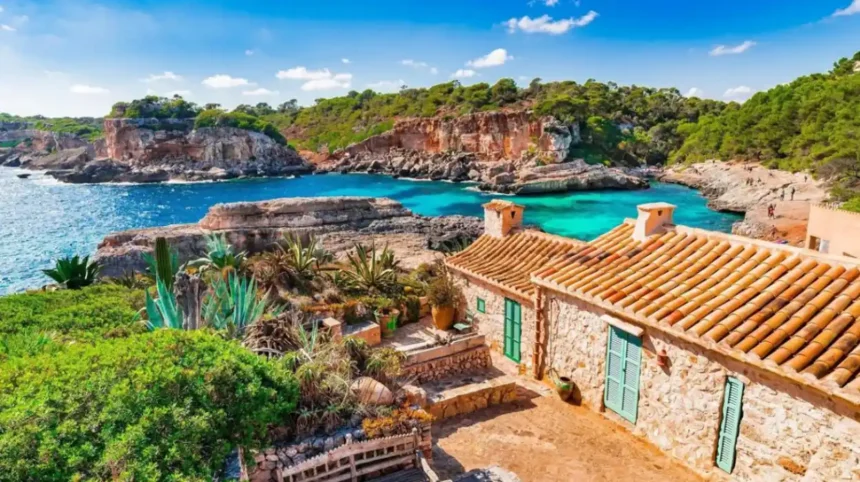
Majorca (Mallorca) adorns the Mediterranean Sea as one of the largest Spanish Balearic Islands, where small hills rise and fall into the sea. Beautiful cliffs whisper the fantasies of the caves, a combination of sandy and stony beaches, and the island’s pine forests welcome the sunrise and sunset as a daily ritual of nature that brings smiles to holidaymakers. From prehistoric settlements to the modern day, Majorca has witnessed seventeen kingdoms, dynasties, caliphates, empires, various conquests, civilizations, invaders, pirates, rulers, and their eventual decline. Influenced by Arab, Roman, and Ottoman invasions, its history has shaped the island’s contemporary multicultural identity. The island was also a trading center for various Mediterranean coastal areas, where Jewish, Roman Catholic, and Muslim merchants formed their conglomerates during the Middle Ages. From Arab invasion to Roman and Ottoman rule, the legacy of maritime piracy in Majorca continues to be reflected in its immersive “Pirates Adventure Show,” which today attracts millions of tourists from around the world. Like its food, the island’s social and economic diversity defines Majorca and its contemporary cosmopolitanism.
Historically, productive farming traditions have existed in Mallorca since its Talaiotic period, but agriculture has been declining over the last few decades due to policymakers shifting their attention from agriculture to tourism from the 1950s onward. Mallorcan agriculture is now confined to the cultivation of almond trees, olive groves, vineyards, fruit orchards, rice, and wheat. Industrial fishing has destroyed the local fishing industry, with 90 percent of the island’s seafood and fish now coming from outside. Economic diversity is declining due to the rise and dominance of a tourist monoculture. Easy money is replacing stable livelihoods. Such a transition is not accidental; it reflects a planned growth based on the strategic requirements of tourist capitalism, which has monetized the island through its monoculture and undermined local people and their traditional sources of livelihood.
Tourism is the mainstay of Mallorca’s economy, but overtourism has created both economic and social monoculture, where the hedonism of holidaymakers drives the economy. It contributes more than forty-five percent of Mallorca’s GDP and accounts for over ninety percent of tourism-led economic activities in other sectors such as construction, logistics, and retail. Despite the economic contributions of the tourism industry, Mallorca’s economy is stagnant in 2026 and is predicted to decline in 2027, as tourists are spending less. Such an economic monoculture heavily influences consumption expenditure across the island.
The overwhelming majority of tourists in Mallorca are Germans, Britons, Nordics, French, Swiss, Spaniards, Scandinavians, other Europeans, a few Americans, and other international travelers. The economic crisis in Europe is shifting tourist demographics and their spending behavior, which not only leads to declining revenue from tourism but also affects other sectors dependent on it. Furthermore, a slowdown in the tourist economy increases local unemployment.
Any form of crisis—economic crisis in particular—serves as a breeding ground for right-wing politics on the island. In such times, right-wing leadership often outsources its own failures to the mainstay of the tourist economy and blames foreign tourists as the problem. However, the majority of Mallorcans are tourist-friendly and do not see visitors as the problem. On issues such as mass tourism, unaffordable housing, water scarcity, and environmental degradation, these concerns drive the political landscape of the island, regardless of political differences.
Yet, no one is seeking a radical alternative to the business monoculture of capitalism led by tourism. Most political parties agree on converting mass tourism into class tourism and plan to attract only wealthy tourists to the island. While this might generate more revenue, it will not solve the fundamental issues faced by working people in Mallorca. The lack of space for the poor and underprivileged in Mallorca is a source of local discontent that drives the growth of right-wing politics. However, none of the political parties offer any alternatives to the marginalized people on the island. Luxury tourism requires more investment and generates lower profits. Therefore, the island and its leadership must look beyond tourism and focus on state-led solutions to the problem by diversifying income sources for both the people and the government.
The tourist monoculture of capitalism not only objectifies the natural beauties of the island but also creates a culture of orderly objects, where people and nature are monetized—a situation not very different from slavery. Large hotels and restaurants make superprofits by employing fewer people, who work more than twelve hours a day. The rise of such a culture is a disgrace. Capitalism destroys places and people in the name of tourist-led economic growth, and then blames the same people for the economic decline. Such an internal contradiction of capitalism comes as no surprise. The problem for the people of Mallorca is neither tourism nor tourists, but rather the policy priorities of the ruling classes, which prioritise investment, investors, and their profits over the everyday needs of working people on the island. The Mallorcan people can find solutions to their problems on the island, but they need a state that listens to them. They need a people’s government, not a government run by investors in the tourism industry.
The monoculture of the capitalist tourism industry and its political masters on the island are the new pirates working for rich—unlike the old pirates, who were often individualized or operated in groups as class warriors for the people of the island. Let the beautiful island and its lovely people reclaim their island, society, culture, and economy from the new pirates who live like parasites on Mallorca. Let the magic of Mallorca stay inviting and warm.