Key Points
- Arsenal lifted the Premier League trophy after a 2-1 win over Crystal Palace at Selhurst Park, ending a 22-year wait for the title.
- Mikel Arteta said he had expected the title to be won at the Emirates Stadium, but the reality turned out differently.
- Gabriel Jesus and Noni Madueke scored Arsenal’s goals, while Jean-Philippe Mateta pulled one back for Palace.
- Arsenal finished the league season with 26 wins from 38 matches and ended seven points clear of Manchester City.
- Martin Odegaard lifted the trophy after medals were presented to Arteta and the squad.
- Arteta said the moment was “magical” and described the joy it brought to players, families and supporters.
- Arsenal are now turning its attention to the UEFA Champions League final against Paris Saint-Germain in Budapest on May 30, 2026.
- The club will also hold a trophy parade in north London on May 31, 2026.
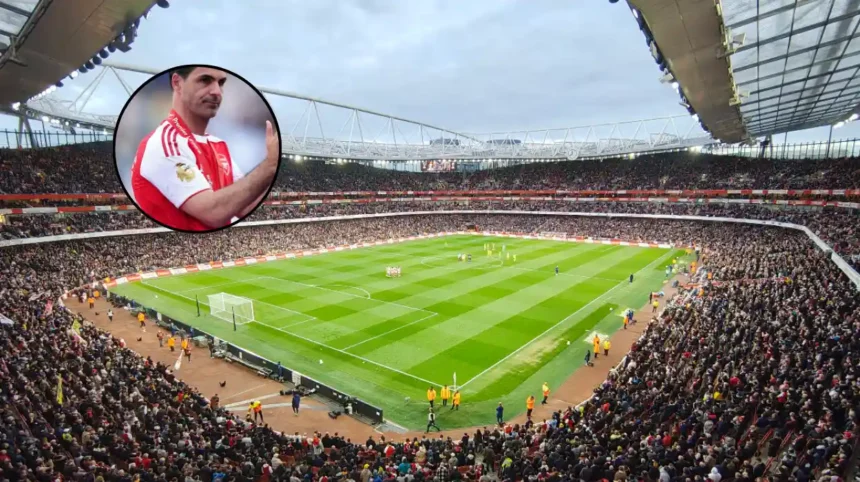
Arsenal (North London News) May 25, 2026 – Arsenal’s Premier League title celebrations at Selhurst Park have underlined the scale of the club’s achievement, but the story behind the trophy lift was shaped by an expectation that never quite came to pass, as Mikel Arteta admitted he had imagined the moment happening at the Emirates Stadium rather than away from home.
What happened at Selhurst Park?
Arsenal closed out their championship-winning season with a 2-1 victory over Crystal Palace, a result that came after they had already secured the title when Manchester City failed to beat Bournemouth earlier in the week. The match itself mattered more for the occasion than the standings, but Arsenal still took it seriously enough to ensure the day ended with another win. Gabriel Jesus put the visitors ahead late in the first half, Noni Madueke added a second soon after the restart, and Jean-Philippe Mateta’s late goal for Palace only narrowed the margin.
The result carried added significance because it marked Arsenal’s first English title in 22 years, with the club finishing seven points ahead of Pep Guardiola’s Manchester City. Arsenal had also won five straight league matches after their defeat at City on April 19, a run that helped secure control of the title race when it mattered most. Once the final whistle went, Martin Odegaard received the trophy on the pitch after medals had been handed out to Arteta and his players.
What did Arteta say?
As reported by Elijah Odetokun of Legit.ng, Arteta said the emotion of the moment was deeper than he had expected, telling Arsenal TV: “It’s an amazing feeling. I’ve been trying to go through this moment a few times, but I could never expect it to be that big, to be that beautiful, and to see so much joy and pride amongst all the people and our supporters”.
He also explained that he expected the club’s title celebration to happen at the Emirates Stadium, not at Selhurst Park. “I thought we were going to win it at [the] Emirates Stadium at some point, and it happened in a completely different manner to what anyone expected. But it was magical being around the players, your family and having some time to reflect,” he said. That remark frames the trophy lift as both a sporting milestone and a personal moment of reflection for the manager.
Arteta also pointed to the energy from the celebrations as something Arsenal can carry into their next major challenge, the Champions League final against Paris Saint-Germain. He said the team would use the positivity and confidence from the title win in Budapest. Martin Odegaard, meanwhile, described lifting the trophy as “unreal” and said it felt “crazy” and emotional after the years of effort behind the campaign.
Why did the lift matter?
The trophy presentation mattered because it marked the end of a long wait for Arsenal and confirmed the team’s progress under Arteta in a season that had not always looked straightforward. Arsenal had to stay ahead of Manchester City for much of the second half of the campaign, and the title appeared capable of slipping away at points before their late-season consistency settled the race. The club’s success also carried symbolic value because it was their first league title since 2004.
There was also a ceremonial layer to the occasion. Arsenal were given a guard of honour by Palace, and the title lift was accompanied by red confetti, fireworks and celebrations from the away supporters at Selhurst Park. The club’s owners, Stan Kroenke and Josh Kroenke, carried the trophy onto the pitch before the presentation. The whole scene emphasised that this was not just another away win, but the formal conclusion of a title-winning season.
How did the match unfold?
Arteta made several changes with the Champions League final in mind, leaving key names such as Bukayo Saka, Declan Rice, Gabriel Magalhaes, Eberechi Eze, David Raya and Viktor Gyokeres on the bench. That gave opportunities to others, including Max Dowman, who became the youngest player ever to start a Premier League match at 16 years and 144 days. Palace manager Oliver Glasner also rotated his side ahead of the Conference League final.
On a hot afternoon in south London, Arsenal began strongly and Jesus had already struck the post and gone close before he finally scored in the 42nd minute. Martinelli created the chance with a neat pass, and Jesus finished low at the near post. Madueke then made it 2-0 in the 48th minute, scoring from a set-piece move that reflected one of Arsenal’s biggest strengths during the campaign. Mateta’s late header made the scoreline more competitive, but it did not alter the outcome or the celebrations.
What comes next for Arsenal?
Arsenal’s season is not over yet, with the Champions League final against Paris Saint-Germain due in Budapest on May 30, 2026. That gives the club a chance to turn a domestic title into a double that would define the campaign even more strongly. Arteta has already suggested the title win should be used as fuel rather than a final destination.
The club will also stage a parade in north London on May 31, giving supporters another chance to see the trophy in person. That procession will likely extend the celebrations beyond the matchday atmosphere at Selhurst Park. For a club and fanbase that have waited more than two decades for another league crown, the next few days carry both symbolic and sporting weight.
Background of the development
Arsenal’s title win represents the end of a long rebuilding arc under Arteta, who has gradually turned the team from challengers into champions. The club had finished second in the previous three seasons, which added pressure and frustration but also established a level of consistency that ultimately translated into a title. Their late-season response after the City defeat was crucial, as the team kept winning while the race remained tight.
The Emirates Stadium had often been mentioned as the place where Arsenal hoped to secure the title, which is why Arteta’s comment about expecting the trophy lift there stood out. Instead, the trophy was lifted at Selhurst Park after the title had already been mathematically confirmed earlier in the week. That changed the setting, but not the significance of the achievement.
What could this mean for fans?
For Arsenal supporters, the immediate effect is straightforward: the club has finally ended its league drought and can point to a major domestic success after years of near misses. The title will likely strengthen confidence around the team’s direction and deepen trust in Arteta’s project, especially if the players follow the league triumph with another strong result in Europe. The planned parade also gives fans a public moment to share in the achievement beyond the stadium setting.
For the broader audience around the club, including younger supporters who have not seen many title-winning Arsenal teams, the development could reset expectations about what the side is capable of in the coming seasons. It may also raise the standard for future campaigns, because a club that has won once will be judged on whether it can do so again. If Arsenal follow this with success in the Champions League, the season would be viewed as a turning point rather than a one-off peak.