Key Points
- Stake Expansion: The Lewis family has increased its overall control and holding in Tottenham Hotspur Football Club following consecutive equity cash injections totaling £320 million over the past 12 months.
- Levy’s Position Reduced: Former executive chairman Daniel Levy has seen his equity slice in parent company ENIC and the club shrink as a result of the non-proportional capital calls.
- Active Leadership: Vivienne Lewis and her son-in-law Nick Beucher have taken a direct, proactive role in driving the club’s strategic direction, actively backing Chief Executive Officer Vinai Venkatesham and Non-Executive Chairman Peter Charrington.
- Buyout Interest Rejected: Despite repeated takeover inquiries and interest from multiple international investment consortiums over the past two years, the Lewis family continues to resist sales and maintains that Spurs is not for sale.
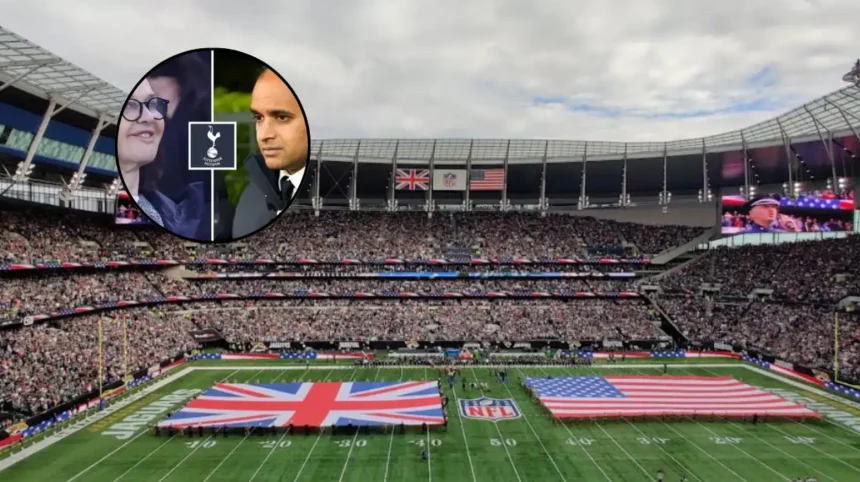
Tottenham Hotspur (North London News) October 12, 2026 — The Lewis family have increased their stake in Tottenham Hotspur off the back of their recent cash injections, with former chairman Daniel Levy’s slice of the club shrinking as a direct result. The family, who own the Premier League club through investment vehicle ENIC Sports & Entertainment, have backed Spurs’ ongoing attempts to rebuild their status among English football’s elite, with a cumulative £320 million injected into the organization over the past 12 months. Vivienne Lewis and her son-in-law Nick Beucher have taken a visibly active role in supporting Chief Executive Officer Vinai Venkatesham and Non-Executive Chairman Peter Charrington, as the family continues to resist takeover interest from various international consortiums.
- Key Points
- How has the capital structure at Tottenham Hotspur shifted?
- Who is driving the strategic direction of Tottenham Hotspur?
- Why have external takeover bids failed to materialize?
- Background of the particular development
- Prediction: How this development will affect Tottenham Hotspur supporters and club operations
How has the capital structure at Tottenham Hotspur shifted?
As reported by Alasdair Gold of Football.London, the corporate balance of power at the Tottenham Hotspur Stadium has undergone a substantial realignment following repeated equity issuances by ENIC. According to financial reporting by Paul Nicholson of Inside World Football, the Lewis family trust previously held approximately 70.12 per cent of ENIC, whilst Daniel Levy and his family trusts controlled a 29.88 per cent stake. Because ENIC holds the vast majority of Tottenham Hotspur Limited, Levy’s look-through ownership position in the football club historically stood at roughly 26 per cent.
However, as detailed by Gold, the subsequent £120 million capital infusion alongside a separate £100 million capital raise issued via A-shares has Diluted non-participating shareholders. Because Levy elected not to match the capital calls proportionately within the standard 60-day allotment windows, his personal holding within ENIC has shrunk significantly, effectively transferring greater percentage control to the Lewis family.
As stated by Tom Allnutt of The Independent, the fresh capital allotments have effectively pushed the Lewis family’s overall control of Tottenham Hotspur toward approximately 88 per cent. This shift consolidates decision-making power directly within the family trust following the restructuring of Spurs’ corporate governance structure.
Who is driving the strategic direction of Tottenham Hotspur?
As noted by Alasdair Gold of Football.London, day-to-day operations and executive oversight at the club are now firmly directed by Vivienne Lewis and Nick Beucher. The family’s direct operational presence marks a departure from the historical era in which billionaire founder Joe Lewis maintained a hands-off approach from his residence in the Bahamas before formally transferring ENIC ownership to the family trust.
As reported by David Ornstein of The Athletic, the Lewis family has provided firm backing to CEO Vinai Venkatesham and Non-Executive Chairman Peter Charrington, empowering them to manage football operations, commercial expansion, and squad rebuilds. Sources close to the family confirmed to financial correspondents that the investment was structured specifically to give the club immediate financial flexibility on and off the pitch without relying on external third-party debt.
As cited in reporting by Sky Sports News, sources close to the family explicitly stated:
“This is initial additional funding. As the club’s management decides what’s needed to deliver success, more money will be available. The Lewis family is committed to backing the club to be successful.”
Why have external takeover bids failed to materialize?
As revealed by Paul Nicholson of Inside World Football, Tottenham Hotspur has been the subject of persistent interest from private equity firms and international capital groups over the past two years, including inquiries led by Eight Sports Capital and a buyout consortium formerly connected to American investors.
However, as reported by Alasdair Gold of Football.London, three prospective buying groups—including a group led by former DJ Brooklyn Earick—have formally confirmed to the London Stock Exchange that they do not intend to pursue a takeover, having satisfied themselves that the Lewis family has no intention of selling their controlling interest.
Despite market speculation that external groups were attempting to build minority stakes to launch a long-term bid, the family’s consistent deployment of private equity boosts has reinforced their long-term commitment to retaining ownership of the Premier League side.
Background of the particular development
The corporate evolution of Tottenham Hotspur traces back to 1991, when ENIC (English National Investment Company) initially acquired a stake in the club before securing majority control from Sir Alan Sugar in 2001. Daniel Levy was appointed executive chairman that same year, becoming the longest-serving chairman in Premier League history. Under Levy’s tenure, Spurs built state-of-the-art training facilities at Hotspur Way and constructed the 62,850-capacity Tottenham Hotspur Stadium, which opened in 2019.
Despite financial stability and commercial growth, the club faced criticism from supporters over on-pitch performance and transfer spend relative to European rivals. In October 2022, ultimate ownership of ENIC was officially transferred from Joe Lewis to the Lewis Family Trust. Following internal corporate restructurings in late 2025, Levy stepped down from his executive chairman position into a reduced non-executive role, paving the way for Chief Executive Officer Vinai Venkatesham and Chairman Peter Charrington to assume executive operational duties. The subsequent series of capital injections totaling £320 million over 12 months served as the primary mechanism for the Lewis family to expand their operational control while systematically diluting legacy minority holdings.
Prediction: How this development will affect Tottenham Hotspur supporters and club operations
The consolidation of ownership under the Lewis family, paired with the gradual reduction of Daniel Levy’s equity, is poised to impact Tottenham Hotspur supporters, executive staff, and squad investment in several key ways:
- Increased Transfer Market Agility: With £320 million in direct equity funding injected into the club’s capital reserves, executive leadership under Vinai Venkatesham gains immediate financial flexibility. Supporters can expect greater responsiveness during transfer windows, as manager Thomas Frank and the recruitment staff will have direct access to committed capital without relying solely on player sales or stadium-generated operational cash flow.
- Shift in Decision-Making Dynamics: As Daniel Levy’s ownership stake shrinks toward a minor shareholding, historical resistance to rapid wage-structure adjustments or aggressive market moves is expected to soften. Governance will align more closely with modern corporate football models driven by executive committees rather than a single dominant figurehead.
- Takeover Rumour Resolution: The family’s explicit refusal to entertain buyout offers, alongside formal filings to the London Stock Exchange confirming the withdrawal of prospective suitors, provides long-term ownership stability. While this ends short-term hopes among some fan groups for an immediate oil-state or sovereign wealth fund takeover, it guarantees financial backing backed by the multi-billion-pound Tavistock Group ecosystem.