Key Points
- Project Scope: Transport for London (TfL) has commenced the first phase of a £10.8 million project to strengthen, waterproof, and modernise the Brent Cross Interchange, specifically focusing on the A41 Hendon Way flyover above the A406 North Circular Road.
- Funding: The scheme is backed by £10.8 million in central government funding allocated via the Department for Transport (DfT).
- Freight Reintroduction: Structural updates will allow the reintroduction of heavy goods vehicles (HGVs) onto the flyover, reversing a 7.5-tonne weight restriction enforced in October 2022 due to structural safety concerns.
- Traffic Management: Phased closures include initial overnight restrictions, lane reductions on Hendon Way, and a dedicated contraflow system starting on 29 October.
- Wider Congestion: Major delays are anticipated across surrounding strategic routes, including the A41, A406 North Circular, A5 Edgware Road, and A1.
- Alternative Routing: TfL advises long-distance drivers to utilise the M25 orbital motorway and encourages local travellers to walk, cycle, or check public transport travel tools.
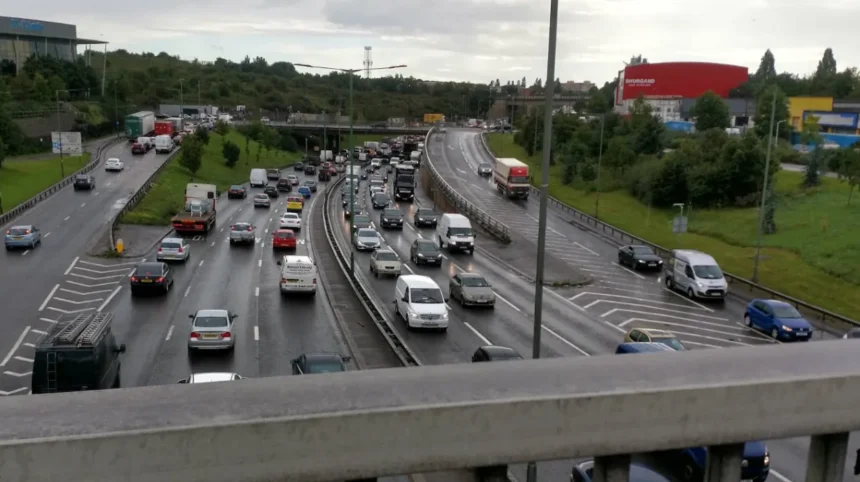
Brent Cross (North London News) October 3, 2026 – Transport for London (TfL) has officially initiated the preliminary stages of a major £10.8 million structural renewal programme at the Brent Cross Interchange, aiming to safeguard the long-term integrity of the A41 Hendon Way flyover.
As reported by Kevin Borras of Highways News, Transport for London (TfL) confirmed that the multi-phase scheme will focus on reinforcing the structural elements of the flyover where it spans the A406 North Circular Road in north London. According to TfL officials, the primary objective of the £10.8 million capital project—funded by the Department for Transport (DfT)—is to restore full load-bearing capacity to the structure, prevent future emergency road closures, and update critical safety features including barrier systems and deck waterproofing.
As detailed by London Travel News, initial site operations will start with overnight closures across selected sections of the A41 and A406 routes. Lane restrictions along Hendon Way are scheduled to begin during October, culminating in a formal contraflow layout across the flyover on 29 October. TfL has cautioned that the capacity reduction across the flyover will inevitably cause congestion that will ripple through the surrounding regional network.
What Is the Full Scope of the Engineering Scheme?
As outlined in official project documentation released by Transport for London, the upgrade involves comprehensive structural reinforcement alongside critical preventative maintenance. Structural teams will fit upgraded safety barriers across the flyover deck and approach ramps, applying a high-performance waterproofing layer directly to the concrete sub-deck to prevent moisture ingress and extend the lifespan of the arterial route.
As reported by Kevin Borras of Highways News, these engineering steps are essential to prepare the flyover for the eventual return of heavy freight. In October 2022, structural assessments forced highway managers to impose an emergency 7.5-tonne gross vehicle weight restriction across the structure. Once the strengthening works conclude, TfL intends to lift the weight restriction, restoring normal heavy goods vehicle (HGV) access to this regional freight corridor.
How Will Traffic Management Impact Drivers and Bus Services?
As detailed by London Travel News, traffic management will be implemented progressively in distinct stages to maintain worker safety while keeping partial traffic flowing. Following initial overnight road closures, lane width reductions will take effect on Hendon Way, leading up to the activation of the central contraflow system on 29 October.
TfL representatives highlighted that traffic queues are projected to build beyond the immediate vicinity of Brent Cross. Surrounding feeder roads—specifically the A41, A406 North Circular Road, A5 Edgware Road, and the A1—are all expected to experience notable increases in vehicle density during peak commute windows.
As reported by London Bus Routes, local bus operators using the Brent Cross Interchange will operate under temporary revised timetables to account for traffic delays through the construction zones. Highway authorities are strongly urging long-distance motorists to re-route via the M25 where feasible, while recommending active travel choices—such as walking and cycling—for short local journeys within Hendon and Brent Cross.
Background of the Brent Cross Interchange Development
The Brent Cross Interchange serves as one of North London’s most critical multi-modal arterial junctions, carrying over 120,000 vehicles daily across its flyovers, slip roads, and mid-level circulatory roundabouts. Constructed during the expansion of London’s primary orbital routes in the mid-20th century, the A41 Hendon Way flyover forms a crucial link connecting outer London corridors to the central road network and the M1 motorway.
Over recent decades, heavy traffic volumes and environmental weathering led to gradual deterioration of the elevated structure. Concerns culminated in October 2022 when routine structural monitoring identified stress limitations in the concrete flyover deck. To protect public safety while keeping the road open to lighter commuter vehicles, TfL implemented an immediate 7.5-tonne weight ban, diverting heavy lorries and multi-axle freight through local surface roads.
Following years of technical assessments, options reports, and securing financial backing from the Department for Transport (DfT), TfL finalized the £10.8 million funding package required to undertake a total structural renewal. The overarching scheme forms part of TfL’s wider ongoing strategic road infrastructure renewal programme, which aims to modernize aging bridges and flyovers across Greater London to prevent catastrophic structural failures.
Prediction: How This Development Will Affect Road Users and Local Communities
The execution of the £10.8 million Brent Cross renewal project will have distinct, direct consequences for several key groups across North London over its anticipated two-year delivery window:
- Private Motorists and Commuters: Drivers regularly using the A41 and A406 routes face extended journey times and unpredictable delays, particularly during morning and evening rush hours. The reduction in lane capacity caused by the October contraflow system will create bottlenecks, likely forcing commuter traffic into surrounding residential streets in Hendon, Golders Green, and Cricklewood.
- Freight and Logistics Operators: While the temporary lane restrictions will initially exacerbate delivery delays through North London, the eventual removal of the 7.5-tonne weight limit represents a major long-term win for logistics firms. Reopening the flyover to heavy goods vehicles will eliminate lengthy urban diversions, cutting fuel costs and improving supply chain efficiency across the regional freight network once construction finishes.
- Local Residents and Businesses: Communities surrounding the Brent Cross Retail Park and Hendon are likely to experience elevated noise levels, localized congestion, and potential air quality impacts as diverted traffic navigates secondary arterial roads. However, the successful completion of the renewal scheme will secure the long-term safety of nearby transport corridors, guarding local trade against the severe economic impact of sudden, unplanned infrastructure failures in the future.