Council‑owned or council‑managed housing in North London must be maintained to minimum health and safety standards. When repairs are delayed, tenants can use legal rights, complaint procedures, and political pressure to force action. This guide explains what you can do, how it works under current law, and what steps to take in North London.
- What counts as a “delayed repair” in council housing?
- What rights do North London council tenants have on repairs?
- When can the council itself be forced to act?
- How does Awaab’s Law change repair timeframes in North London?
- What are the first steps to push for repairs?
- How to document delays and build a case
- How to escalate a complaint up the council chain
- Using political pressure (councillors and MPs)
- When can legal action force repairs and compensation?
- How much compensation can tenants expect?
- How to push for faster action in emergency situations
- What options exist if the council still refuses to act?
- How to prevent delays from recurring in the future
- Where can North London tenants get free specialist help?
What counts as a “delayed repair” in council housing?
A delayed repair is any repair that remains uncompleted beyond the legally or locally expected timeframe, particularly when health, safety or basic habitability is at risk.
Under English housing law, council landlords and housing associations must repair the structure, exterior, installations (water, gas, electricity, heating), and keep the property fit for human habitation. If a landlord has accepted a repair request but fails to complete work within a reasonable time, or within a target set by law (for example, under Awaab’s Law), the council may be breaching its statutory obligations. In North London boroughs such as Enfield, Barnet, Haringey, Brent, and Islington, each council also publishes repair‑response times for different categories (emergency, urgent, routine). Repairs that breach these local targets, especially for damp, mould, leaks, structural faults, blocked drains, or heating failures, can be treated as “delayed” and escalate into formal complaints or legal claims.
What rights do North London council tenants have on repairs?
Council tenants in North London have an implied “right to repair” and a legal duty on the council to keep the property in a habitable condition within set timeframes.
Section 11 of the Landlord and Tenant Act 1985 requires landlords of most social and private rented housing to repair structure, exterior, and key installations (water, gas, electricity, heating, and sanitary appliances). Most council‑owned tenancies in North London fall under this regime. From 27 October 2025, Awaab’s Law and the accompanying Hazards in Social Housing regulations require social landlords to fix reported damp, mould, and emergency hazards within strict timeframes and keep tenants updated. Boroughs such as Islington, Brent, and Haringey have translated these national rules into local repair‑response policies, for example: 24 hours for emergency hazards, 14 days for damp‑related hazards, and longer but defined windows for routine works. Tenants who live in temporary or supported social housing (for example, some North London homelessness placements) are also covered by the same core obligations if the letting is structured as a tenancy with a registered provider.
When can the council itself be forced to act?
The council must act if hazards are so serious that they could endanger health or safety, or if the council‑appointed landlord fails to respond within statutory or policy‑set timeframes.
If you rent from a private landlord or a housing association, the council has a duty under the Housing Health and Safety Rating System (HHSRS) to inspect and intervene where significant hazards exist. Havering, Brent, Barnet and other North London boroughs use environmental health officers to assess hazards such as damp and mould, gas leaks, structural defects, and electrical faults. If officers find a serious hazard and the landlord refuses or delays, the council can serve an improvement notice, a hazard awareness notice, or an emergency remediation notice; in some cases it can carry out the work itself and recover costs from the landlord. In social housing directly managed by the council, the council both owns the property and acts as the landlord, so any delay in repairs is a direct council failure and can be escalated through the council’s complaints process, then to the Housing Ombudsman or the Local Government and Social Care Ombudsman.
How does Awaab’s Law change repair timeframes in North London?
Awaab’s Law, effective from 27 October 2025, requires social landlords in North London to fix damp, mould and emergency hazards within 14 days, and all other serious hazards under a phased timetable.
Regulations under Awaab’s Law classify hazards as “emergency” (immediate risk) or “significant” (serious risk over time). Examples include acute damp and mould, structural instability, major gas or electrical faults, and unsafe heating systems. From 2025, hazards related to damp and mould reported to social landlords must be assessed and work completed within 14 days; if the property cannot be made safe in 24 hours, the landlord must offer suitable alternative accommodation. From 2027, the 14‑day rule expands to all serious hazards in social housing, including fire risks, structural defects, and pest infestations that threaten health. If your council or housing association fails to meet these timeframes, that breach can be cited in formal complaints, ombudsman submissions, and in housing‑disrepair claims.
What are the first steps to push for repairs?
The first step is to log every repair request in writing, with clear dates, photos, and references to Awaab’s Law and local council repair standards.
North London councils such as Barnet, Haringey, and Islington operate online repair portals and phone lines for reporting issues in council‑owned or managed blocks. Even if you have already reported a problem verbally, you must follow up with a dated letter or email that describes the defect (for example, “black mould on bedroom wall”, “leak from flat above”), states when it was first reported, and references the council’s repair‑response policy and Awaab’s Law. For private rentals, contact your landlord in writing and keep copies; if no action follows within the council’s target period (often 14–28 days for serious issues), you can then ask the local council’s environmental health department to inspect under the HHSRS. In emergency cases, such as suspected gas leaks, severe structural cracks, or flooding, you should also call appropriate emergency services (gas engineer, 0800 408 5500 for gas emergencies, 999 if there is immediate danger).
How to document delays and build a case
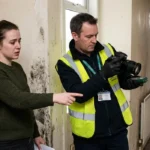
Build a case by keeping a log of dates, photos, correspondence, and any medical or school records linked to poor conditions.
A strong evidence log typically includes:
- A written repair diary with dates of each report, who you contacted, and their response.
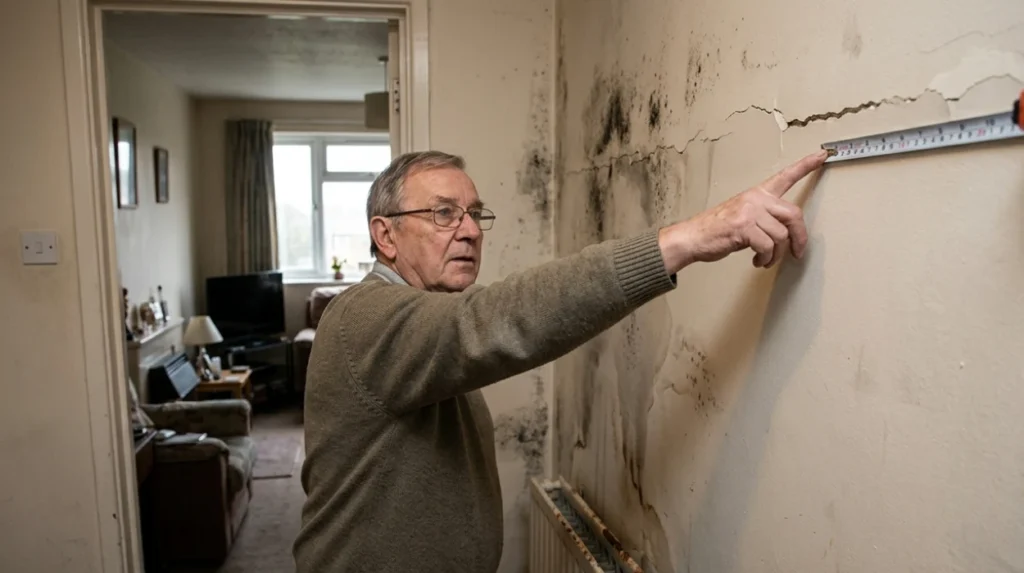
- Photos and videos of damp, mould, leaks, broken windows, or structural damage, ideally with timestamps.
- Copies of emails, texts, and recorded phone calls (where permitted) with the council or landlord.
- Medical records, school notes, or prescriptions that show asthma or other health issues linked to damp, mould, or cold.
Law firms and housing‑disrepair specialists in London report that households with detailed documentation are more likely to secure faster repairs and compensation. Tenants Advice, which supports Londoners, notes that over 56,700 households sought housing‑disrepair help in a single year, many of them in outer‑London boroughs served from North or West London offices. Clear, dated evidence also strengthens complaints to the Housing Ombudsman or the Local Government and Social Care Ombudsman if the council fails to act.
How to escalate a complaint up the council chain
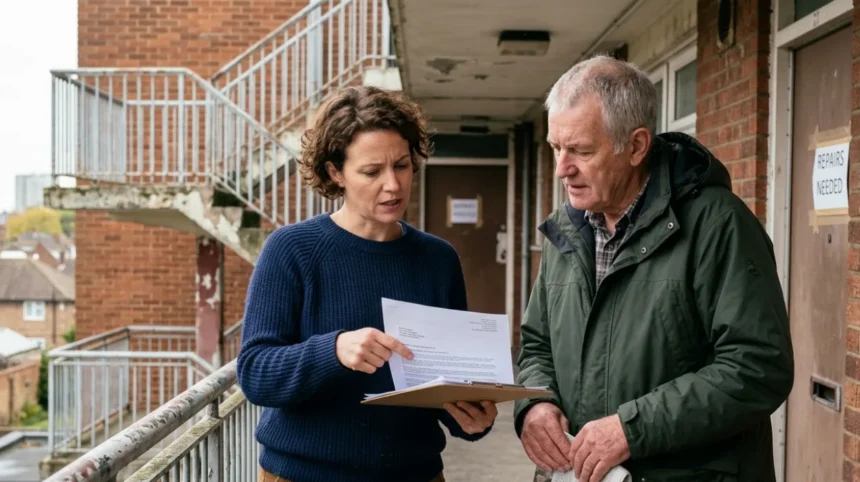
Escalate through the council’s formal complaints process: informal stage → stage 1 → stage 2, then to an ombudsman if the problem remains unresolved.
Most North London councils follow a two‑stage complaint model. At stage 1, you send a written complaint to the relevant housing or repairs department, which should respond within 10–20 working days with a decision and an explanation. If you disagree, you can escalate to stage 2, where the case is reviewed by a more senior manager or a central complaints team (for example, Islington’s Housing Complaints team or Haringey’s Tenancy Services). Stage‑2 responses must be in plain language and include information on how to contact the Housing Ombudsman or the Local Government and Social Care Ombudsman if you are still dissatisfied. The Housing Ombudsman handles complaints about councils and housing associations over management of repairs, while the Local Government and Social Care Ombudsman deals with broader council‑service failures, including welfare and support linked to housing. Both services are free and can recommend compensation, repairs, or policy changes.
Using political pressure (councillors and MPs)
Contact your local councillor, ward committee, and MP to request urgent intervention when the council appears slow or unresponsive.
Every council‑tenanted property in North London falls within a specific ward represented by elected councillors. If emails and complaints produce no action, you can attend a ward‑council meeting, speak at a councillor’s surgery, or write a formal letter asking the councillor to raise your case with the housing department. Since January 2025, many North London boroughs have also strengthened scrutiny arrangements, allowing ward committees to question housing‑estate managers on repair backlogs. You can also email or write to your local Member of Parliament, even if the MP is not directly responsible for local housing; they can raise the issue with the council, the Department for Levelling Up, Housing and Communities, or refer you to a specialist housing‑rights adviser. Political pressure is most effective when backed by clear evidence, such as photos, dates, and a reference to Awaab’s Law or the council’s own repair‑response policy.
When can legal action force repairs and compensation?
Legal action can force repairs and compensation if the council or landlord breaches its repairing obligations, causes health‑linked damage, or violates Awaab’s Law timeframes.
Tenants in social and private rented housing can pursue housing‑disrepair claims through the civil courts or via specialist claims‑management firms operating in London. Common grounds include: damp‑related mould affecting respiratory health, structural defects, unsafe heating, or flooding that persists after repeated reports. Courts may order the landlord or council to carry out repairs within a set period, and may award compensation for pain, suffering, and financial loss (for example, replacing damaged furniture or paying for temporary accommodation). In social housing, tenants can also claim under the “right to repair” scheme if repairs are delayed beyond government‑set deadlines, typically 14 days for urgent works, and be reimbursed for works they arrange themselves. Several North‑London‑based housing‑disrepair specialists report that cases involving Awaab’s Law‑linked damp and mould have higher success rates because the 14‑day hazard‑fix rule gives clear evidence of breach.
How much compensation can tenants expect?
Compensation varies by severity but can range from a few hundred pounds for temporary discomfort to several thousand pounds for chronic health‑linked damage.
Typical components include:
- Rent repayment for the period the property was uninhabitable or significantly defective.
- Reimbursement for expenses such as cleaning, storage, temporary accommodation, or replacement of damaged belongings.
- General damages for pain, suffering, and loss of amenity, especially where mould or cold has caused asthma, respiratory infections, or stress‑related conditions.
In severe social‑housing cases, London‑based firms have reported total awards of several thousand pounds where landlords repeatedly ignored Awaab’s Law-linked damp and mould while tenants suffered ongoing health impacts. Courts also consider whether the council or landlord acted in “good faith” to mitigate harm; documented delays and ignored warnings can increase the compensation awarded.
How to push for faster action in emergency situations
In emergencies, report the issue immediately to the council, emergency services, and, if necessary, to the Housing Ombudsman or Local Government Ombudsman.
Emergency hazards include: sudden structural collapse risk, major gas leaks, electrical faults posing fire risk, or flooding that renders part of the home unsafe. North London councils publish emergency repair numbers; for example, many boroughs operate a 24‑hour repairs line specifically for urgent cases. If the council fails to respond within a reasonable timeframe, you can contact environmental health, request an HHSRS inspection, or ask the council to activate its emergency‑remediation powers. Under Awaab’s Law, if a hazard cannot be made safe within 24 hours, the social landlord must offer suitable alternative accommodation at its own expense. If the council refuses to act, you can escalate to the Local Government and Social Care Ombudsman with evidence of the emergency and your attempts to get help.
What options exist if the council still refuses to act?
If the council continues to ignore delayed repairs, you can combine legal proceedings, ombudsman referrals, and public accountability tools (Freedom of Information requests, ward‑forum pressure, and media).
Tenants can request a Freedom of Information (FOI) disclosure from the council about repair‑backlog figures, average completion times, and complaints related to their estate or block. Responses to FOI requests can reveal systemic delays and support both individual claims and wider campaign work. In some North London estates, residents’ associations have used FOI data to lobby councils for improved repair contracts and faster response teams. You can also share experiences (without breaching privacy) via local outlets, social‑media groups, or community forums, which sometimes prompts ward councillors or housing officers to prioritise specific blocks. Ultimate enforcement, however, comes from the courts and ombudsmen; once a court orders repairs or compensation, the council must comply or risk further legal penalties.
How to prevent delays from recurring in the future
Prevent recurrence by insisting on written action plans, regular follow‑ups, and building a trusted relationship with housing officers and ward‑councillors.
After a repair is finally completed, request a written confirmation that the work meets Awaab’s Law standards and that the hazard is resolved. Ask for a re‑inspection plan if the issue was damp or mould, as some councils in North London now require follow‑up checks within 3–6 months. If the council contracts out repairs, you can also request information on the contractor’s performance rating and complaint history; councils must publish this under transparency rules. Building a constructive relationship with your local housing officer or ward councillor can shorten response times for future issues, especially where estates have chronic repair backlogs.

Where can North London tenants get free specialist help?
Free or low‑cost help is available from Citizens Advice, Shelter, local housing charities, and council‑funded housing‑advice services in North London.
Citizens Advice offices in boroughs such as Barnet, Enfield, and Haringey provide free guidance on repair rights, Awaab’s Law, and how to complete complaints and ombudsman forms. Shelter’s national housing‑advice service offers online tools and phone support for council tenants and private renters facing disrepair. Some North London boroughs fund local housing‑advice charities that specialise in mould‑ and damp‑related cases, helping tenants navigate the transition from informal repair requests to formal complaints and legal claims. These services can also advise on how to phrase letters to councils, councillors, and ombudsmen so that your case is clear, evidence‑based, and likely to receive a faster response.
What can I do if the council ignores repair requests?
You can escalate through the council’s formal complaints process, contact your councillor or MP, and eventually complain to the Housing Ombudsman Service or take legal action for housing disrepair.