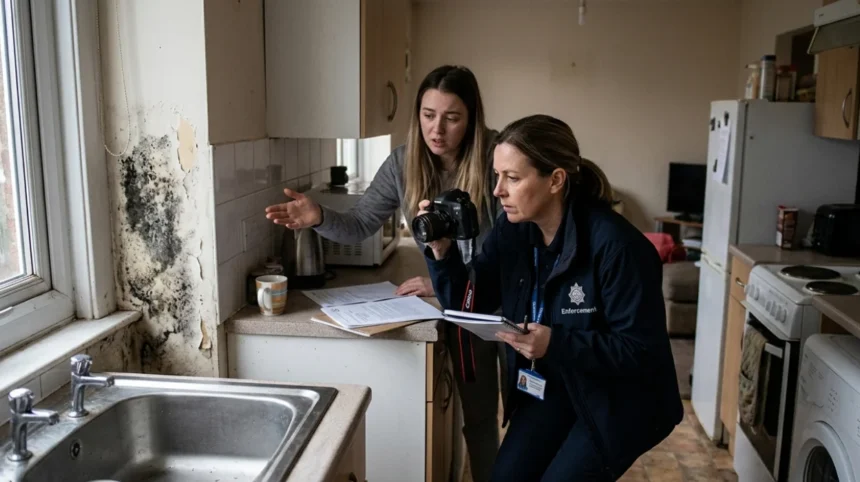
Contact your local council’s private rented housing team or environmental health department first for unsafe rented homes in North London. They inspect hazards under the Housing Act 2004 and enforce repairs. Provide your address, landlord details, photos, and evidence to start the process.
- What Makes a Rented Home Unsafe in the UK?
- What Are Landlord Safety Responsibilities in UK Rentals?
- Which North London Council Handles Unsafe Rental Reports?
- What Steps Follow Contacting Your Local Council?
- When Should You Contact Your Landlord First?
- What if the Unsafe Issue is Gas or Electrical?
- How Does Fire Safety Work in Unsafe Rented Homes?
- What Rights Do North London Tenants Have for Repairs?
- Can You Stay in a Severely Unsafe Rented Home?
- What Role Does Shelter Play in Unsafe Rentals?
- Are There Fines for Landlords Ignoring Safety Notices?
- How Do You Report Anonymous Unsafe Conditions in North London?
- What Statistics Show Unsafe Rentals in North London?
- Future Changes to UK Rental Safety Laws?
What Makes a Rented Home Unsafe in the UK?
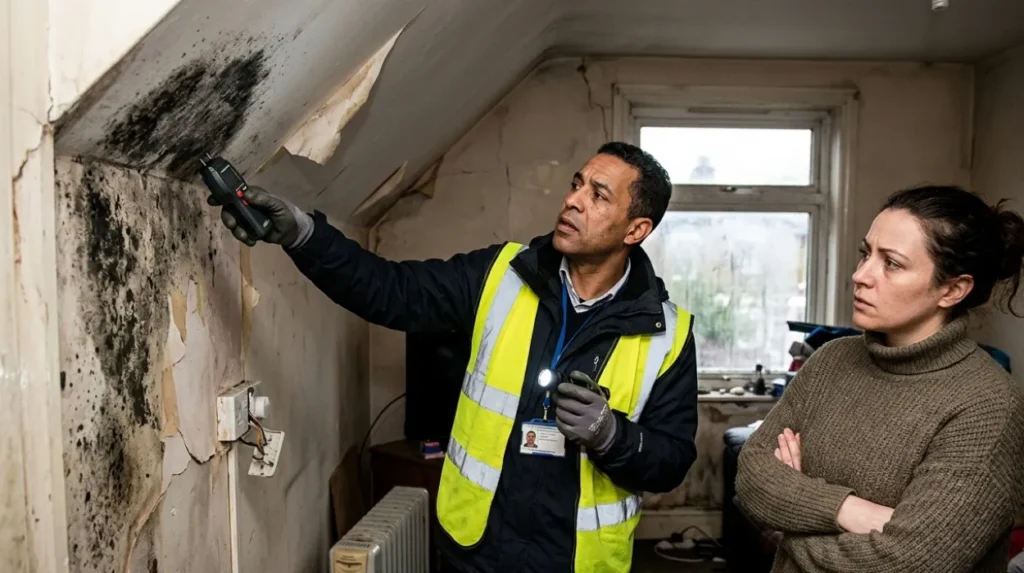
A rented home counts as unsafe if it has Category 1 or Category 2 hazards under the Housing Health and Safety Rating System (HHSRS) in the Housing Act 2004. These include damp, excess cold, fire risks, faulty electrics, or structural defects that threaten health. Councils rate 29 specific hazards and act on Category 1 immediately.
The Housing Act 2004 defines unsafe conditions through HHSRS, introduced in 2006 for England and Wales. Local authorities assess risks to occupants’ health from deficiencies like poor wiring or mould. Category 1 hazards pose a serious imminent danger, such as falling ceilings or gas leaks. Category 2 hazards present lower but notable risks, like inadequate lighting.
Key components include 29 hazards grouped into issues like damp and mould growth, excess cold or heat, asbestos, carbon monoxide, electrical hazards, fire, and falls. For example, damp leads to respiratory problems; excess cold affects vulnerable groups like children and the elderly. Councils use a scoring system based on the likelihood and severity of harm.
Processes involve inspection by environmental health officers who score hazards numerically. High scores trigger enforcement, like improvement notices. Implications include fines up to £30,000 for landlords or rent repayment orders for tenants. In North London, councils like Haringey enforce this strictly, handling reports of no heating or pests.
What Are Landlord Safety Responsibilities in UK Rentals?
Landlords must ensure gas, electrical, fire, and structural safety under laws like the Landlord and Tenant Act 1985 and the Housing Act 2004. They conduct annual gas checks by Gas Safe engineers, five-year electrical inspections, install smoke alarms on every storey, and fix disrepair promptly.
Landlords owe a duty of care to maintain habitable conditions. Gas safety requires annual checks on appliances and flues, with certificates given to tenants within 28 days. Electrical safety demands Electrical Installation Condition Reports (EICR) every five years for wiring and sockets; portable appliance testing for supplied items like cookers.
Fire safety mandates smoke alarms per floor and carbon monoxide detectors for solid fuel appliances. For Houses in Multiple Occupation (HMOs), add fire doors and alarms. The Homes (Fitness for Human Habitation) Act 2018 reinforces implied terms for safety from move-in.
Real-world examples include London Fire Brigade cases where missing alarms led to enforcement. Statistics show 20% of private rentals fail initial safety checks, per Shelter data. Implications involve unlimited fines for non-compliance; tenants gain repair rights or compensation.
Which North London Council Handles Unsafe Rental Reports?
Contact your borough’s private sector housing or environmental health team: Haringey (020 8489 3051), Islington (020 7527 3083 for dangers), Camden (020 7974 4444 or 020 7974 5969), Enfield (020 3821 1761), Barnet (020 8610 3539). Report via website forms, email, or phone with evidence.
North London boroughs manage unsafe rentals through dedicated teams under HHSRS. Haringey’s private sector housing team inspects disrepair like damp or pests; anyone can report anonymously. Islington contacts within three days, prioritising dangers.
Camden assesses hazards via online forms; Barnet’s Housing Options advises on options. Enfield handles licensing and safety via Civic Centre contacts. Processes start with landlord notification, then council escalation if ignored.
Examples: Haringey resolved cockroach infestations in rentals. Data indicates 15% rise in North London reports post-2020. Implications ensure quick fixes; councils issue notices or prosecute.
What Steps Follow Contacting Your Local Council?
Submit a report with the address, landlord details, photos, and tenancy agreement to the council team. They inspect within days, rate hazards, and serve improvement notices on landlords. Tenants stay during repairs unless a Category 1 hazard requires evacuation.
Councils’ triage reports: urgent dangers get same-day response. Environmental health officers visit, apply HHSRS, and classify hazards. For Category 1, mandatory action like hazard awareness notices or prohibition orders banning occupation.
Mechanisms include formal notices with deadlines, e.g., 28 days for repairs. Non-compliance leads to works in default, where councils fix and bill landlords. Tenants receive updates and support.
Real examples: Camden officers assessed mould, enforced fixes. Shelter reports 70% of complaints are resolved via council intervention. Implications protect tenants from retaliation; councils mediate.
When Should You Contact Your Landlord First?
Notify your landlord in writing first about unsafe issues, detailing problems with photos, dates, and repair requests under Section 11 of the Landlord and Tenant Act 1985. Allow 14-28 days’ response before escalating to the council.
Section 11 requires landlords to repair the structure, installations like heating and electrics. Written notice creates records for evidence. Include specifics: “Leaking roof since 1 March 2026, causing damp.”
Processes: Email or recorded post; keep copies. If ignored, proceed to the council. Examples: Tenants in Barnet fixed electrics via polite escalation.
Stats: 60% of issues are resolved pre-council per Shelter. Implications build cooperation; avoid disputes.
What if the Unsafe Issue is Gas or Electrical?
For gas leaks, call National Gas Emergency Service at 0800 111 999 immediately, then the council. Electrical faults go to the council environmental health for EICR enforcement; do not use faulty appliances.
Gas Safety Regulations 1998 mandate annual Gas Safe checks. In an emergency, evacuate and call 0800 111 999. Electricals need five-year EICRs since 2020.
Examples: Fatal CO incidents prompted stricter rules. 25% of rentals lack valid certificates. Implications: Prosecution, £5,000+ fines.
How Does Fire Safety Work in Unsafe Rented Homes?
Landlords install smoke alarms per storey, CO alarms for fuel appliances, and ensure escape routes. Report missing alarms to the council; the London Fire Brigade advises on HMO extras like fire doors.
Regulatory Reform (Fire Safety) Order 2005 applies. HMOs over three storeys need extinguishers. Inspections check compliance.
Examples: Brigade enforced in North London HMOs. 40% fires are from faulty electrics. Implications: Evacuation orders possible.
What Rights Do North London Tenants Have for Repairs?
Tenants enforce repairs via council notices or court under the Defective Premises Act 1972 and the Homes Act 2018. Claim compensation for health impacts; rent repayment up to 12 months possible.The
Deregulation Act 2015 sets notice periods. Councils recover costs. Examples: Islington tenants won mould claims.
Stats: £10m repaid yearly UK-wide. Implications: Stronger bargaining.
Can You Stay in a Severely Unsafe Rented Home?
No, councils issue prohibition orders for Category 1 hazards, requiring evacuation and rehousing support. Temporary accommodation is provided if at risk.
Orders ban use until fixed. Appeals possible. Examples: Damp evacuations in Haringey.
Implications: Priority rehousing lists.
What Role Does Shelter Play in Unsafe Rentals?
Shelter England provides free advice on 0808 800 4444, helps report to councils, and supports claims. Use for North London-specific guidance on HHSRS.
Established in 1966, Shelter campaigns for rights. Advisers review evidence. Examples: Assisted 1m yearly.
Implications: Empowers escalation.
Are There Fines for Landlords Ignoring Safety Notices?
Yes, unlimited fines in magistrates’ court, up to £30,000 per HMO offence, plus prosecution. Rent repayment orders are deducted from rent.
Enforcement Policy 2024 sets scales. Examples: Barnet fined negligent landlords.
Stats: 5,000+ cases yearly. Implications: Deterrence.
How Do You Report Anonymous Unsafe Conditions in North London?
Use council online forms or phone anonymously; provide address and details without name. Teams like Camden accept third-party reports.
Protection from eviction fears. Processes protect identities. Examples: Neighbours reported pests.
Implications: Broader enforcement.

What Statistics Show Unsafe Rentals in North London?
25% of private rentals have serious hazards; North London sees 10,000+ annual complaints. Mould affects 40% properties, per Shelter 2025 data.
English Housing Survey notes rises post-pandemic. Implications: Urgent action needed.
Future Changes to UK Rental Safety Laws?
Renters’ Rights Bill 2025 mandates stricter EPC E ratings and professional standards. North London pilots faster inspections.
Awaab’s Law sets mould timelines. Implications: Proactive landlord duties.
Who do I contact about an unsafe rented home in North London?
You should contact your local council’s private rented housing team or environmental health department. They inspect dangerous housing conditions under the Housing Act 2004 and can force landlords to carry out repairs. Most North London councils accept complaints online, by phone, or email.