Key Points
- 40th Anniversary Celebration: Judith Chernaik, a co-founder of the ‘Poems on the Underground’ project, is marking its 40th anniversary with a special public event in London.
- International Impact: Initially launched on the London Underground in 1986, the initiative has since been replicated on subway networks globally, including cities such as New York, Moscow, and Beijing.
- Event Details: The celebratory evening will take place next month at the Keats House library in Keats Grove, featuring poetry readings, musical performances by the Apollo Quartet, and guest poet Nick Mahoka.
- Current Selection Process: Today, the project continues to thrive under the guidance of celebrated poets Imtiaz Dharker and George Szirtes, who curate sets of six poems displayed three times a year in Tube carriages.
Gospel Oak (North London News) May 25, 2026 — One of the original visionary forces behind London’s highly acclaimed ‘Poems on the Underground’ project is preparing to host a landmark public event to reflect on the initiative’s 40-year history of weaving literature into the daily commute of millions. Judith Chernaik, a New York-born author and long-time resident of Gospel Oak, originally conceived the concept alongside her neighbours four decades ago. What began as a local grassroots push to democratize classical and contemporary verse has grown into an enduring fixture of London’s cultural fabric, transforming empty advertising panels in subterranean train carriages into spaces for artistic reflection.
- Key Points
- What are the origins of the Poems on the Underground project?
- How has the initiative expanded globally and culturally over forty years?
- What are the specific details of the upcoming anniversary event?
- Background of the particular development
- Prediction: How this development can affect the commuting public and literary community
What are the origins of the Poems on the Underground project?
To understand how literature found a permanent home in London’s subterranean transit network, it is necessary to look back at the cultural landscape of the early 1980s. As documented by local literary logs, Judith Chernaik, described as a book-loving New Yorker captivated by the depth of literary London, conceptualised the project alongside fellow writers and neighbours in the Gospel Oak area. They were active members of the ‘Barrow Poets’, a collective whose core mission was to dismantle the perceived elitism surrounding poetry by performing works directly in accessible public venues, such as local schools and community pubs.
As Chernaik recounted in personal reflections, her perspective was heavily shaped by her formative years spent navigating transit systems across the Atlantic. “You have to understand I had come from New York where the subway was unclean and dangerous but we just had to use it — I still think London has one of the great transport systems of the world,” Chernaik stated, highlighting the stark contrast she observed upon relocating to the United Kingdom.
Recognising the vast, passive audience captive within London Underground carriages every day, she suggested using empty advertising spaces to display poetry. The proposal was met with immediate enthusiasm from transit officials. London Underground proved fully cooperative, allowing the project to bypass bureaucratic hurdles. Backed by a modest, baseline fundraising effort, the very first installment of five poems was successfully installed across the network in January 1986. The inaugural selection featured a diverse blend of historic and contemporary works, notably including Percy Bysshe Shelley’s classical sonnet Ozymandias, alongside verses penned by Scottish national poet Robert Burns and the celebrated Irish poet Seamus Heaney.
How has the initiative expanded globally and culturally over forty years?
What began as a distinctively British experiment quickly evolved into an international phenomenon. Over the subsequent four decades, the model pioneered by Chernaik and her colleagues was adopted by major metropolitan transit authorities worldwide. Subways and metro systems spanning various continents and political landscapes — from New York and Moscow to Beijing — established their own iterations of poetry-in-transit programs, directly inspired by the London template.
Reflecting on the unexpected international footprint of her initial idea, Chernaik noted the widespread appeal of the concept. “It was quite an extraordinarily popular idea that was taken up and has led to a lot of interesting travel where I’ve been invited to attend the launch at various metro systems,” Chernaik remarked. She further emphasised the unique psychological space that transit poetry occupies for the average city dweller, adding: “There is something very different about seeing a poem on a Tube. It’s a special way of reading a poem and reaches you in a different way.”
In its modern iteration, the London project maintains a rigorous curatorial schedule to ensure the material remains fresh and engaging for contemporary audiences. Responsibility for the programmatic selection now rests with celebrated poets Imtiaz Dharker and George Szirtes. Together, Dharker and Szirtes are tasked with choosing six distinct poems, three times a year, balancing classical literary heritages with diverse, modern voices that reflect the changing demographics of the metropolis.
What are the specific details of the upcoming anniversary event?
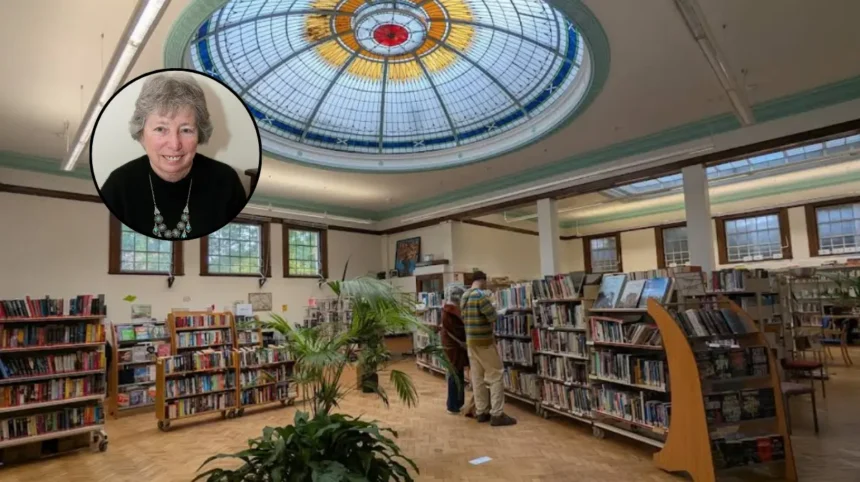
The 40th-anniversary milestone will be officially marked next month with a public presentation designed to celebrate both the history of the project and the broader intersection of poetry and music. The event is scheduled to take place at the historic library located in Keats Grove, Hampstead — a venue deeply tied to London’s romantic poetic tradition as the former home of John Keats. Organizers have described the upcoming gathering as a “joyful event” intended to bring together founders, contemporary curators, and the public.
Judith Chernaik will serve as the evening’s central speaker, detailing the early operational hurdles, the evolution of their fundraising, and the creative choices that defined the project’s foundational years. She will be joined on stage by current curators Imtiaz Dharker and George Szirtes, who will provide insight into the contemporary selection process and the criteria used to capture the attention of fast-moving commuters.
In addition to historical retrospectives, the evening will feature live performances to highlight London’s broader cultural history. Guest poet Nick Mahoka is scheduled to deliver readings of contemporary works, while the Apollo Quartet will provide a classical musical accompaniment throughout the night, blending spoken word with live strings.
Background of the particular development
The longevity of ‘Poems on the Underground’ is deeply rooted in the mid-1970s and 1980s British arts movement, which sought to strip high culture of its insular status and place it directly into the paths of working-class citizens. Prior to the project’s launch in 1986, public transport advertising spaces were strictly commercial domains utilized by corporate entities. The agreement by London Underground to cede a portion of this visual real estate for non-commercial, artistic purposes marked a significant shift in corporate municipal responsibility.
The project survived multiple decades of privatization, structural re-organizations within Transport for London (TfL), and the digital revolution. While modern commuters are increasingly occupied by smartphones and digital screens, the physical poetry posters have maintained their placement inside the rolling stock. The initiative has historically been supported by the Arts Council England and British Council, confirming its status not merely as a transit novelty, but as a core state-sanctioned literary outreach program that bridges classical education gaps by introducing historic literature to citizens who may not actively visit bookshops or libraries.
Prediction: How this development can affect the commuting public and literary community
The continuation and celebration of the 40th anniversary of ‘Poems on the Underground’ is poised to reinforce the presence of analog art within increasingly digitized public environments. For the primary audience — consisting of millions of daily London commuters, transport workers, and everyday travellers — the ongoing preservation of this project guarantees continued access to brief, screen-free cognitive breaks during high-stress transit hours. In an era dominated by targeted digital advertisements and mobile connectivity, these physical posters offer a standardized psychological decompression point, which urban psychologists note assists in reducing commuter anxiety.
For the broader literary and artistic community, the milestone ensures the survival of a highly coveted, non-traditional publishing platform. The endorsement of the project’s 40-year tenure signals to funding bodies, such as Arts Council England, that public-facing poetry remains financially and socially viable. This development will likely stimulate renewed interest from independent publishers and emerging poets, such as those represented by guest speakers like Nick Mahoka, who view the Tube displays as a mechanism to achieve mass visibility outside traditional literary journals. Furthermore, as international transit networks observe London’s celebration of this four-decade milestone, it is highly probable that modern metro systems currently lacking arts initiatives will initiate similar programs to enhance the aesthetic value of their civil infrastructure.