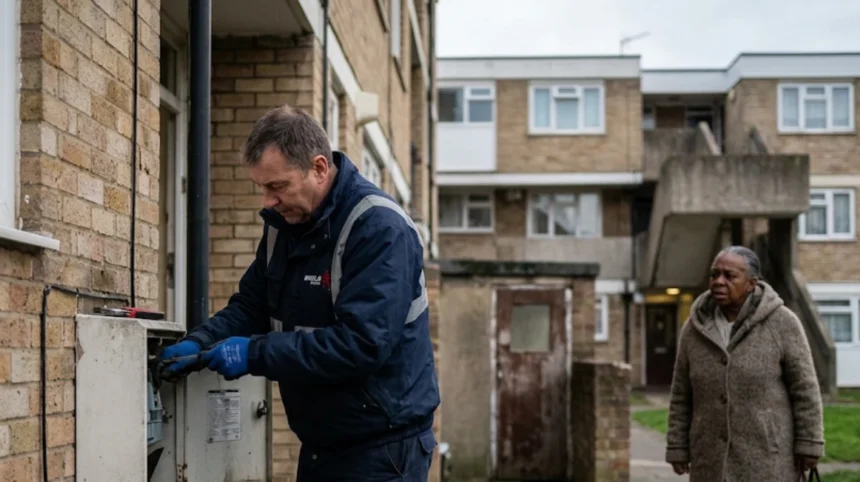
Council housing repairs in Enfield depend on the type of defect, but the broad rule is simple: emergency issues get the fastest response, while non-emergency repairs can be delayed and scheduled later. Enfield Council has said that, during a period of high demand and rising costs, it has prioritised emergency repairs and placed non-emergency work into future delivery slots.
- What counts as a council housing repair in Enfield?
- How long do emergency repairs take?
- How long do routine repairs take?
- Why do repair times vary?
- What is Enfield Council’s repairs process?
- What examples show the expected timeframes?
- What does the council say about delays?
- What rights do tenants have?
- How do delays affect housing conditions?
- What should residents do if they are waiting?
- How long should you expect overall?
- Why this matters in Enfield
What counts as a council housing repair in Enfield?
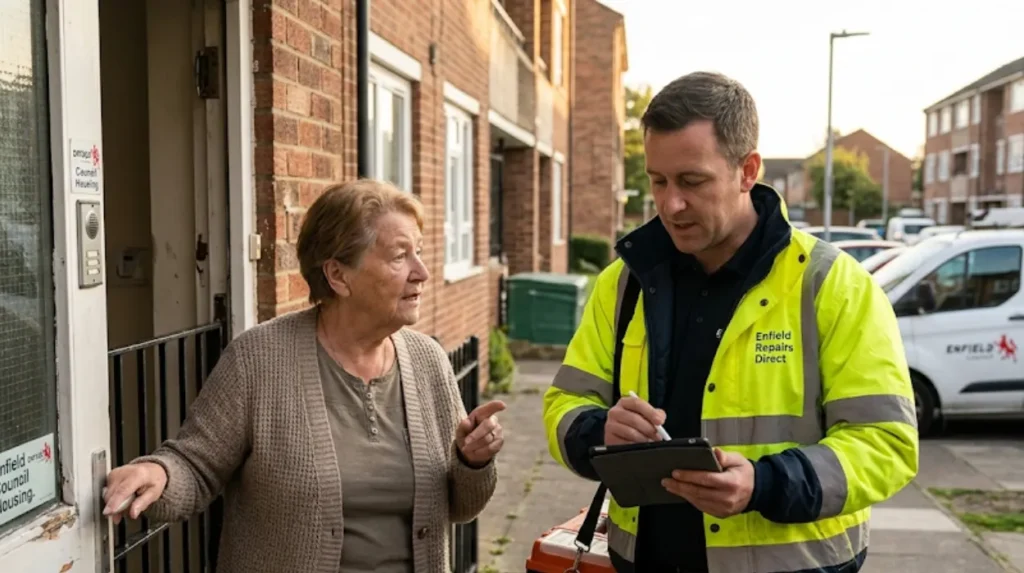
A council housing repair in Enfield is maintenance or fault-fixing work for a home owned by Enfield Council, covering issues such as leaks, broken heating, unsafe electrics, damaged doors, and structural defects. Enfield Council owns about 10,500 council homes and runs an in-house repairs service called Enfield Repairs Direct.
Repairs in council housing usually fall into different urgency levels. Emergency repairs are issues that create immediate risk to health, safety, or property damage. Routine repairs are less urgent and are scheduled through planned work orders. This distinction matters because the response time depends on risk and service capacity, not just the date you report the problem.
How long do emergency repairs take?
Emergency council housing repairs in Enfield are handled first, because the council has said it is prioritising emergency issues over non-emergency work. The public reporting does not give a single universal hour-by-hour target, but emergency repairs are the category the council continues to deliver while less urgent work is deferred.
In practice, emergency repairs cover serious problems such as major leaks, loss of essential services, dangerous electrics, or security failures that leave a home exposed. Shelter England describes short time limits for urgent repairs, giving examples such as a leaking roof within 7 days in some cases, while less urgent work like a broken internal door fits a longer 28-day window. Those examples are general housing guidance, not a specific Enfield service promise, but they show how repair urgency is commonly measured.
How long do routine repairs take?
Routine repairs in Enfield take longer than emergency repairs because the council has said non-emergency work is being recorded and then programmed for future delivery. That means the repair enters the system, but the completion date depends on when work packages are scheduled.
Enfield Dispatch reported that non-emergency housing repairs were put on hold until further notice, with completion dates issued as “packages of work are compiled”. That approach means the wait time is not fixed in advance for every job. The practical delay can stretch from days to weeks, and in periods of backlog it can extend further, depending on the type of repair and the availability of contractors or in-house crews.
Why do repair times vary?
Repair times vary because councils sort jobs by urgency, safety, cost, staffing, and the scale of the backlog. Enfield Council said high demand and rising costs forced it to focus on emergency work, which directly affects how quickly routine jobs move forward.
Several factors shape the final repair timeline. A simple door issue moves faster than a complex damp or roofing problem. A job needing specialist parts takes longer than a standard fix. Access problems also slow delivery when tenants are not available for visits. Large volumes of repairs create queueing, which pushes non-emergency work into later work schedules.
What is Enfield Council’s repairs process?
The process starts when a resident reports a fault, and it ends when the council records, assesses, and schedules the work. Enfield’s model includes in-house delivery through Enfield Repairs Direct, which was created to handle thousands of defects in council properties each year.
The general flow is straightforward. First, the tenant reports the problem. Next, the council decides whether it is emergency or non-emergency. Then the job is either dispatched quickly or placed into a planned work queue. Finally, the resident receives a date once work is grouped into delivery packages for non-emergency repairs.
What examples show the expected timeframes?
Common repair examples help show how councils separate urgent and non-urgent work. Shelter England gives examples such as 7 days for a leaking roof and 28 days for a broken internal door as reasonable time limits for different repair types.
In Enfield, a leaking roof, burst pipe, or unsafe electrical fault fits the emergency category because delay increases the risk of damage or harm. A broken internal door, damaged cupboard, or minor plaster issue usually falls into routine maintenance. The key point is that the same landlord can handle two repairs very differently because urgency, not just inconvenience, drives the response.
What does the council say about delays?
Enfield Council has publicly acknowledged that non-emergency repairs have been paused or delayed because of pressure on the service. The council stated that emergency issues were being prioritised, while non-emergency repairs would be delivered later.
This matters because a repair system becomes slower when demand rises faster than resources. The council’s own explanation links delay to service pressure and costs, not to a policy of ignoring repairs. For residents, that means a reported defect can still be officially logged even when it is not fixed immediately.
What rights do tenants have?
Council tenants have the right to ask for repairs to be carried out within a reasonable time, especially when the defect affects safety or essential services. Shelter England advises tenants to keep records, pictures, and videos of the problem so they can prove the issue and track the report.
A tenant should also keep the date of the first report, the repair reference number, and any replies from the council. That record matters if a repair remains unresolved or becomes worse over time. If a repair affects heating, water, electrics, security, or damp, the issue should be documented clearly because these faults often move into the higher-priority category.
How do delays affect housing conditions?
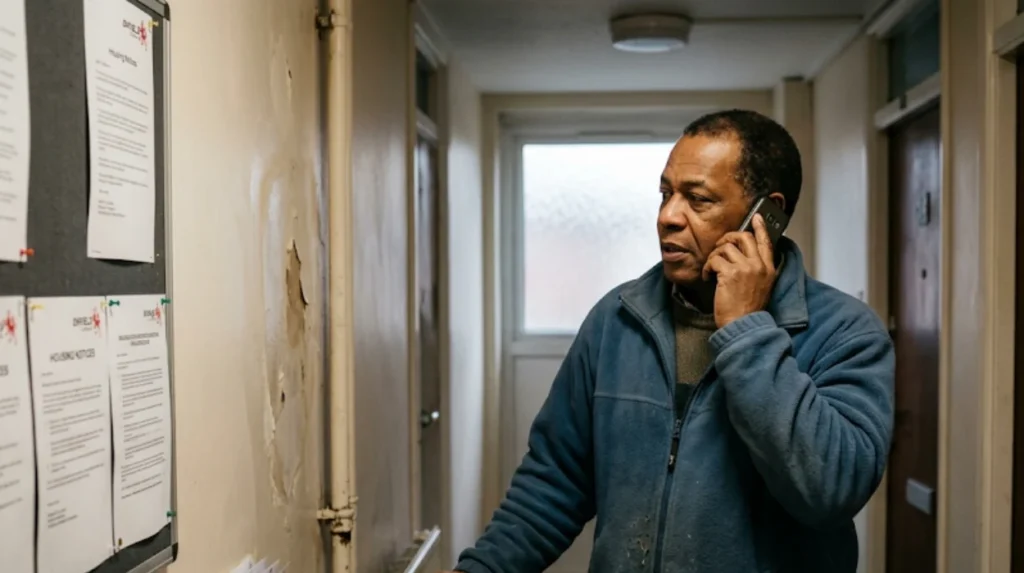
Delays affect housing conditions by allowing minor faults to become bigger and more expensive repairs. In council housing, a blocked repair queue can turn a small leak into damp, mould, or ceiling damage if the issue remains unresolved.
For residents, the impact is practical and financial. A slow repair can reduce comfort, make rooms unusable, and increase the chance that follow-up work becomes more complex. For the council, delay creates a larger maintenance burden later because unresolved defects often spread to other parts of the property. This is why the timing of repairs matters as much as the quality of the repair itself.
What should residents do if they are waiting?
Residents should keep the report, request a reference, and follow up if the repair changes from minor to urgent. If a routine defect becomes a safety issue, it should be reported again as an emergency because the category can change when the risk changes.
A strong record includes the date of the problem, photos, the first report, and any appointment notices. If the council has said the work is delayed, residents should ask whether the job is in the emergency queue or the planned work queue. That distinction is the clearest indicator of whether the repair is being treated as immediate or deferred.england.
Explore More Help & Resources
How to escalate an unresolved council complaint in Enfield?
Why is Enfield Council not responding to repair requests?
How long should you expect overall?
The overall answer is that Enfield council housing repairs are fastest for emergencies and slower for routine jobs, with non-emergency repairs currently subject to delay and future scheduling. Public reporting shows that urgent issues remain prioritised, while routine work is recorded and grouped into later delivery packages.
For a resident in North London, the most accurate expectation is this: emergency repairs should be reported immediately and treated as urgent, while routine repairs can wait longer because the council’s service is under pressure. If you are writing for search, that is the core answer users want: Enfield repairs do not follow one fixed timeline, but urgency determines the speed.
Why this matters in Enfield
Repair timing matters because Enfield manages a large council housing stock and must balance demand against available repair capacity. With around 10,500 council homes, even a modest backlog creates pressure across the system.
That scale explains why service timing becomes uneven. When an in-house repairs team handles thousands of defects each year, urgent jobs naturally move ahead of planned maintenance. For residents, this means the best strategy is to report problems early, classify them correctly, and document every step so the repair remains visible in the system.
Enfield council housing repairs take as long as the urgency of the fault and the council’s current workload require. Emergency repairs are prioritised, while non-emergency repairs are being deferred and scheduled later, so there is no single fixed completion time for every job.
For an evergreen answer, the key rule is simple: report safety issues immediately, keep evidence, and expect longer waits for routine maintenance. That is the clearest and most accurate description of how council housing repairs currently work in Enfield.