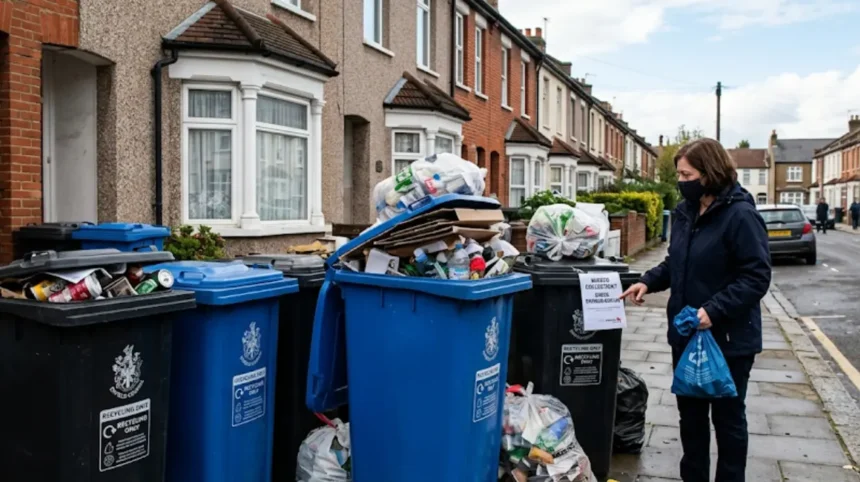
When recycling is not collected in Enfield, it usually stays on the property or in communal bins until the next collection, and residents should check for service updates, presentation errors, or contamination before reporting a missed collection. Enfield Council’s public guidance and related local reporting show that missed or rejected recycling is tied to bin day rules, contamination, and collection access, and that residents are directed to use the council’s missed-collection process when a scheduled pickup does not happen.
- Why does recycling sometimes go uncollected in Enfield?
- What should residents do when recycling is missed?
- What happens to recycling after it is left behind?
- Can uncollected recycling cause fines or problems?
- How does missed recycling affect Enfield’s recycling rate?
- What counts as contamination in recycling?
- What is Enfield’s missed collection process?
- Why does this matter for North London homes?
- What should be removed before the next collection?
- How have recycling problems changed in recent years?
- What is the long-term impact on the borough?
- What should Enfield residents remember?
Why does recycling sometimes go uncollected in Enfield?
Recycling goes uncollected in Enfield when crews cannot take the bin, the recycling is contaminated, the container is presented incorrectly, or the collection has been disrupted by service issues. Public guidance for missed collections lists common causes such as bins not being out on time, overfilled containers, wrong placement, and contamination from incorrect items. Enfield’s own public messaging has also warned that contaminated recycling can be rejected, which means the materials are left behind instead of being taken for processing.
Recycling collection is part of a wider waste system, not a simple doorstep pickup. Enfield sits within the North London Waste Authority area, and borough recycling performance has been closely tracked because contamination and missed capture reduce the amount of material that can be recycled properly. Local reporting has also shown that recycling rates in Enfield have fluctuated in recent years, with contamination repeatedly identified as a major problem.
What should residents do when recycling is missed?
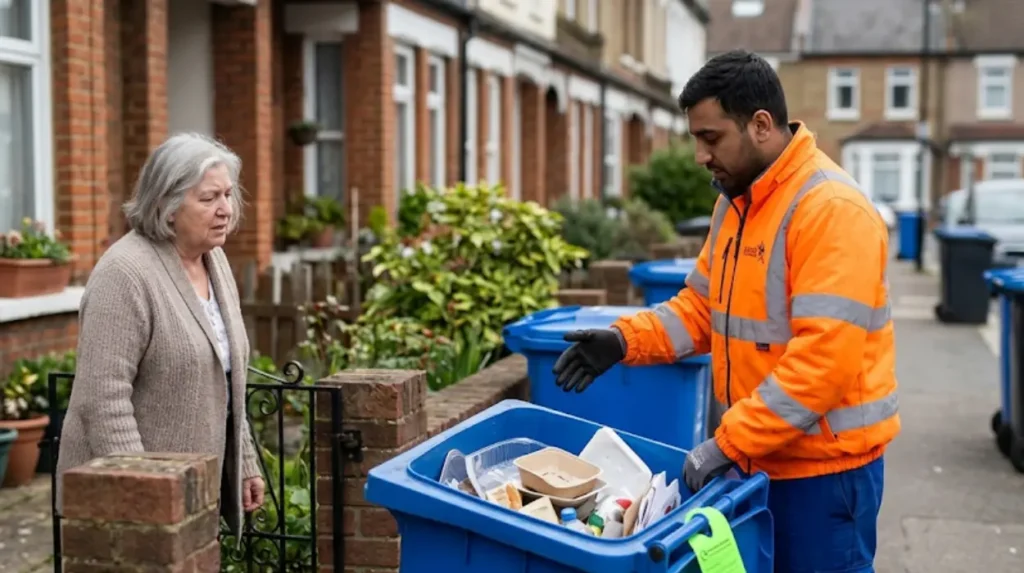
Residents should keep the recycling in place, check the council’s collection status, and report the missed collection through the official route if the bin was presented correctly. GOV.UK points Enfield residents toward the local council’s missed-bin process, which is the standard way to escalate an uncollected recycling container. Missed-collection guidance from local authorities also advises residents to confirm that the bin was out by the required time, was in the correct location, and was not overfilled or contaminated before reporting.
If the recycling has been left behind because it was rejected, the cause usually matters. Some councils attach a hanger or leave an explanation, and the resident then needs to remove non-recyclable items, flatten or re-sort materials, and present the bin on the next scheduled collection day. In Enfield, the council’s public statements on recycling have stressed correct sorting because rejected material affects both household collections and borough-wide recycling performance.
What happens to recycling after it is left behind?
Left-behind recycling remains the resident’s responsibility until the next successful collection, a corrected re-collection, or a trip to an appropriate disposal point. If the bin was not emptied due to contamination or incorrect presentation, the contents do not enter the recycling stream and stay with the household or block. This is important because mixed or dirty recycling can lower the quality of processed material and increase the amount sent for incineration or disposal rather than reuse.
The practical effect is immediate in dense housing areas. In flats and shared bin stores, one missed collection can quickly become an overflow problem because the same containers serve multiple households. Enfield Council has also acknowledged that improving recycling in flats is part of the borough’s waste strategy, which shows how missed or rejected collections have wider operational consequences beyond a single street.
Can uncollected recycling cause fines or problems?
Uncollected recycling does not automatically create a fine, but repeated misuse, contamination, or illegal dumping can create enforcement and housing-management problems. The direct issue is usually service failure or incorrect sorting, not punishment for a single missed collection. However, if residents leave bags next to bins, dump waste in communal spaces, or create an accumulation that leads to nuisance or fly-tipping, the situation can move into enforcement territory because councils treat unmanaged waste as a local environmental problem.
The distinction matters in North London boroughs with high-density housing. Communal bin stores, estate yards, and narrow access roads create conditions where waste builds up fast, and once bags are left outside containers the problem often spreads. Enfield’s wider waste discussions have repeatedly linked recycling contamination, litter, and waste overflow to declining cleanliness and lower recycling performance.
How does missed recycling affect Enfield’s recycling rate?
Missed recycling lowers Enfield’s recycling rate because every uncollected bin reduces the amount of material counted as recovered and increases the amount sent to disposal. Local reporting has shown Enfield’s household recycling rate falling to 32.9% in 2024/25, down from 33.0% in 2023/24 and 34.2% in 2022/23, while the North London Waste Authority area also trailed its 50% target. Earlier reporting also showed that Enfield’s rate had dropped to 30.9% in 2021/22 after pandemic disruption, with contamination identified as a key factor.
This is not only a statistical issue. When recycling is not collected, residents often hold the material longer, re-sort it, or place it in the wrong container later, which increases the risk of contamination in the next round. Enfield has also reported that targeted interventions reduced wrongly placed items and improved food-waste capture, which shows that collection quality directly affects borough recycling outcomes.
What counts as contamination in recycling?
Contamination means putting the wrong items in the recycling container, such as food waste, dirty packaging, plastic film that is not accepted, or general rubbish mixed with recyclables. Councils treat contamination as one of the main reasons recycling gets rejected because a load with the wrong materials cannot be processed efficiently. Enfield reporting has highlighted contamination as a central reason for falling recycling performance in the borough.
For residents, the issue is simple: clean, accepted materials belong in recycling; everything else belongs in the correct residual or food-waste stream. The local authority guidance and reporting make clear that contamination does not just affect one household bin. It affects the quality of collected material across the borough and can push more waste toward incineration instead of recycling.
What is Enfield’s missed collection process?
Enfield’s missed collection process is the council route for reporting a bin that should have been emptied but was not. GOV.UK directs residents to the London Borough of Enfield’s official missed-bin information, which confirms that the borough has a specific procedure for this problem. The general process used by councils is to check the collection day, confirm the bin was presented properly, and then submit a report if the container remains uncollected.
This process matters because it separates operational misses from resident errors. If the recycling was placed out late, overfilled, or contaminated, the council can treat it as a presentation issue rather than a service failure. If the bin met the rules and was still not emptied, the report creates a record that can trigger follow-up action.
Why does this matter for North London homes?
It matters because North London has dense housing, shared bins, and limited storage space, so missed recycling quickly becomes a public-health and cleanliness issue. Enfield contains many homes in flats, estates, and mixed-occupancy buildings, and those settings rely heavily on timed collection cycles. When recycling is not collected, the overflow can attract vermin, produce smells, and block access for residents and contractors.
The issue also affects community confidence in local services. Residents who see uncollected recycling often stop separating waste carefully, especially if they believe the bin system is unreliable. That creates a feedback loop in which lower trust leads to poorer sorting, and poorer sorting leads to more rejected collections.
What should be removed before the next collection?
Before the next collection, residents should remove non-recyclable items, empty loose food residue, flatten cardboard where required, and place only accepted materials in the container. Councils reject recycling when bins contain overfilled, too-heavy, or incorrect items, so correct presentation is essential. Enfield’s public recycling messaging has also stressed careful sorting because rejected recycling is bad for both the borough and the environment.
A simple practical example is household cardboard mixed with greasy takeaway packaging. Clean cardboard is typically recyclable, while heavily food-soiled packaging usually is not, and putting both together can contaminate the whole load. In shared housing, this matters even more because one resident’s mistake can affect the communal bin used by many households.
How have recycling problems changed in recent years?
Recycling problems in Enfield have remained persistent, with contamination, service pressure, and housing density continuing to shape performance. Reporting from 2023 and 2026 shows that the borough has struggled to raise its recycling rate consistently, even while the council has tried targeted interventions and food-waste improvements. The 2026 reporting also noted that Enfield’s highest recorded household recycling rate was 39.1% in 2013/14, showing that the borough has long faced structural challenges.
These trends matter because they show missed recycling is not a one-off inconvenience. It is part of a long-running service and behavior problem involving presentation, contamination, collection design, and shared-bin management. That is why councils focus on both enforcement and resident guidance rather than relying on collection vehicles alone.
What is the long-term impact on the borough?
The long-term impact is lower recycling performance, more waste sent for disposal, more bin overflow, and weaker environmental outcomes for Enfield. Local figures show that the borough’s recycling rate remains far below the ambition set by waste authorities in north London, which means every missed or rejected collection adds to a wider gap. Contamination also increases processing costs and reduces the value of collected materials because mixed waste requires more sorting or disposal.
For residents, the consequence is practical as well as environmental. Missed recycling creates extra handling, more storage problems, and more pressure on communal areas, especially in blocks of flats and busy streets. For the council, the impact is strategic because reliable collection and cleaner recycling streams are necessary to improve performance over time.
What should Enfield residents remember?
Residents should treat missed recycling as a reportable service issue, and treat contamination as the main preventable cause of rejection. The core rule is straightforward: put out the right container, on time, with the right materials, and report a true missed collection through the council’s process if it is left behind. Enfield’s public guidance and local reporting both show that correct sorting and timely reporting are the two most effective responses.
The broader lesson is that recycling collection in Enfield depends on both service reliability and household accuracy. Where either one fails, the result is the same: uncollected material, lower recycling performance, and more waste pressure across North London.
What should I do if my recycling was not collected in Enfield?
First, check your scheduled collection day and make sure your recycling bin was presented correctly. Confirm there were no service updates, access problems, or contamination issues. If the bin met the collection requirements and was still not emptied, report the missed collection through Enfield Council’s official missed-bin service.