Key Points
- Labour Party retains overall control of Islington Council but faces significant losses, dropping from 48 seats in the 2022 election down to 32 seats.
- The Green Party achieves a historic surge, expanding its representation from just 3 seats before the vote to 19 seats, establishing a formidable opposition bloc.
- A total of 51 council seats across the London Borough of Islington were contested during the local elections held on Thursday, 7 May 2026.
- Voter turnout varied across the borough, hitting a high of 49.87% in the Tufnell Park ward and dropping to a low of 37.72% in the Bunhill ward.
- The wider UK political landscape saw a broader collapse in local government vote share for the ruling Labour Party, coinciding with low national poll ratings.
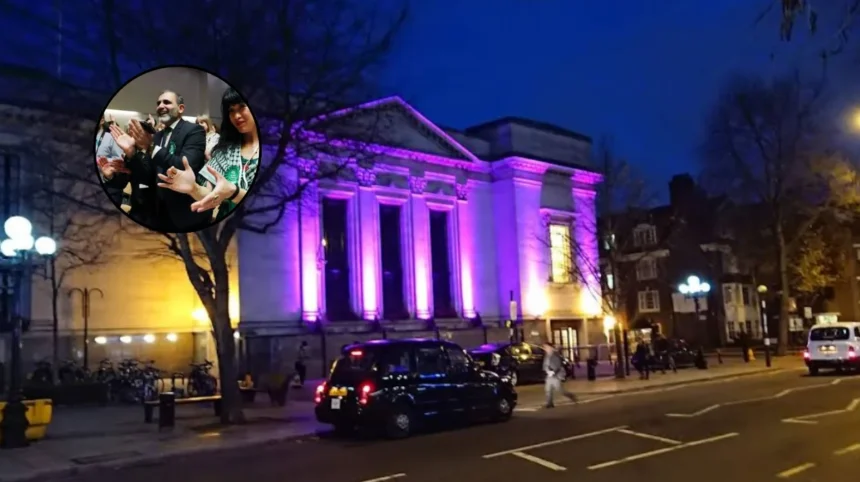
Islington (North London News) June 24, 2026 — The political landscape of the London Borough of Islington has been fundamentally transformed following the local council elections held on Thursday, 7 May 2026. Official verification published by the Islington Council election scrutiny body confirms that while the Labour Party has managed to retain its majority control over the local authority, it suffered a severe reduction in its elected representatives. The Labour Party, which previously held a near-total dominance of 48 seats following the 2022 local elections, saw its share plummet to 32 seats.
- Key Points
- What Were the Official Vote Counts and Turnout Percentages Across the Wards?
- How Did Political Journalists and Media Outlets Report the Shift in Power?
- What Official Statements Have Been Released by Party Leaders?
- Background of the Islington Council Political Structure
- Prediction: How This Development Can Affect Islington Residents
- Shifting Priorities in Housing and Climate Initiatives
- Intense Local Consultations on Fees and Council Tax
Concurrently, the Green Party achieved an unprecedented breakthrough in the borough, securing 19 seats compared to the mere 3 seats it controlled prior to the polling date. This shift ends years of single-party dominance in Islington, establishing a robust dual-party framework within the town hall chambers.
What Were the Official Vote Counts and Turnout Percentages Across the Wards?
According to the comprehensive statistical data released by the Islington Council media relations team, all 51 council seats across the borough’s diverse wards were up for active contestation. Local administrative data revealed that approximately 620 municipal personnel managed 87 active polling stations throughout the polling day, with a secondary contingent of 250 counters validating ballots at the Islington Tennis Centre to process the final declarations.
The localized engagement metrics published in the council’s electoral ledger demonstrated substantial geographic variance in voter participation.
The highest level of public engagement was documented in the Tufnell Park ward, where turnout reached a peak of 49.87%. In stark contrast, the lowest level of physical voter turnout was recorded in the Bunhill ward, which registered a participation rate of just 37.72%.
As detailed in the individual ward breakdowns by the Islington municipal returning officer, distinct battlegrounds emerged between the two dominant factions. In high-intensity reporting zones such as the Barnsbury ward, a split victory occurred.
Green Party candidates Patrick David Brighty and Nafisah Brown successfully won seats, alongside Labour candidate Fin Craig, drawing a cumulative 11,451 counted votes from a total ward electorate of 8,539. Conversely, in the Canonbury ward, Labour maintained a clean sweep with Rowena Elizabeth Champion securing 1,615 votes, Jilani Chowdhury obtaining 1,394 votes, and Kane Emerson receiving 1,355 votes.
How Did Political Journalists and Media Outlets Report the Shift in Power?
As reported by political correspondents examining the London municipal results, the outcome in Islington represents a localized manifestation of a broader nationwide trend impacting the Labour administration.
In an analytical report compiled by the editorial staff of Wikipedia’s UK Electoral Archive, data indicated that the local Labour Party experienced a net loss of 16 seats within the borough, matching an identical net gain of 16 seats by the Green Party.
The shifting dynamics were further contextualised by national political reporters covering the wider English local elections.
As reported by political editors at The BBC and ITV News, the Labour Party entered the May 2026 local elections facing consistently depressed national poll ratings, heavily impacted by ongoing industrial disputes, such as the prominent Birmingham bin strike, and local government funding constraints.
Furthermore, an external commentary surfaced on the immigrant media portal Mshale, where Editor-in-Chief Tom Gitaa hosted instructional material detailing the fundamental principles of public administrative execution.
While the analytical broadcast titled “Role Of Public Administration In Developing Countries” primarily assessed structural governing frameworks in emerging economies, it explicitly referenced the 2026 Islington council outcomes to highlight how fluctuating local voter sentiments directly alter the administrative priorities and accountability mechanics of localized civil services.
What Official Statements Have Been Released by Party Leaders?
The leadership figures within the council have offered contrasting assessments of the structural reality facing the new administrative assembly. Prior to the final processing of the results, the Council had been led by Labour Councillor Una O’Halloran.
In official council logs documenting local executive proceedings, representatives from the Labour leadership emphasized that despite the loss of individual seats, the party retains a governing mandate to push forward its baseline municipal manifesto.
In a formal address during the preceding council sessions, Labour leadership components highlighted their ongoing focus on protecting vulnerable residents, welcoming national welfare adjustments such as the abolition of the two-child benefit limit, and maintaining Islington’s status as a sanctuary borough.
On the opposing side of the chamber, the Green Party, led locally by Benali Hamdache, has framed the election outcome as a clear public directive for increased environmental and fiscal scrutiny.
In statements corresponding with the Green Party’s expanded 19-seat presence, opposition figures stated that the influx of Green councillors would be utilized to enforce rigorous accountability on the ruling executive, particularly concerning housing standards, local environmental schemes, and budget allocations.
Background of the Islington Council Political Structure
To understand the magnitude of the 2026 election results, it is necessary to examine the historical composition of the Islington London Borough Council. For over a decade, Islington was widely regarded as one of the safest and most homogenous Labour strongholds in the United Kingdom.
In the 2022 local elections, Labour secured an overwhelming supermajority, winning 48 out of the 51 available seats, leaving the Green Party with an opposition of just 3 councillors.
However, the four years leading up to the 2026 vote introduced significant internal friction within the local authority. Between 2023 and 2024, multiple sitting Labour councillors resigned their party whips or were suspended due to internal policy disagreements.
For instance, Councillor Matt Nathan and Councillor Asima Shaikh chose to sit as independents in 2023, while veteran councillor Philip Graham was suspended from the party in mid-2024. These internal fractures, combined with high-profile resignations such as that of former Council Leader Kaya Comer-Schwartz in late 2024, required a series of closely watched by-elections.
Simultaneously, the borough’s administrative organs faced intense fiscal pressures. Financial documents from the Islington Executive Committee detailed a forecast overspend of more than £2.4 million within the Housing Revenue Account (HRA) heading into the 2025/2026 financial cycle.
This economic environment, paired with public debates over local traffic reduction policies and social housing maintenance, created an opening for the Green Party to systematically pick up support across central and northern wards, culminating in the historic 16-seat swing witnessed in May 2026.
Prediction: How This Development Can Affect Islington Residents
The transition from a near-monolithic council to a competitive two-party legislative chamber is expected to alter how local government operates in Islington, directly impacting the borough’s residents and local businesses.
With the Green Party commanding 19 seats, the Labour executive can no longer pass localized legislation or annual budget proposals without facing intense, formalized resistance. Every major municipal policy—ranging from the implementation of acoustic cameras on major roadways to modifications in the General Fund Medium-Term Financial Strategy—will undergo strict committee debates.
For residents, this could mean a significant slowdown in the rollout of local infrastructure projects as policies are sent back to scrutiny panels for adjustments. However, it also means that public initiatives will likely be more thoroughly vetted, potentially reducing wasteful administrative expenditure.
Shifting Priorities in Housing and Climate Initiatives
The expanded Green bloc will undoubtedly leverage its position to force concessions on environmental issues. Residents can anticipate aggressive pushes for enhanced sustainability clauses within the council’s multi-million-pound capital asset decisions and housing general funds.
The Green opposition is likely to demand that future allocations for the “Flood Ready London” initiative and borough-wide estate renovations strictly prioritize carbon-neutral metrics. Conversely, this may create friction for local tradespeople and contractors, who could face more stringent eco-compliance frameworks when bidding for municipal council contracts.
Intense Local Consultations on Fees and Council Tax
Because the ruling Labour party’s political margin has shrunk, the executive will have to tread carefully regarding local tax and fee increases to avoid further alienating the electorate. As the Council navigates the outcomes of the national Fair Funding Review 2.0, any future proposals to raise Housing Revenue Account rents or adjust general sales, fees, and service charges will likely be met with mandatory, highly publicized public consultation phases. Consequently, Islington residents will gain a more powerful, direct channel to voice objections, backed by a substantial opposition bloc inside the town hall ready to champion their grievances.