
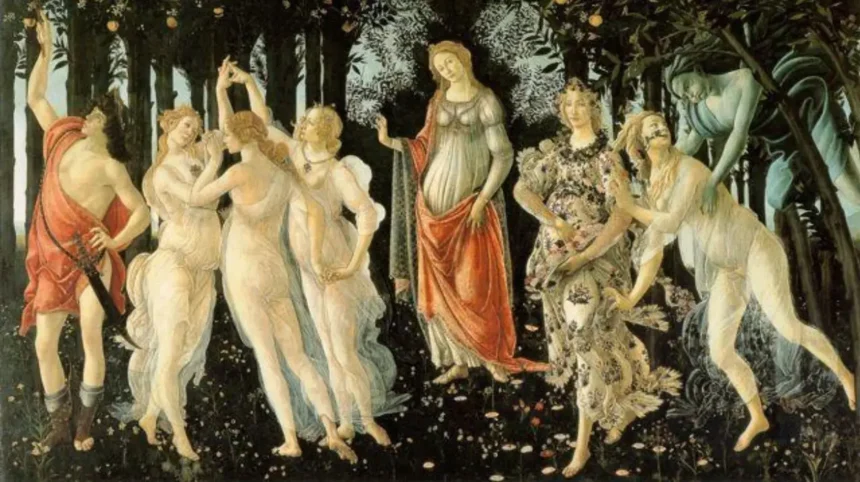
Florence is known as the “Cradle of the Renaissance,” and the Uffizi Gallery continues to keep the legacy of the Renaissance alive through its masterpieces of Renaissance art. Set against the naturally beautiful green canvas of this Tuscan city, art, history, and architecture draw visitors and tourists from around the world. The terracotta dome of the Cathedral Duomo, the Palazzo Pitti, and the marble Galleria dell’Accademia are not merely landmarks of the city—they embody its art, history, and architectural grandeur. The Arno River flows like a necklace through the city, while the medieval stone bridge, Ponte Vecchio, adds to its natural charm.
There is something about this lively city that defies definition. The people are friendly, yet there is a sense of distance and dignity about them. Culturally, the city feels European in spirit but with an American orientation with little Italian flavour. In the world of fashion, Florence holds its own against Milan. When it comes to food, this city stands apart from the rest of Italy. There is something sharp and rustic about Tuscan flavours that defines the culinary delicacies here—from the bread and Ribollita soup to sandwiches and fruit juice, everything tastes distinct, much like the unique Florentine dialect itself.
This Roman garrison city was established in 59 BC. Historically, it was a flourishing and blossoming town, hence its name—Florence—which became a centre of trade and finance. It was one of the richest cities of medieval Europe. The Medici trading and banking family ruled the city, their power consolidated by the wealth of the textile business and Medici bank. The economic influence of this family expanded further through their political control over the city during the 15th century. This family produced four popes of the Catholic Church and controlled the city’s religious life as well until the late 17th century. The alliance between medieval feudal political and economic power has always moved in step with religious power. Religion and capital move together to forge formidable political authority—a pattern that continues to echo in modern times, not only in the city and Italy, but across the world.
Such an alliance between the feudal political and economic power of the Medici family and the Catholic Church gave rise to numerous republican and religious struggles for the emancipation of working people, whose lives were suffocated in the city, across the Tuscan region, and beyond. The Florentine bankers were the financiers of the English kings, who managed to sustain the Hundred Years’ War (1337–1453) with France. This was not a people’s war, but a war for the expansion of political power, trade, and business. These wars are often named after countries to lend them a nationalistic and religious flavour, mobilising people to fight for their rulers. But these European wars were fundamentally bourgeois wars, in which religion played a key role in rallying working people to fight for kings. These were not people’s struggles for emancipation.
The Albizzi family also ruled Florence during the second half of the 14th century. The wool trade of the Albizzi family led to the rise of conflict with the Medici family. This oligarchical control of wealth by these two families, and the conflict between them and their dominace over everyday lives of working people, gave rise to mass discontent—for their wealth was a direct result of the exploitation of artisans, labourers, and craftsmen. The four-year Ciompi Revolt, from 1378 to 1382, was led by these unorganised working classes, primarily composed of textile and wool workers, who managed to form a workers’ government in the city and took over government buildings, monasteries, and many palazzi.
However, the Ciompi Revolt failed to sustain itself due to factionalism among the leadership and a lack of organisational power. Yet this failed revolution has become a source of inspiration for workers and lower classes in their struggles against low wages, exploitation, and lack of political representation. People’s struggles for emancipation and their revolutionary activities never go to the dustbin of history. Revolution—whether small or large, failed or successful—does not matter; it always shines and guides society on the path of progress. The popular Ciompi Revolution may have failed, but it provided a revolutionary foundation to Florence as a city, which later contributed to its liberation from Nazi-Fascist occupation in 1944. The anti-fascist foundation of Florence continues to be a source of contemporary anti-fascist movements across Italy.
The growth of art, science, and humanism in 15th-century Florence was funded by business families and banking dynasties such as the Albizzi and the Medici. Thus, the bourgeois Renaissance was designed to undermine working-class consciousness by crafting a benevolent image of these ruthless oligarchical families in Florence. However, the Florentine revolutionaries adopted science and humanism to serve the working people of the city. Therefore, Florence continues to exist as a city caught between renaissance and revolution on the political canvas of Italy and Europe. Many working-class, anti-fascist, and anti-Nazi struggles in Italy continue to draw inspiration from the revolutionary textile and wool workers of Florence. The Ciompi Revolution provided much-needed hope to the working people of the region in a hopeless world dominated by oligarchical families that controlled the city and its surroundings.
The natural beauty of Florence shines even brighter due to the radical and revolutionary spirit of the city, which continues to pursue centre-left politics in its governance. Florence maintains its reputation as a long-standing supporter of left-wing, radical, democratic, and progressive politics. The history of the city lives on in its present-day politics.