Formed on 1 April 1965 under the London Government Act 1963, the borough combines historical territories formerly administered within the counties of Middlesex and Hertfordshire. Its administrative headquarters are located at 2 Bristol Avenue in Colindale.
- How does the housing market and residential infrastructure perform in Barnet?
- What educational institutions and academic standards are available in Barnet?
- What transport connectivity and public infrastructure support commuting in Barnet?
- What green spaces, recreational facilities, and leisure amenities define Barnet?
Barnet shares borders with several other administrative districts, including the London Borough of Harrow to the west, the London Borough of Brent to the south-west, the London Borough of Camden to the south, and the London Borough of Haringey and the London Borough of Enfield to the east. To its north lies the county of Hertfordshire, encompassing districts such as Hertsmere and Welwyn Hatfield.
Demographically, Barnet is characterised by high cultural diversity and rapid population expansion. According to Office for National Statistics data, the borough’s population grew by more than 9 percent between the 2011 and 2021 censuses, outstripping the wider London and national growth averages. Approximately 48 percent of the resident population belongs to Black, Asian, mixed, or other minority ethnic groups, reflecting a multi-faith and multi-ethnic community structure.
The median gross weekly pay for full-time employees residing in the borough sits at £905.40, mirroring robust local employment dynamics.
As you explore the modern site, you are crossing land with a deep heritage. Read about the full [Insert Anchor Text for History Article Here] to understand its origins. Historical landmarks such as the Hadley Green site and ancient coaching routes underscore how agricultural parishes evolved into dense suburban centres.
How does the housing market and residential infrastructure perform in Barnet?
Barnet features a diverse housing market spanning period suburban properties, modern apartment developments, and large regeneration zones, with an average overall property price of £591,000 as of mid-2026.
The local residential landscape varies significantly across the borough’s 13 distinct postal districts. Prime areas such as East Finchley (N2) record average asking prices exceeding £1.2 million, whereas western regeneration corridors like Colindale (NW9) offer more accessible entry points with average prices around £443,019 and gross rental yields reaching approximately 5.6 percent. Property types across the borough range from detached family houses, which averaged £1,541,000 in mid-2026, to purpose-built flats and maisonettes averaging £369,000.
Rental accommodation forms a substantial component of the housing ecosystem. Private monthly rents average £1,939 across the borough, reflecting a high concentration of private renters—roughly 30 percent of total households—compared to a 20 percent average across wider London.
To accommodate continuous demographic growth, municipal authorities enforce major urban renewal strategies. The Brent Cross Cricklewood regeneration scheme represents one of the largest development projects in Europe, spanning 800 acres and designed to deliver up to 10,000 new homes alongside 20,000 permanent employment opportunities.
Additional large-scale residential projects are concentrated in Colindale, where former industrial and institutional land has been transformed into high-density mixed-use communities featuring thousands of new council and privately owned properties.
What educational institutions and academic standards are available in Barnet?
Barnet is widely recognised for its exceptional educational performance, with approximately 22 percent of its schools rated as ‘Outstanding’ by Ofsted and consistently high student attainment rates at General Certificate of Secondary Education and A-Level stages.
The local authority oversees a comprehensive network of state-funded primary schools, secondary schools, comprehensive academies, and special educational needs facilities. Notable grammar schools within the borough include Queen Elizabeth’s School for Boys in Barnet and Henrietta Barnett School in Hampstead Garden Suburb, both of which regularly rank among the highest-performing academic institutions in the United Kingdom. In addition to selective grammar options, comprehensive institutions such as Copthall School, Mill Hill County High School, and The Archer Academy deliver high educational standards.
Higher education and adult learning facilities are similarly accessible within the local boundary. Middlesex University maintains its primary modern campus in Hendon, accommodating over 20,000 students across disciplines including art and design, business, law, and health and education.
Further education colleges, such as Barnet and Southgate College, provide vocational training courses, technical diplomas, and apprenticeships designed to align workforce skills with regional employer demands. These educational assets make the borough a primary destination for families relocating to secure academic placement for children across all age brackets.
Explore More Area Guide
Barnet Conservation Areas Protect Historic Heritage | Barnet 2026
Barnet Urban Growth and History: North London 2026
What transport connectivity and public infrastructure support commuting in Barnet?
Barnet benefits from comprehensive transport infrastructure, including multiple London Underground lines, National Rail and Thameslink services, and an extensive strategic road network that links North London directly to central districts and home counties.
Public transit accessibility is anchored by the London Underground. The Northern line operates two distinct northern branches through the borough—the High Barnet branch via Finchley and Totteridge, and the Edgware branch via Colindale and Hendon—providing direct, high-frequency access to King’s Cross St. Pancras, the West End, and the financial district of the City of London.
Additionally, the Jubilee line clips the southern edge at West Hampstead and Swiss Cottage proximity, while Thameslink rail services operate stations at Mill Hill Broadway, Hendon, and Cricklewood, connecting commuters to Luton Airport, St. Pancras International, and Gatwick Airport.
Road transport relies on major arterial corridors. The North Circular Road (A406) bisects the southern portion of the borough, intersecting with the strategic radial routes of the A1 (Great North Way) and the A41 (Watling Avenue).
These roadways connect motorists directly to the M1 motorway at junction 2 (Staples Corner), facilitating rapid vehicular transit towards the Midlands and northern England.
Local bus services, managed by Transport for London, operate dozens of daytime and 24-hour routes, ensuring high connectivity between residential neighbourhoods, commercial town centres, and healthcare facilities such as Barnet Hospital and the Royal Free Hospital.

What green spaces, recreational facilities, and leisure amenities define Barnet?
Barnet is designated as one of London’s greenest boroughs, possessing over 2,000 hectares of parks, open spaces, and sports facilities that cover approximately 58 percent of its total geographic area.
The borough’s open spaces include expansive ancient woods, formal Victorian parks, and protected nature reserves. Significant locations include Hampstead Heath Extension on the southern boundary, Trent Park in the east, and Moat Mount Open Space in Mill Hill. Additional local amenities feature Hendon Park, Sunny Hill Park, and the Dollis Valley Greenwalk, a 10-mile walking route connecting major green corridors from Finchley down to Moat Mount.
These environments support a wide range of outdoor activities, including organized team sports, running clubs, cycling, and wildlife conservation programmes.
Recreational infrastructure extends beyond natural landscapes to indoor leisure centres, community hubs, and cultural venues. Council-managed leisure facilities, such as the Barnet Copthall Leisure Centre, feature Olympic-standard swimming pools, modern fitness suites, and multi-use sports halls.
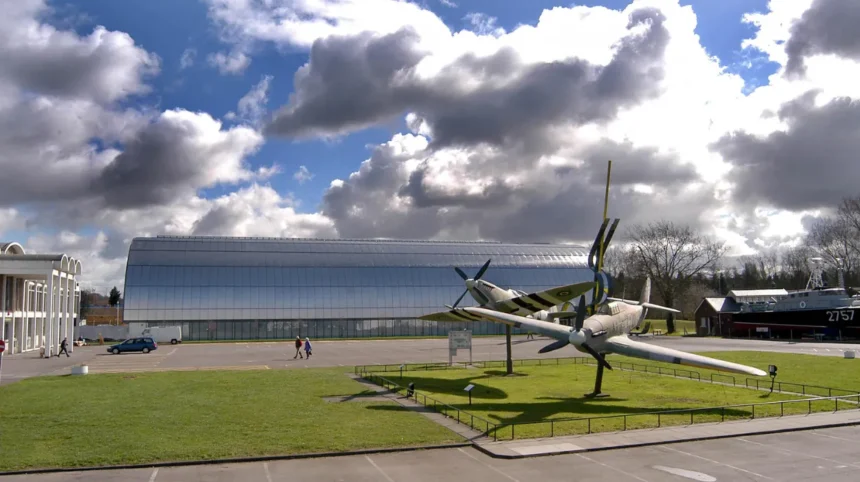
Cultural attractions include the Royal Air Force Museum in Colindale, which houses extensive aviation collections and historic aircraft exhibits across multiple large exhibition hangars, drawing domestic visitors and international tourists alike. Commercial leisure hubs, such as the Brent Cross Shopping Centre and emerging dining precincts, provide extensive retail and hospitality options that sustain the local economy.
Why is Barnet considered one of the best places to live in North London?
Barnet is considered a top place to live because it combines strong transport links, excellent schools, diverse housing options, large green spaces, and modern regeneration projects. The borough offers suburban living with convenient access to central London, making it attractive for families, professionals, and long-term residents.