Golders Green is known for its diverse cultural identity, strong Jewish heritage, specialist shops, restaurants, transport connections, and proximity to Hampstead Heath and Golders Hill Park. The North London district combines a busy commercial centre with established residential neighbourhoods and significant green spaces.
- What is Golders Green best known for?
- How did Golders Green develop into the area it is today?
- Why is Golders Green associated with Jewish culture?
- What makes Golders Green’s food scene distinctive?
- What is Golders Green known for when it comes to shopping?
- What green spaces is Golders Green known for?
- Why is Golders Green important for public transport?
- What cultural communities are represented in Golders Green?
- What historic and cultural landmarks can visitors see in Golders Green?
- Is Golders Green a good place for visitors to spend a few hours?
- What is the future relevance of Golders Green’s identity?
- Why does Golders Green remain distinctive in North London?
What is Golders Green best known for?
Golders Green is best known for its Jewish heritage, multicultural community, specialist food shops, restaurants, Northern Line station, and access to Golders Hill Park and Hampstead Heath. Its commercial centre combines independent businesses, international influences, community institutions, and established residential streets.
Golders Green is a district in the London Borough of Barnet in North London. It sits close to Hampstead Garden Suburb, Hendon, Childs Hill and Hampstead Heath. Barnet Council describes Golders Green as a vibrant and diverse town centre with strong transport connections, independent shops and a cosmopolitan community.
The area’s identity developed rapidly during the early twentieth century. Its population increased from 4,465 in 1911 to 17,837 in 1931 as housing and transport expanded. The arrival and development of the Underground helped transform Golders Green from a comparatively rural locality into a substantial suburban centre.
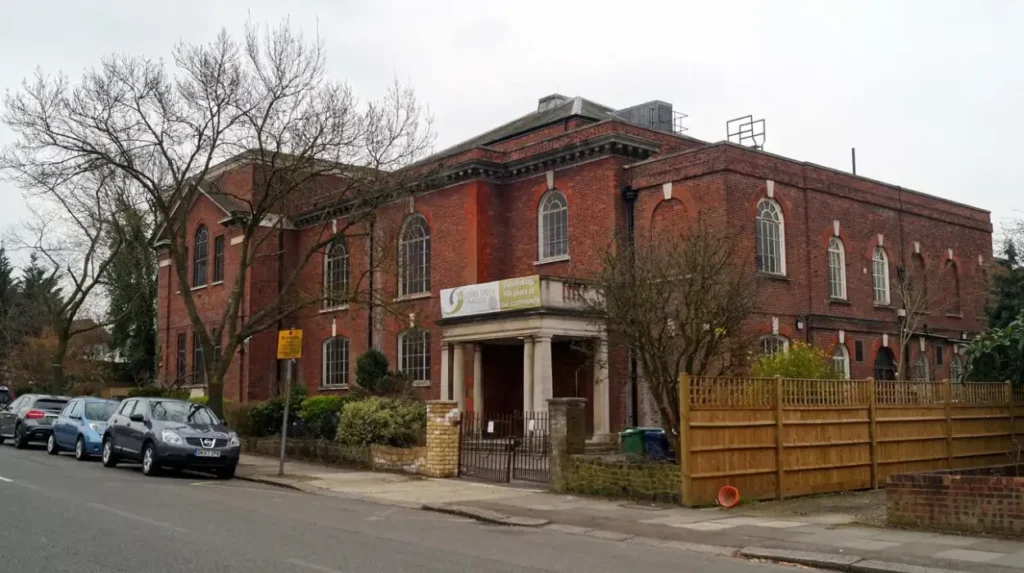
Today, Golders Green is particularly associated with Jewish life. Barnet Council records the establishment of Jewish family shops and homes by 1910 and estimates that around 300 Jewish families were living in the area by 1915. Dunstan Road synagogue opened in 1922, reinforcing the area’s developing Jewish community infrastructure.
Its identity is broader than one community. Barnet’s Golders Green Town Centre Strategy identifies sizeable Jewish, Korean, Greek, Polish and Japanese communities among the area’s diverse population. This diversity is visible in the area’s food businesses, specialist retailers, religious institutions and everyday services.
For visitors, Golders Green works as both a destination and a base. Its commercial centre provides food, shopping and local services, while nearby green spaces provide access to walking, recreation and outdoor attractions.
How did Golders Green develop into the area it is today?
Golders Green developed rapidly after the Underground arrived, with population growth, suburban housing and commercial parades transforming the locality during the early twentieth century. Jewish settlement became particularly significant, while transport infrastructure connected the growing neighbourhood with central and northern London.
The modern character of Golders Green is closely connected with transport-led suburban development. The Northern Line reached Golders Green in 1907, creating a direct railway connection that encouraged residential expansion. Transport infrastructure subsequently supported the growth of shops, services and community facilities.
Barnet Council’s historical record shows the scale of this transformation. The local population increased more than fourfold between 1911 and 1931. The same historical record notes that the Ionic cinema and Hippodrome opened in 1913, while the Refectory opened in 1916.
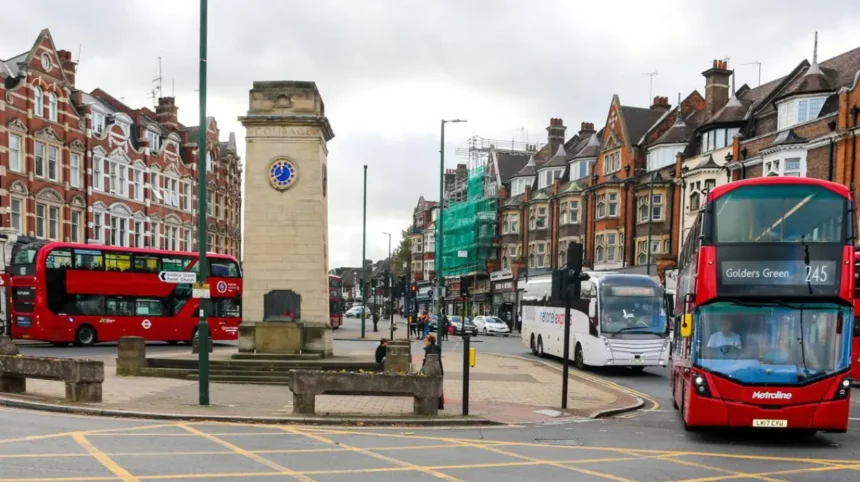
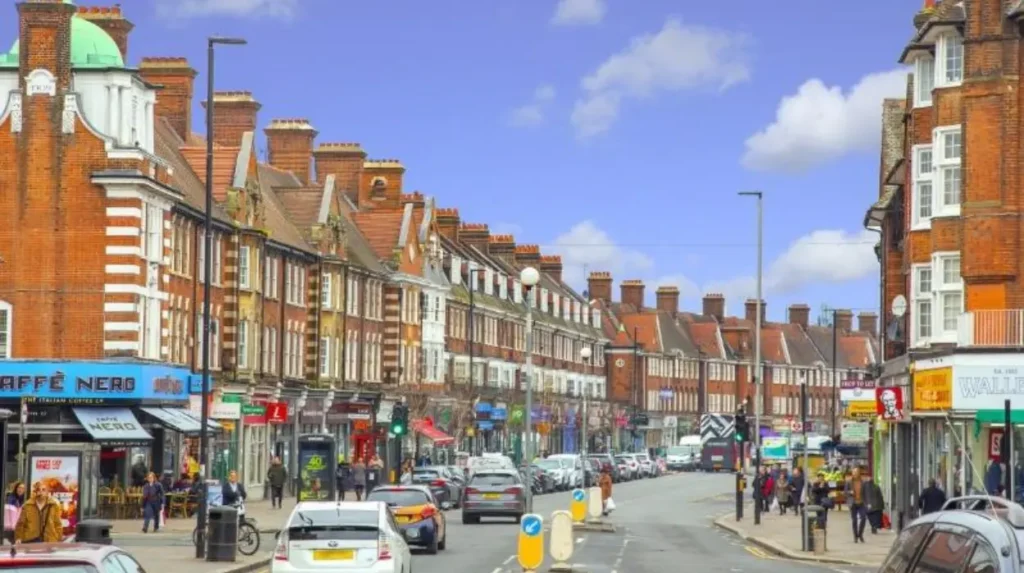
The commercial centre developed around Golders Green Road, North End Road and Finchley Road. These routes remain central to the area’s physical structure. Barnet’s conservation-area documentation identifies the junction of these roads, marked by the war memorial, as a notable centre of the conservation area.
The area’s built environment also reflects its suburban expansion. Golders Green town centre is largely formed from purpose-built shopping parades with commercial premises on the ground floor and residential accommodation above. This arrangement remains visible along the principal streets.
As you explore the modern streets, you are crossing land with a deep local heritage. Read the full [Insert Anchor Text for History Article Here] to understand how Golders Green developed from its earlier landscape into a major North London neighbourhood.
The historical development explains why Golders Green feels different from many purely commercial London centres. Its high street is integrated into a residential district, while its cultural institutions and specialist businesses reflect decades of community development.
Why is Golders Green associated with Jewish culture?
Golders Green is strongly associated with Jewish culture because Jewish families settled there from the early twentieth century, followed by synagogues, community organisations, kosher food businesses, specialist retailers and restaurants. This heritage remains an important part of the area’s commercial, religious and social identity.
Jewish heritage is one of the defining characteristics of Golders Green. Barnet Council’s local history records Jewish family shops and homes in the area by 1910 and approximately 300 Jewish families by 1915. The first public Jewish service in the area was held in 1913.
Dunstan Road synagogue opened in 1922. By 1959, approximately one quarter of the population of the former Borough of Hendon, which included Golders Green, was Jewish. These developments established a long-term institutional and commercial presence.
The influence remains visible today. Barnet Council’s conservation-area assessment identifies specialist businesses and catering serving the Jewish community as an established feature of the town centre. Its documentation specifically describes shops and restaurants serving local Jewish residents and notes the importance of specialist retail.
Visitors encounter this heritage through food shops, bakeries, restaurants, community facilities and religious buildings. Jewish cultural identity is therefore not confined to individual institutions. It forms part of the wider streetscape and commercial pattern.
Golders Green also demonstrates how migration and community settlement can shape an urban neighbourhood over generations. Businesses established to meet local cultural needs become part of the wider visitor experience and contribute to the district’s recognisable identity.
What makes Golders Green’s food scene distinctive?
Golders Green is known for a specialist and international food scene shaped by Jewish, Japanese, Korean, Greek, Polish and other communities. Its commercial streets contain restaurants, cafés, delis, bakeries, supermarkets and specialist food retailers serving both residents and visitors.
Food is one of the clearest ways to experience Golders Green’s cultural diversity. The town centre contains a combination of independent businesses, specialist retailers, cafés, restaurants and larger supermarkets.
Barnet Council’s conservation-area assessment specifically identifies food businesses serving Jewish and Japanese communities. It also records numerous cafés and restaurants as important components of the town centre’s leisure economy.
The wider Golders Green Town Centre Strategy identifies Jewish, Korean, Greek, Polish and Japanese communities as significant parts of the local population. Their presence contributes to the range of food and retail businesses available in the district.
For visitors, this means Golders Green is particularly suited to food-focused exploration. The main commercial streets provide access to specialist ingredients, prepared food and international dining without requiring a journey into central London.
Golders Green Road is particularly important for local shopping. Historical council assessments describe independent food retailers including butchers, delis, bakeries, greengrocers and ethnic convenience stores. The area also contains cafés, restaurants, takeaways and other food-related businesses.
The food scene also supports the area’s role as a practical local centre. Residents use the businesses for everyday shopping, while visitors can encounter products and cuisines associated with communities that have helped shape Golders Green over several generations.
What is Golders Green known for when it comes to shopping?
Golders Green is known for specialist independent shopping alongside national chains and everyday services. Its commercial centre contains more than 25,000 square metres of retail space, with businesses serving local residents, specialist communities, visitors and the surrounding neighbourhoods.
Shopping is another defining part of Golders Green’s identity. Barnet Council states that the town centre contains more than 25,000 square metres of retail space and many independent shops. The commercial offer extends beyond conventional high-street chains.
The conservation area is organised around several important roads, particularly Finchley Road, Golders Green Road and North End Road. Purpose-built shopping parades line these streets, with retail premises commonly occupying ground floors and homes above.
Specialist retail is particularly significant. Historical council assessments recorded independent food shops, bakeries, butchers, delis, greengrocers, pharmacies, gift shops, stationers and clothing businesses. Services include opticians, hairdressers, dry cleaners, estate agents and financial services.
This mixture gives Golders Green a practical commercial function. The town centre is not solely focused on visitors. It serves the daily requirements of a substantial residential population while also attracting customers from neighbouring districts.
The commercial identity is also linked to the area’s cultural communities. Specialist products create a shopping environment that differs from more standardised retail centres. This makes Golders Green Road and the surrounding high streets particularly relevant for visitors interested in local culture and specialist food shopping.
What green spaces is Golders Green known for?
Golders Green is known for its close relationship with Hampstead Heath and Golders Hill Park, which provide landscaped gardens, walking routes, recreational facilities, wildlife attractions and open space close to the commercial centre and residential neighbourhoods.
The area’s strongest natural attraction is Golders Hill Park, which forms part of the Hampstead Heath landscape managed by the City of London. The park is on North End Way and is approximately a 14-minute walk from Golders Green Underground station.
Golders Hill Park contains a café, tennis courts, all-weather table tennis tables, a bandstand, a children’s playground, a walled garden, a stumpery and Golders Hill Park Zoo. These facilities give visitors several different ways to use the park.
The park also has accessibility features. Many paths are surfaced and even, entrances are step free, and accessible toilets are available. These facilities support visitors using wheelchairs or mobility aids.
The wider Hampstead Heath landscape provides an even larger green-space setting. Golders Hill Park sits close to other parts of the Heath, including the Hill Garden and Pergola and the Vale of Health.
For visitors combining shopping with outdoor recreation, this geography is important. Golders Green allows a trip to move from a busy commercial high street to landscaped parkland within a relatively short distance.
Why is Golders Green important for public transport?
Golders Green is an important North London transport hub because its Underground station sits on the Northern Line and the surrounding station area is served by several bus routes. This connectivity supports commuting, local shopping, tourism and access to nearby attractions.
Golders Green Underground station is on the Northern Line. Transport for London lists the station at North End Road, NW11 7RN, with lifts, Wi-Fi, waiting facilities and ticket halls.
The station’s location helped shape the area’s development. Barnet Council records rapid population growth following the development of the Underground station, with the shopping parades expanding alongside the growing residential population.
Bus connections add another layer of accessibility. TfL currently lists routes including 210, 268, 310 and N5 serving the Golders Green Underground station area.
The station also provides a useful starting point for visitors travelling towards Golders Hill Park. The City of London identifies Golders Green Underground station as the nearest station to the park, with the 210 and 268 buses also serving the area.
Transport therefore forms part of Golders Green’s identity rather than simply providing access to it. The station supports the area’s role as a residential centre, commercial destination and gateway to nearby green spaces.
What cultural communities are represented in Golders Green?
Golders Green is home to a diverse mix of communities, including sizeable Jewish, Korean, Greek, Polish and Japanese populations identified by Barnet Council. Their presence is reflected through specialist businesses, food outlets, community facilities, religious institutions and cultural traditions.
Golders Green’s multicultural character is formally recognised in Barnet’s town-centre planning documents. The council identifies sizeable Jewish, Korean, Greek, Polish and Japanese populations among the communities contributing to the area’s distinctive identity.
This diversity is particularly visible in commercial activity. Specialist shops and restaurants provide products and services associated with different cultural traditions. The town centre therefore functions as both a conventional suburban high street and a specialist destination.
Japanese influence is specifically identified in Barnet’s conservation-area documentation, which notes a tradition of catering for Japanese as well as Jewish communities.
The cultural composition also changes the way visitors experience the area. Food, language, religious buildings, specialist retail and community services create a streetscape that reflects migration and long-term settlement.
Golders Green’s multicultural identity is therefore a combination of population history and visible everyday activity. It is expressed through businesses and institutions rather than existing only as a demographic statistic.
What historic and cultural landmarks can visitors see in Golders Green?
Golders Green’s notable landmarks include its war memorial, historic shopping parades, former entertainment buildings, religious institutions and nearby green-space attractions. These sites reflect the area’s twentieth-century suburban expansion, community development, commercial growth and continuing connection with Hampstead Heath.
The Golders Green War Memorial stands at the junction of the principal roads in the conservation area. Barnet Council records its unveiling in April 1923. It forms an identifiable landmark within the town centre.
The former Ionic cinema and Hippodrome are also part of Golders Green’s entertainment history. Both opened in 1913 during the period when the district was expanding rapidly.
The Refectory, opened in February 1916 and now a public house, is another historic reference point. Barnet’s local history notes that it is considered by some to have been the first restaurant whose kitchens were entirely powered by electricity.
Religious architecture also forms an important part of the area’s cultural landscape. Dunstan Road synagogue opened in 1922, reflecting the development of the Jewish community during the early twentieth century.
The conservation area’s built form is equally significant. The shopping parades preserve the physical pattern created during the area’s rapid suburban development, with commercial premises at street level and residential accommodation above.
Together, these landmarks show that Golders Green’s identity extends beyond shops and restaurants. Its streets contain evidence of demographic change, suburbanisation, entertainment, community life and twentieth-century urban development.
Is Golders Green a good place for visitors to spend a few hours?
Golders Green works well for a short North London visit because visitors can combine specialist shopping, international food, cultural landmarks, public transport and nearby green spaces within one connected area. Golders Hill Park and Hampstead Heath provide an outdoor extension to the town centre.
The area’s compact combination of commercial and recreational attractions supports short visits. A visitor can arrive by Underground, explore the main shopping streets, eat at a local restaurant and continue towards Golders Hill Park.
Golders Hill Park provides the strongest outdoor complement to the town centre. Its café, gardens, zoo, playground, tennis courts and other facilities create a structured recreational destination.
The town centre itself provides a different type of experience. Its specialist shops and restaurants reflect the area’s cultural diversity and long-established communities. Barnet Council describes Golders Green as a cosmopolitan town centre with independent shops and strong connections to central London.
Visitors interested in architecture and history can also examine the conservation-area streetscape. The combination of purpose-built shopping parades, residential accommodation, the war memorial and historic buildings illustrates the area’s twentieth-century development.
This combination makes Golders Green particularly relevant to visitors who want more than a single attraction. Its identity is distributed across the town centre, transport network, community institutions, food businesses and surrounding landscape.
Explore More Area Guide
What Is Edgware Known For? History, Shops and Transport
What Is Hendon Known For? History, RAF Museum & Landmarks
What is the future relevance of Golders Green’s identity?
Golders Green’s future identity is closely connected with maintaining its diverse community, strengthening local businesses, improving public spaces and transport, and protecting its historic character. Barnet’s planning strategy specifically links future town-centre improvements with heritage, sustainability and community life.
Golders Green continues to be treated as an important town centre within Barnet’s planning framework. The council’s wider growth strategy identifies Golders Green as one of the eastern borough centres where investment can support local retail, community facilities and leisure uses.
Barnet’s Golders Green Town Centre Strategy sets out objectives covering the high street, public spaces, sustainable transport, historic assets, business opportunities and community involvement. The strategy also identifies the importance of protecting the area’s heritage while adapting the centre for future needs.
This approach reflects the area’s established character. Golders Green is not defined by one attraction or one commercial function. Its identity comes from the interaction between community history, specialist businesses, transport, residential neighbourhoods and green infrastructure.
The council also identifies Golders Green as part of a wider network of town centres across Barnet. Current planning priorities include improving town-centre character, healthy streets, local retail and connections between public transport and surrounding areas.
For visitors, this means the characteristics that make Golders Green distinctive remain relevant: cultural diversity, specialist food, independent businesses, historic streets, public transport and access to major green spaces.
Why does Golders Green remain distinctive in North London?
Golders Green remains distinctive because its identity combines Jewish heritage, multicultural communities, specialist commerce, twentieth-century suburban history, Northern Line connectivity and direct access to major green spaces. Few aspects of the district operate separately; together they define its recognisable North London character.
Golders Green’s cultural identity is rooted in more than a century of development. Jewish settlement became established in the early twentieth century, while other communities subsequently contributed to the area’s commercial and social landscape.
Its high street remains important because it serves both residents and visitors. More than 25,000 square metres of retail space, independent shops, restaurants and local services support a functioning town centre rather than a purely tourist-oriented destination.
Its green-space connections add another dimension. Golders Hill Park provides landscaped gardens, recreational facilities and a small zoo, while the wider Hampstead Heath landscape offers extensive open space.
Transport reinforces the area’s accessibility. The Northern Line station and several bus routes connect Golders Green with other parts of North London and central London.
The result is a district with several clearly documented defining characteristics. Golders Green is known for its Jewish heritage, multicultural population, specialist shopping, food culture, historic suburban environment, transport connections and proximity to Hampstead Heath.
For travellers exploring North London, these characteristics provide a clear framework for understanding the area. Golders Green is both a functioning residential community and an established commercial centre, with cultural and environmental attractions that extend beyond its main high street.
What is Golders Green known for?
Golders Green is known for its strong Jewish heritage, multicultural communities, specialist shops, international restaurants, excellent transport links and proximity to Golders Hill Park and Hampstead Heath.