Key Points
- Lucy Powell criticised broadcasters for airing Russell Brand’s prison message.
- Brand’s wife, Laura Gallacher, read the message on the couple’s YouTube podcast.
- Brand said he was not guilty of the offences for which he is serving a 10-and-a-half-year sentence.
- The Ministry of Justice is investigating whether the publication breached prison rules.
- Ministers are considering wider questions about the age of consent following allegations involving Brand.
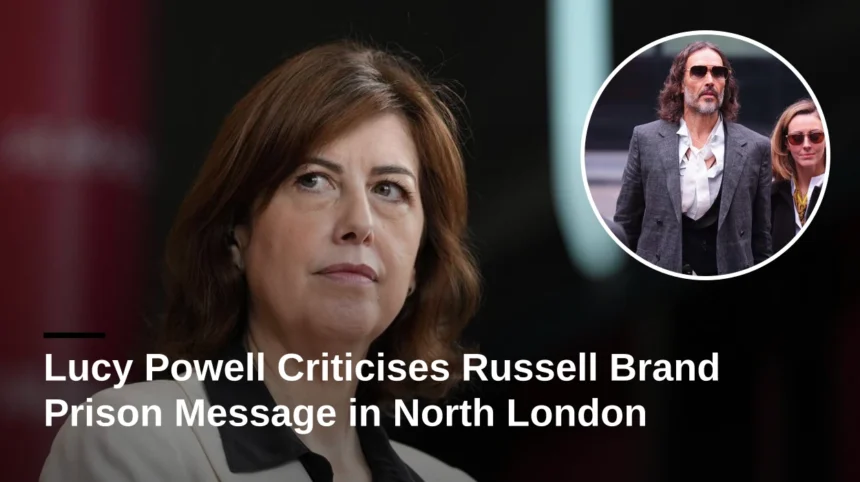
North London (North London News) November 18, 2026 – Labour deputy leader and Education Secretary Lucy Powell has criticised media organisations for airing a message from jailed comedian Russell Brand, saying broadcasters should not have amplified his claims of innocence. The message was read by Brand’s wife, Laura Gallacher, on a YouTube podcast on Sunday. Brand is serving a 10-and-a-half-year prison sentence after being convicted of rape and three sexual assaults. Authorities are investigating whether he breached prison rules by arranging for the message to be made public.
- Key Points
- Why did Lucy Powell criticise media coverage of Russell Brand’s message?
- What did Russell Brand say in the prison message?
- What is being investigated by prison authorities?
- Could the case lead to changes in the age of consent?
- What is the background to Lucy Powell’s comments?
- How could this affect Lucy Powell’s audience?
Why did Lucy Powell criticise media coverage of Russell Brand’s message?
As reported by the BBC and the Evening Standard, Lucy Powell told LBC Radio that she was “appalled” by the decision of mainstream media organisations to transmit the clip. She said the message was from a convicted offender who was showing no remorse or sensitivity towards victims.
“It’s a platform I don’t think should have been amplified, to be honest,” Lucy Powell said.
The recording was aired or discussed by several broadcasters and programmes, including BBC Radio 4’s Today, ITV’s This Morning, Sky News, LBC and The News Agents podcast.
Lucy Powell also addressed her earlier association with Russell Brand. She said Ed Miliband’s appearance on Brand’s online programme in 2015 took place before the allegations and convictions, creating a different context from the present circumstances.
What did Russell Brand say in the prison message?
Laura Gallacher read a message in which Russell Brand said he was not guilty of the offences for which he had been imprisoned. The message was published through the couple’s YouTube channel.
Downing Street described the message as “clearly appalling”. Justice Secretary Alex Norris said prisoners are prohibited from making public statements that cause distress to victims and cannot avoid those rules by asking another person to publish comments on their behalf.
What is being investigated by prison authorities?
The Ministry of Justice is carrying out an urgent investigation into whether Russell Brand knew that his comments would be published and whether this amounted to a breach of prison regulations. Reports said prisoners require permission for interviews or calls intended for broadcast and cannot ask people inside or outside prison to distribute statements on their behalf.
Possible disciplinary measures could include restrictions on Brand’s prison telephone calls. Any action would depend on the investigation’s findings and evidence about how the message was prepared and released.
Could the case lead to changes in the age of consent?
Lucy Powell said the Government was seriously examining whether changes to the law on the age of sexual consent would be workable. She said the issue required consideration of victims, enforcement and relationships involving teenagers.
Adults of any age can currently have consensual sex with 16- and 17-year-olds under UK law. Mia Latter, who has waived her anonymity, has publicly alleged that Brand raped her when she was 16 and has called for a staggered age of consent.
Work and Pensions Secretary Pat McFadden said discussions about a staggered age of consent would take place. Justice minister Lord Lemos told the House of Lords that the Law Commission was examining consent as part of its future work, while warning that any change would be significant and far-reaching.
What is the background to Lucy Powell’s comments?
Russell Brand was sentenced to 10-and-a-half years in prison after being convicted of rape and three sexual assaults involving four women between 2004 and 2009. The convictions followed allegations and investigations involving Brand’s conduct towards women.
Brand’s prison message came after Laura Gallacher read his comments on the couple’s Sunday Service podcast. The publication prompted the Ministry of Justice investigation into possible breaches of prison rules concerning public statements by prisoners.
The wider legal debate followed public allegations by Mia Latter and calls for stronger protection for teenagers in relationships with substantially older adults. Allegations involving other high-profile entertainers have also contributed to discussion about whether the current law adequately addresses sexual exploitation.
The Government has not announced a final decision to change the age of consent. Ministers have said any review would need to consider victims’ views, enforcement and the potential effects on teenage relationships.
How could this affect Lucy Powell’s audience?
Lucy Powell’s criticism is likely to keep attention focused on how broadcasters report statements from convicted offenders, particularly when those statements challenge court outcomes or may distress victims.
For victims and survivors, the debate may increase scrutiny of whether repeating such messages gives them unnecessary reach. For broadcasters, it may encourage tighter editorial assessments before airing statements made through relatives or social-media channels.
For parents, teenagers and campaigners, the accompanying discussion about the age of consent could increase interest in any Law Commission or Government review. No legal change has yet been confirmed, and the impact on young people will depend on any proposals ultimately brought forward.