
Islington’s former workhouses reveal how poverty, public assistance and social welfare developed in North London between the eighteenth and twentieth centuries. These institutions provided accommodation, food, medical treatment and employment for people experiencing poverty. They also reflected the strict social attitudes and government policies that shaped Britain’s historical poor relief system.
- Why Were Workhouses Established in Islington?
- Where Was Islington’s First Parish Workhouse Located?
- What Was the History of the Liverpool Road Workhouse?
- How Did Clerkenwell Workhouse Support Poor Residents?
- How Did the 1834 Poor Law Amendment Act Change Islington’s Workhouses?
- What Was the St John’s Road Workhouse in Upper Holloway?
- What Were Conditions Like Inside Islington’s Victorian Workhouses?
- What Other Poor Relief Institutions Operated Across Islington?
- How Did Islington’s Workhouses Become Public Assistance Institutions?
- Where Can Visitors Explore Islington’s Former Workhouse Locations Today?
- Where Can Researchers Find Historical Records of Islington’s Workhouses?
- Why Are Islington’s Former Workhouses Important to London’s Social History?
The history of Islington’s workhouses centres on several important locations, including the former St Mary’s Parish Workhouse on Liverpool Road, the St John’s Road Workhouse in Upper Holloway and Clerkenwell Workhouse near Farringdon Road. Each institution reflects a different stage in the administration of poverty, from parish-based assistance to organised Poor Law institutions.
These buildings served people who experienced unemployment, illness, disability, homelessness and old age. Their residents included children, single mothers, elderly people and individuals unable to support themselves. Workhouse administration involved local parish authorities, Poor Law officials, medical officers and appointed guardians.
Today, the former workhouse sites form part of Islington’s wider architectural and social history. Some buildings disappeared through redevelopment, while surviving structures and archival collections preserve evidence of their original purposes.
Understanding these institutions provides visitors with a deeper appreciation of Islington’s historic neighbourhoods, including Barnsbury, Upper Holloway and Clerkenwell.
Why Were Workhouses Established in Islington?
Workhouses were established in Islington to provide organised relief for people experiencing poverty, unemployment, illness and homelessness. Parish authorities financed these institutions through local taxes and required many residents to undertake work in exchange for accommodation, food and basic assistance.
The history of English workhouses developed from the Elizabethan Poor Laws. The Poor Relief Act of 1601 established a framework that made individual parishes responsible for supporting people who could not maintain themselves.
Under this system, local officials collected a tax known as the poor rate. Property owners contributed towards the cost of supporting people in financial difficulty. Parish overseers administered assistance and decided how resources were distributed.
Islington’s population expanded significantly during the eighteenth and nineteenth centuries. Its development as a residential and commercial district increased demand for organised poor relief. Population growth, rising living costs and insecure employment placed pressure on local parish resources.
Workhouses offered one method of managing this responsibility. They provided accommodation for people who lacked financial support and organised their daily activities around institutional routines.
Residents received basic necessities, including:
- Accommodation and meals, such as bread, porridge and cooked food.
- Medical attention for illnesses and physical disabilities.
- Clothing and bedding for people without adequate possessions.
- Work opportunities involving activities such as spinning, sewing and oakum picking.
- Supervision by appointed masters, matrons and other staff.
The system also reflected contemporary beliefs about poverty. Authorities frequently distinguished between people considered unable to work and those believed capable of earning a living.
This distinction influenced the treatment of workhouse residents. Elderly people, children and individuals with serious illnesses often received different forms of assistance from able-bodied adults.
The workhouse therefore operated as both a welfare institution and a system of social control.
Where Was Islington’s First Parish Workhouse Located?
Islington’s earliest recorded parish workhouse probably operated at Stroud Green around 1726. Further premises followed on Holloway Road around 1731 before the parish established a larger permanent institution near Liverpool Road in 1777.
Historical research identifies several locations associated with the early administration of poor relief in St Mary’s parish.
The first recorded workhouse arrangement dates to approximately 1726, when the parish vestry reportedly hired a house at Stroud Green. A vestry was a local administrative body responsible for parish affairs, including poor relief.
Around 1731, another workhouse operated on Holloway Road near Ring Cross. This establishment was shared with Hornsey, demonstrating how neighbouring communities organised assistance before the development of larger Poor Law institutions.
The parish subsequently used different rented premises. One recorded location in 1758 stood on Lower Street, near the chapel. Historical accounts suggest that this property was possibly an old soap house or a building known as Ward’s Place.
Residents undertook practical work inside these early establishments. Activities included spinning materials and picking oakum.
Oakum picking involved separating old tarred rope into fibres. Workers reused these fibres for sealing wooden ships and other practical purposes. The activity required repetitive manual labour and became common in British workhouses.
A parliamentary survey conducted in 1776–77 recorded a parish workhouse at St Mary’s, Islington, with accommodation for approximately 60 residents.
These early arrangements demonstrate that Islington’s poor relief system developed gradually. The parish moved from rented properties towards purpose-built accommodation as the demand for institutional assistance increased.
The establishment of a permanent workhouse also created a physical landmark within the expanding residential district.
What Was the History of the Liverpool Road Workhouse?
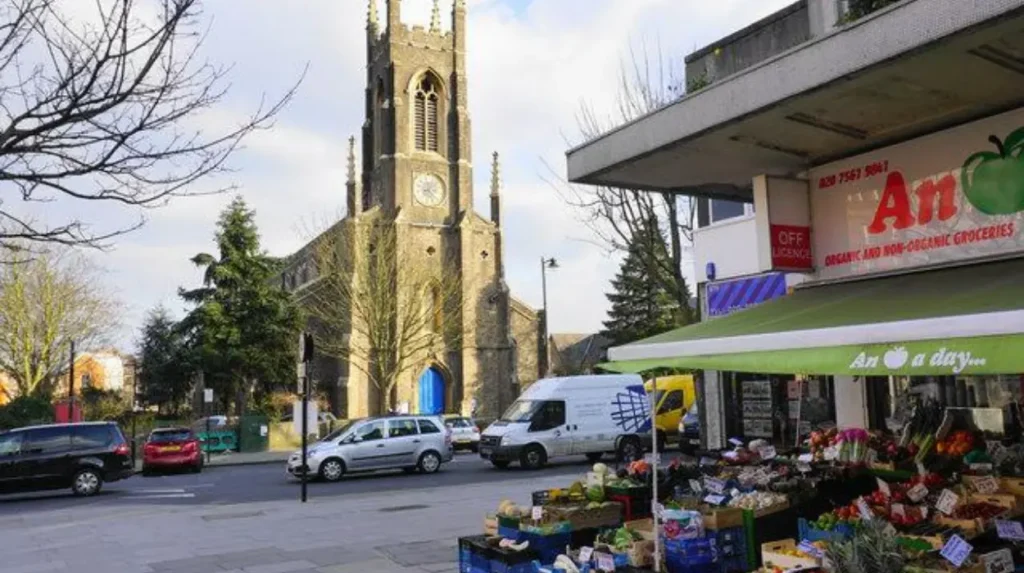
The Liverpool Road Workhouse opened in 1777 after a local Act of Parliament authorised a larger institution for St Mary’s parish. Built for approximately 120 residents, it remained in use until the 1860s and became an important centre of Islington’s eighteenth-century poor relief system.
The Liverpool Road Workhouse represented a major development in Islington’s approach to poverty.
In 1776, a Local Act enabled the parish to establish a new workhouse. The following year, the institution was constructed on land donated by Mrs Amy Hill.
The site stood at the junction of Liverpool Road and the western section of what is now Upper Barnsbury Street. Historical descriptions refer to the location as the Hundred Acre in the Back Road.
The original building had a three-storey brick structure with a central section and two wings. It also included a vegetable garden, reflecting the institution’s need to manage food supplies and everyday expenses.
The original accommodation was designed for approximately 120 residents. However, the number of people requiring assistance increased substantially.
By 1814, the workhouse accommodated 407 people. Historical records identify the population as:
- 95 men.
- 186 women.
- 67 boys.
- 48 girls.
- 11 people recorded as lunatics.
The figures demonstrate the scale of demand for parish assistance during the early nineteenth century.
The workhouse also had an infirmary for residents requiring medical attention. Additional accommodation was constructed over time, including extensions to the front of the central building in 1802.
Daily work inside the Liverpool Road institution
Residents performed different tasks according to their assigned responsibilities.
Men commonly picked oakum and repaired local footpaths. Women undertook sewing and other forms of domestic work, known historically as slop-work. Some female residents also provided nursing assistance.
The institution therefore combined accommodation, employment and basic healthcare.
Its operation depended on a master and matron who supervised residents and managed daily activities. Their responsibilities included maintaining discipline, organising labour and overseeing provisions.
The closure of the Liverpool Road Workhouse
The Liverpool Road institution continued operating until the 1860s. Changes in administration, increasing demand and concerns about building conditions contributed to the development of a replacement institution in Upper Holloway.
The former site was subsequently redeveloped. Its original workhouse buildings disappeared, although historical maps, photographs and surviving records preserve evidence of its location.
The site is particularly important for understanding the early history of Barnsbury and the development of organised poor relief in Islington.
How Did Clerkenwell Workhouse Support Poor Residents?
Clerkenwell Workhouse was established in 1727 for the parishes of St James and St John. Located on the western side of Farringdon Road, it provided institutional relief, employment and assistance for local residents experiencing poverty before nineteenth-century Poor Law reforms.
Clerkenwell developed its own arrangements for managing poverty during the eighteenth century.
The workhouse was established in 1727 to serve the parishes of St James and St John. Its location was on the western side of Farringdon Road, historically known as Coppice Row.
The institution formed an important part of local social administration. Parish authorities organised accommodation, employment and financial assistance for people who could not support themselves.
Unlike a modern council-run welfare office, a historical workhouse provided assistance through a residential institution. People entering the building became subject to its routines and administrative rules.
Clerkenwell’s poor relief system also included outdoor relief. This arrangement provided financial or material assistance to people who remained in their own homes rather than entering a workhouse.
Historical records reveal the range of activities associated with the institution.
These include:
- Settlement examinations, which investigated a person’s legal parish responsibility.
- Indoor relief registers, which documented assistance provided to residents inside the workhouse.
- Outdoor relief registers, which recorded support provided outside the institution.
- Medical relief books, which documented healthcare assistance.
- Labour records, which recorded work undertaken by residents.
- Punishment books, which documented disciplinary matters.
The surviving records demonstrate that workhouse administration involved much more than providing beds and meals.
The importance of Clerkenwell’s historical records
Islington Council’s Local History Centre preserves important records relating to Clerkenwell Workhouse.
The surviving collection includes settlement examinations from 1777–1782 and 1785–1851. It also contains admission registers, indoor relief lists, medical records and labour books from the nineteenth century.
A particularly significant document is the workhouse punishment book covering 1853–1857.
These materials provide evidence of how officials administered poor relief and supervised residents.
The records also help family historians investigate ancestors who received assistance from the institution.
Clerkenwell Workhouse is therefore an important part of Islington’s social history, even though its original buildings no longer define the surrounding streetscape.
How Did the 1834 Poor Law Amendment Act Change Islington’s Workhouses?
The Poor Law Amendment Act 1834 reorganised poor relief across England and Wales by encouraging parishes to form Poor Law Unions. Islington retained its local arrangements initially, while neighbouring districts developed union-based administration and new institutional responsibilities.
The Poor Law Amendment Act 1834 introduced significant changes to Britain’s welfare administration.
Before the legislation, individual parishes carried much of the responsibility for supporting poor residents. The new system grouped parishes into Poor Law Unions, each administered by a Board of Guardians.
Boards of Guardians were locally elected or appointed administrative bodies responsible for managing poor relief. Their responsibilities included workhouse management, financial administration and the supervision of assistance.
The reform promoted the workhouse test. Under this principle, able-bodied people seeking institutional relief faced workhouse conditions intended to make receiving assistance less attractive than independent employment.
This approach reflected the government’s belief that poor relief required stricter administration and financial control.
Why did Islington follow a different administrative route?
St Mary’s, Islington, was among several London parishes that retained local arrangements after 1834.
Its status under local legislation meant that it remained largely outside the immediate provisions of the new Poor Law system.
The parish continued operating its existing workhouse on Liverpool Road while neighbouring districts reorganised their institutions.
Clerkenwell also experienced changes in administration, although its institutional history followed a different timetable.
The Holborn Poor Law Union was established in 1836. It became responsible for the workhouse on Gray’s Inn Road and developed institutional facilities in the wider Clerkenwell area.
In 1867, St Mary’s, Islington, became constituted as a Poor Law Parish under the 1834 legislation.
This change marked the beginning of a more centralised approach to Islington’s poor relief administration.
The subsequent construction of the St John’s Road Workhouse reflected the changing expectations of nineteenth-century institutional welfare.
The broader Poor Law system continued until the Local Government Act 1929 abolished Poor Law Unions and Boards of Guardians from 1 April 1930.
The responsibility for poor relief subsequently transferred to local authorities.
What Was the St John’s Road Workhouse in Upper Holloway?
The St John’s Road Workhouse opened in Upper Holloway in 1869, replacing the older Liverpool Road institution. Designed by R H Burden, the complex provided accommodation, administrative facilities and medical services for Islington’s growing population of people requiring poor relief.
The St John’s Road Workhouse represented a new phase in Islington’s institutional history.
By the middle of the nineteenth century, the Liverpool Road buildings faced increasing pressure. Concerns about overcrowding, accommodation and medical facilities strengthened the case for a larger establishment.
In 1865, Islington acquired a site measuring approximately 7.5 acres at Upper Holloway. The land provided space for a new workhouse and associated facilities.
Construction began in 1868–69, and the institution opened in 1869.
Architectural design and building arrangement
Architect R H Burden designed the complex around a T-shaped layout. The building used yellow brick and cost approximately £63,300.
Its design separated administrative areas from residential accommodation.
The main structure included:
- Central administrative offices and the master’s quarters.
- A western wing for male residents.
- An eastern wing for female residents.
- A dining hall with a chapel above it.
- Basement accommodation for storage.
- Separate infirmary buildings behind the main workhouse.
The arrangement reflected contemporary institutional planning. Separating accommodation by gender allowed administrators to supervise residents and organise daily activities.
The elevated Upper Holloway site also influenced the architectural design. The difference in ground levels allowed the architects to introduce basement accommodation and terraces along the main building.
Who lived at the St John’s Road Workhouse?
The institution accommodated people from different social and economic backgrounds.
Its residents included elderly people, individuals with disabilities, people experiencing unemployment, children and those requiring medical attention.
An 1889 account published in the magazine Sunday at Home described the Islington workhouse as an extensive complex containing a large population of older residents.
The account also stated that younger residents were transferred to other institutions, including Shadwell House.
This arrangement demonstrates that Islington’s poor relief system operated through a network of establishments rather than one building alone.
Medical services at the institution
The infirmary formed an important part of the St John’s Road complex.
Residents requiring treatment received medical attention within the workhouse system. Separate infirmary buildings provided dedicated facilities for patients.
The institution also developed receiving and casual wards in 1908. Casual wards provided temporary accommodation for people without permanent housing, including individuals travelling between districts.
The development of the St John’s Road institution illustrates the growing connection between poor relief and public healthcare in Victorian London.
What Were Conditions Like Inside Islington’s Victorian Workhouses?
Conditions inside Islington’s Victorian workhouses varied according to the building, period and resident’s circumstances. Institutions provided essential accommodation and healthcare, but overcrowding, strict discipline, poor sanitation and inadequate medical facilities created serious challenges.
Workhouse life followed a structured daily routine.
Residents lived according to institutional regulations established by the master, matron and local authorities. Meals, work, religious services and rest periods formed part of everyday administration.
Able-bodied residents generally performed assigned tasks. Elderly people and individuals with disabilities received different treatment depending on their physical condition.
The quality of accommodation also varied between establishments.
Living conditions at Liverpool Road
The Liverpool Road Workhouse experienced considerable pressure as its population increased.
Its original capacity of approximately 120 residents was significantly exceeded by 1814, when 407 people were recorded inside the institution.
This increase placed pressure on accommodation and facilities.
The infirmary also attracted criticism during the nineteenth century.
In 1865, The Lancet, a prominent British medical journal, investigated the conditions of several London workhouse infirmaries.
Its report on Islington criticised the Liverpool Road infirmary for inadequate ward design, poor lighting, insufficient ventilation and unsuitable sanitation arrangements.
The investigation described the building as structurally unsuitable for hospital purposes.
However, the report also acknowledged positive aspects of medical care. It recognised the efforts of medical officers and guardians to maintain an effective infirmary service despite the building’s limitations.
The investigation highlighted problems in the maternity ward, including inadequate furniture and poor standards of linen and cleanliness.
It also criticised the limited bathing arrangements for people entering the casual ward.
These observations demonstrate the difference between the provision of basic medical assistance and the quality of the physical environment.
Nursing and healthcare responsibilities
Nursing arrangements in Victorian workhouses also differed from modern professional healthcare systems.
At Liverpool Road, some nursing duties were undertaken by female inmates who received small payments.
The 1865 Lancet investigation acknowledged that some of these women demonstrated experience and competence in caring for patients.
However, reliance on resident labour also reflected the limited professional staffing arrangements of the period.
Discipline and institutional regulations
Workhouse authorities maintained rules governing residents’ behaviour.
Administrators controlled working hours, meals, accommodation and other aspects of institutional life.
Historical punishment books from Clerkenwell provide evidence that disciplinary procedures formed part of workhouse administration.
Nevertheless, workhouses were not prisons. Residents were not legally imprisoned simply because they entered an institution for relief.
Historical records also document people leaving and subsequently returning to workhouses.
These details provide a more complete understanding of workhouse life than descriptions based solely on institutional architecture.
What Other Poor Relief Institutions Operated Across Islington?
Islington’s historical poor relief network included workhouses, infirmaries, children’s homes, receiving homes and casual wards. Examples include the Highgate Hill Infirmary, the Andover Children’s Home and the receiving home at Hornsey Rise.
The development of poor relief extended beyond the principal workhouses.
Local authorities and Poor Law administrators established specialised institutions to support different groups of residents.
These establishments addressed medical needs, childcare, temporary accommodation and long-term institutional care.
Highgate Hill Infirmary
The Highgate Hill Infirmary provided medical accommodation within Islington’s wider Poor Law network.
Its surviving admission and discharge records cover 1873–1929.
The infirmary’s existence demonstrates how Poor Law authorities gradually developed separate facilities for residents requiring medical treatment.
The separation of medical accommodation from ordinary workhouse wards became increasingly important during the nineteenth century.
Andover Children’s Home
The Andover Children’s Home stood on Hornsey Road and provided institutional accommodation for children.
Its records include admission and discharge registers covering 1885–1933.
Other surviving documents include lists of children receiving Poor Law assistance between 1879 and 1930, alongside apprenticeship registers covering 1880–1911.
These records demonstrate how the welfare system managed children who lacked adequate family support.
Apprenticeship arrangements were particularly important in the historical system. Authorities placed some children with employers or tradespeople to receive practical training and enter employment.
Receiving Home at Hornsey Rise
The receiving home at Hornsey Rise operated during the early twentieth century.
Its admission and discharge records cover 1909–1931, while other documents record children accommodated there.
Receiving homes provided temporary accommodation and administrative arrangements for people entering the Poor Law system.
Cornwallis Road and Shadwell Road institutions
Additional records identify workhouse establishments at Cornwallis Road and Shadwell Road.
The Cornwallis Road records include admissions and discharges from 1885–1915. The Shadwell Road collection includes records from 1882–1888.
These institutions formed part of a wider network of accommodation and assistance serving people under Islington’s Poor Law administration.
The historical evidence shows that poor relief operated through interconnected establishments rather than isolated buildings.
How Did Islington’s Workhouses Become Public Assistance Institutions?
Islington’s workhouses continued operating after the nineteenth century as social welfare responsibilities changed. Following the abolition of Boards of Guardians in 1930, the St John’s Road institution became a Public Assistance Institution before closing permanently in 1972.
The early twentieth century brought important changes to Britain’s welfare administration.
The Local Government Act 1929 abolished Poor Law Unions and Boards of Guardians from April 1930. Their responsibilities transferred to local government authorities.
This reform changed the administrative structure of poor relief.
Former workhouses increasingly became known as Public Assistance Institutions. Their purpose continued to involve supporting people requiring accommodation and assistance, but the wider welfare system was gradually changing.
The transformation of St John’s Road
The St John’s Road Workhouse passed into the control of the London County Council (LCC).
The London County Council was the principal local government authority responsible for much of London’s administration between 1889 and 1965.
Under the new arrangements, the former workhouse became a Public Assistance Institution. It was subsequently known as Hillside.
The institution continued serving people requiring residential assistance during the twentieth century.
Its history demonstrates how Victorian workhouse buildings were adapted to meet changing public welfare responsibilities.
The establishment eventually closed in 1972.
Most of its original buildings were demolished following closure. The surviving former boardroom and office block remains an important physical connection with the institution’s history.
The remainder of the former site was redeveloped for housing and public open space.
Why did the workhouse system disappear?
The disappearance of traditional workhouses resulted from wider changes in public policy.
During the twentieth century, responsibility for welfare gradually moved towards specialised local authority services and national social security arrangements.
The National Insurance Act 1911 introduced an important framework for contributory insurance. The National Health Service began operating in 1948, establishing a national system of healthcare provision.
The National Assistance Act 1948 also replaced the remaining Poor Law framework with a new approach to public assistance.
These developments transformed the relationship between poverty, medical treatment and government support.
The former workhouses therefore became historical evidence of a welfare system that no longer exists in its original form.
Where Can Visitors Explore Islington’s Former Workhouse Locations Today?
Visitors can explore the neighbourhoods associated with Islington’s former workhouses through historic streets, surviving buildings and local heritage collections. Important locations include Liverpool Road in Barnsbury, St John’s Road in Upper Holloway and the former Clerkenwell Workhouse area.
Although most original workhouse buildings have disappeared, their locations remain important to Islington’s historical geography.
Exploring these areas provides an opportunity to understand how Victorian institutions developed alongside residential streets, transport routes and public facilities.
Liverpool Road and Barnsbury
The former St Mary’s Parish Workhouse stood near the junction of Liverpool Road and Upper Barnsbury Street.
The original building no longer survives. Visitors can explore the surrounding Barnsbury neighbourhood and understand the location through historical maps and archival photographs.
Barnsbury contains residential streets and historic buildings that reflect Islington’s eighteenth- and nineteenth-century development.
St John’s Road and Upper Holloway
The former St John’s Road Workhouse site offers another important connection with Islington’s institutional history.
The original complex was demolished following the closure of Hillside in 1972. The former boardroom and office building is the principal surviving structure associated with the institution.
The surrounding area now includes residential development and public open space.
Visitors interested in Victorian architecture can examine the remaining historic structure and compare it with archival photographs of the original complex.
Clerkenwell and Farringdon Road
The former Clerkenwell Workhouse was established near Farringdon Road in 1727.
Its historical location connects the development of poor relief with Clerkenwell’s wider industrial and residential history.
The surrounding district contains historic streets, former industrial buildings and religious landmarks.
Visitors exploring Clerkenwell can also investigate its connection with nineteenth-century industry and urban development.
As you explore modern Clerkenwell, you are crossing land with a deep heritage. Discover the full History of Clerkenwell’s Victorian Industrial Development to understand how industry and social institutions shaped this neighbourhood.
Combining heritage exploration with local attractions
Visitors can combine historical research with other attractions across the borough.
Useful places to explore include:
- Islington’s historic streets around Barnsbury and Upper Holloway.
- Clerkenwell’s architectural and industrial heritage.
- Finsbury Library, which houses important local history collections.
- Local churches and historic buildings connected with the development of parish communities.
These locations provide a broader understanding of how Islington changed from a collection of parish communities into a densely developed part of North London.
Explore More Area Guide
How Victorian Industry Transformed Clerkenwell, North London
History of Islington’s Georgian Squares and Historic Architecture
Where Can Researchers Find Historical Records of Islington’s Workhouses?
Researchers can access historical workhouse records through Islington Local History Centre and The London Archives. Their collections include admission registers, discharge books, settlement examinations, medical records, birth registers and Poor Law administrative documents.
Historical records are essential for understanding how Islington’s former workhouses operated.
They provide information about individual residents, institutional management, employment arrangements and the development of local welfare services.
The surviving collections also support family history research.
Islington Local History Centre
Islington Local History Centre is based at Finsbury Library, 245 St John Street, London EC1V 4NB.
Its collections include eighteenth- and nineteenth-century Clerkenwell Workhouse records.
Important documents include:
- Settlement examination books from 1777–1782 and 1785–1851.
- Admission registers covering 1832–1840.
- Admission and discharge records from 1847–1871, although the surviving series is incomplete.
- Indoor relief lists from 1851–1854 and 1856–1869.
- Outdoor relief registers from 1808–1812 and 1830–1832.
- Medical relief records from 1851–1870, with gaps.
- Punishment books from 1853–1857.
The centre also holds parish registers, historical maps, photographs and local authority documents.
These resources help researchers connect individual workhouse records with wider developments in Islington.
The London Archives
The London Archives holds extensive records from Islington’s Poor Law administration.
Its collections include the records of the Islington Board of Guardians, covering the period from 1867 to 1930.
The records include admission and discharge registers, birth and death registers, committee minutes and administrative documents.
The surviving Liverpool Road Workhouse records include admissions and discharges from 1840–1872, as well as birth and death registers covering 1839–1867.
St John’s Workhouse records include admissions and discharges from 1866–1931.
These documents are particularly useful for tracing the movement of residents between institutions.
The London Archives also provides guidance on accessing historical Poor Law records and researching individual family members.
How can visitors research their ancestors?
Family historians should begin by identifying the person’s name, approximate residence and possible period of admission.
Admission and discharge registers are useful starting points because they can record when individuals entered or left an institution.
Researchers should also examine settlement examinations.
Settlement records helped officials determine which parish was financially responsible for supporting an individual. They sometimes contain information about birthplace, employment, family relationships and previous residences.
Birth and death registers provide additional evidence about family circumstances.
Researchers should remember that surviving records are incomplete. Not every individual appears in every register, and spelling variations can make searches difficult.
Why Are Islington’s Former Workhouses Important to London’s Social History?
Islington’s former workhouses are important because they document the development of poverty relief, public healthcare, institutional childcare and local government. Their surviving buildings and archival collections preserve evidence of how Victorian society managed poverty and social vulnerability.
The history of Islington’s workhouses provides insight into the relationship between economic conditions and public welfare.
During the eighteenth and nineteenth centuries, local authorities managed poverty through parish institutions funded by local taxation.
Workhouses became an important part of this arrangement because they combined accommodation, employment and basic healthcare.
Their development also reveals the limitations of historical welfare provision.
The Liverpool Road Workhouse illustrates the difficulties created by population growth and inadequate institutional accommodation. Its expansion from an establishment designed for approximately 120 people to one accommodating 407 residents in 1814 demonstrates the pressure placed on local resources.
The 1865 Lancet investigation provides additional evidence of the problems associated with outdated medical facilities.
The construction of the St John’s Road Workhouse represented an attempt to address some of these shortcomings through larger buildings and separate infirmary accommodation.
The connection between poverty and public healthcare
Workhouse infirmaries played an important role in the historical development of medical assistance for disadvantaged residents.
People without sufficient financial resources often relied on Poor Law institutions for treatment.
The gradual separation of infirmaries from workhouse accommodation contributed to the development of specialised public healthcare facilities.
This institutional history forms part of the wider background to Britain’s modern healthcare system.
The importance of children’s welfare
Children also formed an important part of the Poor Law system.
Institutions such as the Andover Children’s Home provided accommodation and supervision for children who lacked adequate family support.
Historical apprenticeship records demonstrate how authorities organised employment and training arrangements for some children.
These documents provide evidence of changing approaches to childcare, education and social responsibility.
Preserving local heritage
Former workhouse sites also contribute to the understanding of Islington’s architectural and neighbourhood history.
Although most original buildings have disappeared, historical maps, photographs and surviving structures allow researchers to reconstruct their former appearance.
Preserving these records ensures that the history of poor relief remains part of the borough’s wider heritage.
For visitors, the former workhouse locations provide a different perspective on North London’s development. They reveal the social institutions that existed alongside the residential streets, commercial districts and public buildings that define Islington today.
Islington’s former workhouses document more than two centuries of changing approaches to poverty and public assistance. From the early parish workhouse at Stroud Green around 1726 to the Liverpool Road institution of 1777 and the St John’s Road Workhouse of 1869, these establishments shaped the borough’s social history.
Clerkenwell Workhouse, established in 1727, provides another important connection with the development of parish-based welfare.
The institutions supported people experiencing poverty, illness, unemployment and homelessness. They also reflected the strict administrative policies and difficult living conditions associated with historical Poor Law relief.
The closure of Hillside in 1972 marked the end of an important chapter in the physical history of Islington’s workhouses.
Today, surviving buildings, historical maps, archival photographs and Poor Law registers preserve evidence of these institutions. Exploring their former locations and researching their records provides visitors and local residents with a deeper understanding of Islington’s social heritage.
What was the first workhouse in Islington?
Islington’s earliest recorded parish workhouse operated at Stroud Green around 1726. Further establishments followed on Holloway Road around 1731 before the permanent Liverpool Road Workhouse opened in 1777.