

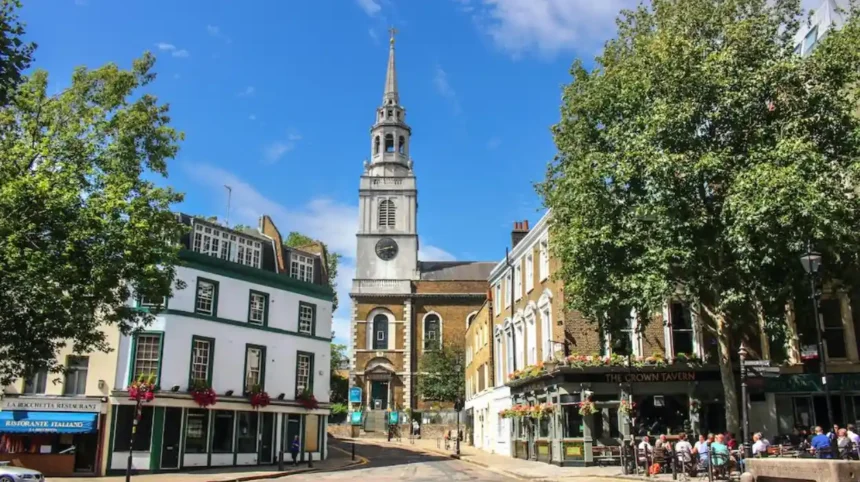
Clerkenwell, in North London, developed into one of Victorian London’s most important centres of skilled manufacturing, printing, metalworking and specialist craftsmanship. During the 19th century, its workshops, factories and commercial premises transformed the area’s economy, employment patterns, architecture and working-class communities. Its industrial heritage continues to influence Clerkenwell’s identity as a centre for design, architecture, creative businesses and cultural tourism.
- What Was Clerkenwell Like Before Victorian Industrial Expansion?
- How Did Watchmaking Establish Clerkenwell’s Industrial Identity?
- Why Did Other Manufacturing Trades Develop in Clerkenwell?
- How Did Watchmaking Transform Victorian Clerkenwell?
- How Did the Workshop System Operate?
- Which Victorian Watchmaking Businesses Influenced Clerkenwell?
- How Did Industrial Competition Affect Local Watchmakers?
- How Did Printing and Publishing Change Clerkenwell During the Victorian Period?
- How Did Newspaper Production Influence Industrial Development?
- What Role Did Printing Machinery Manufacturers Play?
- Which Other Industries Contributed to Victorian Clerkenwell?
- How Did Jewellery and Metalworking Influence the Area?
- How Did Light Engineering Develop in Clerkenwell?
- Did Furniture and Bookbinding Remain Important?
- How Did Victorian Factories and Workshops Change Clerkenwell’s Architecture?
- Why Were Workshops Built Behind Residential Properties?
- Why Did Larger Industrial Buildings Appear?
- What Happened to Clerkenwell’s Older Residential Buildings?
- How Did Victorian Industry Affect Clerkenwell’s Workers and Communities?
- What Were Working Conditions Like in Victorian Workshops?
- How Did Manufacturing Influence Housing?
- How Did Industry Influence Clerkenwell’s Political Identity?
- How Did Transport and Technology Support Clerkenwell’s Industrial Growth?
- Why Did Clerkenwell’s Traditional Industries Decline?
- How Can Visitors Explore Clerkenwell’s Victorian Industrial Heritage Today?
- What Can Visitors Discover Around Clerkenwell Close?
- Why Is Bowling Green Lane Important?
- What Can Visitors Learn at Clerkenwell Green?
- How Does Clerkenwell’s Industrial History Connect With Its Modern Identity?
- What Is the Lasting Legacy of Victorian Industry in Clerkenwell?
The Victorian industrial development of Clerkenwell did not begin with large factories. The district already had an established manufacturing economy based on watchmaking, jewellery, printing and furniture production. During the Victorian period, these traditional trades adapted to changing technology, growing consumer markets and competition from industrial manufacturers.
The result was a distinctive urban landscape where small artisan workshops operated alongside larger industrial premises, commercial buildings and residential streets. This combination shaped how Clerkenwell expanded and how its residents lived and worked.
For visitors exploring Clerkenwell today, understanding this industrial history provides valuable context for its historic buildings, surviving workshops, cultural institutions and streets around Clerkenwell Green.
What Was Clerkenwell Like Before Victorian Industrial Expansion?
Before the Victorian era, Clerkenwell was an established London manufacturing district with specialist trades, residential streets and commercial premises. Watchmaking, jewellery production, printing and furniture craftsmanship provided employment and attracted skilled workers, creating the industrial foundations that shaped its 19th-century development.
Clerkenwell’s manufacturing history extended well before Queen Victoria’s reign, which lasted from 1837 to 1901. Its position close to the City of London made it suitable for businesses supplying wealthy customers, merchants, publishers and commercial organisations.
The district developed around a mixture of residential properties, workshops, religious buildings and trading premises. Unlike industrial towns that depended heavily on coal-powered mills, Clerkenwell developed through specialised urban manufacturing.
Its location provided several commercial advantages. Manufacturers had access to London’s large consumer market, suppliers of raw materials, transport connections and skilled labour. Businesses also benefited from proximity to the City’s financial and commercial networks.
How Did Watchmaking Establish Clerkenwell’s Industrial Identity?
Watchmaking was one of Clerkenwell’s most influential established industries. By the late 18th century, the district and neighbouring St Luke’s had become major centres of British watch production.
Historical estimates suggest that approximately 7,000 people were connected with watchmaking in Clerkenwell around 1790, although historians recognise that contemporary employment estimates varied.
The industry operated through specialised production. Different craftsmen manufactured individual components, including springs, screws, chains, dials and gears. Other workers assembled, polished and finished the completed watches.
This arrangement established a concentrated network of workshops and specialist suppliers. It also created the technical expertise that supported other precision manufacturing activities during the 19th century.
Why Did Other Manufacturing Trades Develop in Clerkenwell?
Watchmaking was not the district’s only important industry. Goldsmiths, silversmiths, printers, engravers, bookbinders and furniture makers also established businesses in the area.
These trades shared several requirements, including access to skilled workers, specialist equipment, suppliers and customers. Their proximity encouraged commercial relationships and the exchange of technical knowledge.
Printing and book production also benefited from London’s expanding publishing industry. Jewellery manufacturers supplied a growing urban market, while furniture makers produced decorative and functional products for domestic and commercial interiors.
By the beginning of the Victorian period, Clerkenwell already possessed an established manufacturing economy. Victorian industrial development expanded and reorganised this existing commercial foundation.
How Did Watchmaking Transform Victorian Clerkenwell?
Watchmaking shaped Victorian Clerkenwell through specialist workshops, skilled employment and precision engineering. Its production system connected independent craftsmen, component manufacturers and larger businesses. This industrial network influenced local employment, commercial buildings and the district’s reputation for high-quality mechanical manufacturing.
Watchmaking remained central to Clerkenwell’s economy throughout much of the 19th century. The industry relied on technical knowledge and detailed manual work, making the district an important centre for precision engineering.
Unlike manufacturing districts dominated by enormous factories, Clerkenwell retained a substantial network of smaller production units. Many businesses occupied converted houses, rear buildings and upper-floor workshops.
How Did the Workshop System Operate?
Clerkenwell’s watchmaking economy depended on the division of labour, sometimes described as the putting-out or chamber system.
Under this arrangement, manufacturers distributed different production tasks among specialist workers. One craftsman produced a particular component, while another completed a separate stage of the manufacturing process.
For example, a watch movement required gears, springs, screws, plates and other precision components. Specialist workers produced these individual parts before the watchmaker or manufacturer assembled and finished the mechanism.
This system allowed businesses to coordinate production without maintaining a large central factory.
It also supported independent artisans who operated from small premises. Workshops often occupied buildings shared with residential accommodation, creating a close relationship between domestic and industrial life.
Which Victorian Watchmaking Businesses Influenced Clerkenwell?
John Moore & Sons provides an important example of the district’s developing manufacturing economy.
The business originated in the 1790s and became associated with premises at Clerkenwell Close. Its products included domestic clocks, church clocks, turret clocks and other specialised timepieces.
By 1858, the company employed approximately 30 to 40 men. Its production combined mechanical processes with skilled hand-finishing.
The company demonstrated how Clerkenwell businesses developed beyond individual artisan workshops while retaining traditional manufacturing expertise.
Its former premises at Clerkenwell Close are no longer standing, but the documented history of the business provides insight into the area’s industrial architecture and working practices.
How Did Industrial Competition Affect Local Watchmakers?
Victorian watchmakers faced increasing competition from overseas manufacturers, particularly businesses adopting more standardised production methods.
American manufacturers developed increasingly mechanised watchmaking systems. These developments challenged British producers who relied heavily on traditional specialist craftsmanship.
The British Horological Institute was established in 1858 to support horological knowledge, professional standards and technical education.
The changing market encouraged manufacturers to reconsider production costs, mechanical equipment and product quality. These pressures gradually altered the district’s traditional watchmaking economy.
The industrial importance of watchmaking therefore extended beyond the number of watches produced. It established technical skills, commercial networks and manufacturing traditions that influenced Clerkenwell’s wider development.
How Did Printing and Publishing Change Clerkenwell During the Victorian Period?
Printing and publishing expanded Clerkenwell’s industrial economy by creating demand for machinery, paper products, skilled labour and commercial storage. Newspaper production encouraged investment in larger premises and improved distribution systems, connecting local manufacturing with London’s expanding publishing and communications industries.
Printing became an increasingly important part of Clerkenwell’s industrial identity during the 19th century. The growth of newspapers, magazines, books and commercial publications created opportunities for printers, typesetters, engravers, bookbinders and machinery manufacturers.
The industry also supported businesses supplying printing equipment and materials. This created a wider industrial network rather than an economy dependent on printing presses alone.
How Did Newspaper Production Influence Industrial Development?
Victorian London experienced substantial growth in newspaper readership. Publishers expanded production to serve a larger market for daily news, political commentary and commercial information.
Clerkenwell benefited from this expanding publishing economy through its manufacturing premises and connections with central London.
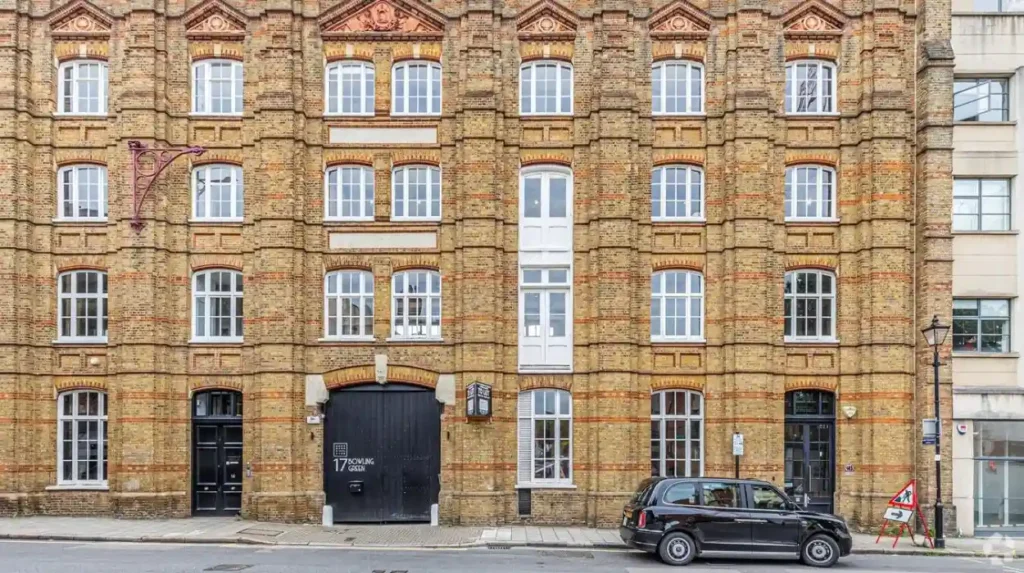
An important example was the warehouse constructed at 16 Bowling Green Lane between 1877 and 1879 for James Johnstone, proprietor of The Standard and Evening Standard newspapers.
The building formed part of an improved production and distribution system. Its location provided convenient access to the railway termini at King’s Cross and St Pancras.
Under Johnstone’s successor, William Mudford, daily sales of The Standard exceeded 250,000 during the mid-1880s. This figure demonstrates the scale of the newspaper business that supported investment in printing facilities and distribution infrastructure.
The warehouse remains an important example of how Victorian publishing influenced Clerkenwell’s commercial architecture. Its red and yellow brick frontage, terracotta decoration and large carriage entrance reflected its industrial and distribution functions.
What Role Did Printing Machinery Manufacturers Play?
Printing required specialist equipment, including presses, metal rules, type-related machinery and production tools.
William Notting was an important manufacturer in this sector. His company produced brass rules, presses and other printing equipment.
In the 1870s, Notting established premises in the Bowling Green Lane area. His Enterprise Works included offices, warehouse accommodation and workshop extensions at the rear.
The arrangement demonstrates how Victorian industrial buildings combined administration, manufacturing and storage within a single property.
Printing machinery businesses also supported the wider publishing economy. They supplied equipment to printing operations and maintained demand for skilled metalworkers and engineering specialists.
By the end of the Victorian period, Clerkenwell’s industrial identity included both the production of printed material and the manufacture of equipment used to produce it.
Which Other Industries Contributed to Victorian Clerkenwell?
Clerkenwell’s Victorian economy extended beyond watchmaking and printing. Jewellery production, goldsmithing, metalworking, engineering, bookbinding and specialist manufacturing supported local employment. These interconnected trades diversified the district’s economy and maintained its reputation for skilled craftsmanship and technical production.
The district’s industrial development depended on several complementary trades. Businesses often shared suppliers, commercial customers, workshop buildings and skilled employees.
This diversity helped Clerkenwell adapt when individual industries experienced economic difficulties.
How Did Jewellery and Metalworking Influence the Area?
Jewellery manufacturing and precious-metal trades had a long association with Clerkenwell.
Goldsmiths and silversmiths required specialist knowledge of metalworking, engraving, polishing and decorative finishing. Their businesses contributed to the district’s reputation for detailed craftsmanship.
These activities also complemented watchmaking. Both industries required precision tools, fine metal components and workers experienced in handling small materials.
Victorian jewellery production served London’s expanding consumer market. Manufacturers supplied decorative objects and personal accessories through retailers and commercial networks.
The presence of specialist metalworking businesses also supported the development of other engineering activities.
How Did Light Engineering Develop in Clerkenwell?
Light engineering involved the manufacture and repair of relatively small mechanical equipment, components and specialist products.
It differed from heavy industrial production, which relied on large machinery, extensive factory space and substantial raw-material consumption.
Clerkenwell’s existing watchmaking expertise provided a foundation for light engineering. Workers already possessed experience in mechanical assembly, metal cutting, finishing and precision manufacturing.
The Survey of London records that clockmaking and watchmaking gradually gave way to light engineering and printing in parts of Clerkenwell Close during the late 19th and early 20th centuries. British History Online+1
Did Furniture and Bookbinding Remain Important?
Furniture making and bookbinding contributed to Clerkenwell’s wider manufacturing history.
Furniture production involved carpentry, cabinetmaking, polishing, upholstery and decorative finishing. Earlier furniture-making businesses had established a tradition of specialist craftsmanship around St John’s Square.
Bookbinding depended on printing and publishing activity. Workers assembled printed sheets, produced covers and completed finishing processes for books and commercial publications.
These industries demonstrate how Clerkenwell’s economy connected different stages of production. A printed publication required paper suppliers, printers, binders, machinery and distribution networks.
The combination of these trades gave the district a diverse manufacturing base rather than a single-industry identity.
How Did Victorian Factories and Workshops Change Clerkenwell’s Architecture?
Victorian manufacturing transformed Clerkenwell’s buildings by introducing larger factories, warehouses, workshops and commercial premises into its established street pattern. Red and yellow brickwork, industrial windows, storage spaces and rear production areas reflected the practical requirements of manufacturing and distribution.
Industrial activity changed how land and buildings were used throughout Clerkenwell.
Traditional residential properties increasingly accommodated workshops, while new industrial buildings occupied former houses and backland spaces.
The resulting architecture reflected the district’s combination of small-scale craftsmanship and expanding commercial manufacturing.
Why Were Workshops Built Behind Residential Properties?
Small workshops provided affordable premises for independent manufacturers and specialist craftsmen.
Many buildings contained domestic accommodation at the front and production spaces at the rear or on upper floors. Large workshop windows provided natural light for detailed work.
This arrangement was particularly suitable for watchmaking, jewellery production and other activities requiring careful manual processes.
The Survey of London documents how back gardens around Clerkenwell Close were progressively converted into workshop spaces. Some houses also included workshop windows in their attic floors. British History Online
Why Did Larger Industrial Buildings Appear?
Growing businesses required more space for production, storage, machinery and administration.
Victorian developers responded by constructing larger warehouses and factories within Clerkenwell’s narrow streets.
Bowling Green Lane provides a particularly clear example. Several warehouses were constructed there during the 1870s, including the buildings associated with newspaper production and printing machinery.
The buildings introduced a different architectural scale to the surrounding streets.
Islington Council’s Urban Design Guide identifies distinctive Victorian warehouses and factories in Clerkenwell. It describes their use of polychromatic brickwork and blue Staffordshire engineering brick, alongside larger building footprints than traditional residential properties.
What Happened to Clerkenwell’s Older Residential Buildings?
Industrial expansion increased pressure on available land.
Some former residential buildings became workshops, factories and warehouses. Others were demolished to make room for commercial premises.
This development changed the relationship between housing and employment. Industrial activity became increasingly visible within the everyday streetscape.
The transition was not uniform. Residential properties, workshops, commercial premises and institutional buildings continued to operate alongside each other.
This mixed-use pattern remains an important characteristic of Clerkenwell’s historic urban environment.
How Did Victorian Industry Affect Clerkenwell’s Workers and Communities?
Victorian manufacturing shaped Clerkenwell’s population by attracting skilled artisans, workshop employees and commercial workers. Industrial employment supported local households but also created demanding working conditions, overcrowded accommodation and economic insecurity, particularly among workers dependent on traditional specialist manufacturing trades.
Industrial growth influenced more than buildings and businesses. It affected housing, household incomes, working hours, social relationships and the district’s political identity.
Clerkenwell developed as a place where many residents lived close to their workplaces. This arrangement reduced commuting distances but also brought industrial activity into residential streets.
What Were Working Conditions Like in Victorian Workshops?
Working conditions differed according to the trade, employer and type of premises.
Watchmakers and jewellery workers needed good lighting, concentration and specialised equipment. Their work involved detailed manual operations and repetitive production tasks.
Printing and engineering businesses involved different physical demands. Employees operated machinery, handled materials and completed production processes under commercial deadlines.
Small workshops often had limited space. The combination of domestic accommodation and manufacturing created challenges involving ventilation, noise and overcrowding.
Workers also faced economic uncertainty. Businesses dependent on specialist skills experienced pressure when imported products, new machinery or changing consumer demand affected their markets.
How Did Manufacturing Influence Housing?
Industrial employment encouraged workers to settle close to Clerkenwell’s workshops and commercial premises.
Existing houses were divided into smaller accommodation, while former gardens and rear spaces became production areas.
By the 1870s, the area between Bowling Green Lane and Clerkenwell Green was densely occupied by housing and workshops.
Poor housing conditions eventually became a concern for local authorities and housing reformers.
The Survey of London records that some overcrowded courts and alleys on the western side of Clerkenwell Close were cleared during the 1870s and 1880s. Model dwellings replaced some of the older accommodation.
These developments reflected wider Victorian efforts to improve urban housing conditions.
How Did Industry Influence Clerkenwell’s Political Identity?
Clerkenwell’s concentration of artisans and industrial workers contributed to its association with working-class political activity.
Clerkenwell Green became an important meeting place for political organisations and reform movements.
The Chartist movement, which campaigned for democratic parliamentary reform during the 19th century, held meetings in the area. Its supporters included workers seeking greater political representation and improved economic conditions.
Industrial employment also connected local residents with wider debates about wages, working conditions and the rights of skilled workers.
This political history forms an important part of Clerkenwell’s Victorian identity. Its manufacturing economy helped establish a substantial artisan community with shared economic and social concerns.
How Did Transport and Technology Support Clerkenwell’s Industrial Growth?
Transport improvements and technological developments strengthened Clerkenwell’s manufacturing economy by improving access to suppliers, workers and customers. Railways supported the movement of commercial goods, while improved machinery changed production methods and encouraged businesses to expand their operations.
Victorian manufacturing depended on reliable access to materials and markets.
Clerkenwell benefited from its position close to central London and its growing transport infrastructure. Businesses could obtain materials from suppliers and distribute finished products through London’s commercial networks.
Why Were Railway Connections Important?
The expansion of London’s railway network improved connections between industrial districts and regional markets.
King’s Cross and St Pancras became important railway termini during the Victorian period. Their proximity to Clerkenwell supported businesses requiring access to wider distribution networks.
The Standard newspaper warehouse at Bowling Green Lane demonstrates this relationship. Its location was selected partly because of convenient access to the mainline railway termini.
Railway development also contributed to wider changes in Islington. Passenger services and new transport routes encouraged residential development and changed how people travelled across the borough.
The Victorian period therefore connected industrial development with broader urban expansion.
How Did Machinery Change Traditional Manufacturing?
New machinery altered the relationship between skilled labour and industrial production.
In watchmaking, mechanical processes supported activities such as cutting, sharpening and polishing. However, skilled hand-finishing remained important.
Printing businesses adopted improved presses and production facilities to meet increasing demand for newspapers and publications.
These changes increased production capacity and encouraged businesses to invest in more specialised premises.
Technology did not immediately eliminate traditional craftsmanship. Instead, manual expertise and mechanical production operated alongside each other.
Clerkenwell’s industrial history demonstrates how established manufacturing districts adapted to technological change without immediately abandoning their traditional skills.
Why Did Clerkenwell’s Traditional Industries Decline?
Clerkenwell’s traditional industries gradually changed because of international competition, mechanised production, changing consumer demand and the relocation of manufacturing businesses. Watchmaking lost some of its former dominance, while light engineering, printing and eventually commercial and creative industries occupied former industrial premises.
The decline of traditional manufacturing was gradual rather than the result of one event.
By the late Victorian period, international competition placed pressure on British watchmakers. Overseas manufacturers increasingly adopted standardised production techniques and machinery.
Traditional businesses also faced changing costs, commercial requirements and demand for manufactured goods.
How Did International Competition Affect Watchmaking?
American watch manufacturers developed production systems that relied on interchangeable components and increasingly mechanised processes.
These methods challenged British businesses that depended on specialised workers and traditional production arrangements.
Clerkenwell’s manufacturers faced the difficult task of maintaining product quality while competing with producers offering more standardised products.
The British Horological Institute, established in 1858, reflected the importance of professional knowledge and technical standards during this period.
However, competition continued to change the economics of watch production.
Did Manufacturing Disappear Completely?
No. Manufacturing remained part of Clerkenwell’s economy even as individual industries changed.
The Survey of London documents the transition from clockmaking and watchmaking towards light engineering and printing around Clerkenwell Close.
Businesses continued to occupy industrial premises into the 20th century.
This gradual transition explains why Clerkenwell developed a varied commercial identity rather than experiencing an immediate end to industrial activity.
Explore More Area Guide
History of Islington’s Georgian Squares and Historic Architecture
How Islington Became a Centre of Political Activism
How Can Visitors Explore Clerkenwell’s Victorian Industrial Heritage Today?
Visitors can explore Clerkenwell’s industrial history through its historic streets, former workshops, Victorian warehouses and cultural institutions. Clerkenwell Close, Bowling Green Lane, Clerkenwell Green and nearby historic buildings provide useful starting points for understanding the district’s manufacturing and commercial development.
Clerkenwell’s industrial heritage remains visible in its architecture and street layout.
A walking visit provides an opportunity to understand how manufacturing shaped the district and how former industrial buildings have acquired new uses.
What Can Visitors Discover Around Clerkenwell Close?
Clerkenwell Close is one of the most useful places to begin exploring the district’s history.
The area developed around the medieval precinct of St Mary’s Nunnery. Following the dissolution of the monasteries in the 16th century, the former religious precinct gradually became a mixture of residential properties and commercial premises.
By the Victorian period, the Close had developed into an important industrial area.
Visitors can examine the relationship between St James’s Church, historic street patterns and the surrounding buildings. The former John Moore & Sons clock factory also provides an important historical reference, although the original factory has been demolished.
The University College London’s Survey of London, particularly Volume 46, provides detailed historical information about the buildings and industrial development of this area. British History Online+1
Why Is Bowling Green Lane Important?
Bowling Green Lane provides some of the clearest examples of Victorian commercial and industrial architecture in Clerkenwell.
Its former warehouses illustrate how manufacturing and distribution influenced building design.
The historic premises associated with James Johnstone and William Notting demonstrate the importance of newspaper production, printing machinery and commercial storage.
Visitors should pay attention to the brickwork, window arrangements, decorative details and larger building footprints.
These architectural features distinguish industrial buildings from the smaller residential properties found on neighbouring streets.
What Can Visitors Learn at Clerkenwell Green?
Clerkenwell Green provides historical context for the area’s industrial and political development.
The Green became associated with artisan communities, political meetings and working-class organisations.
The Marx Memorial Library is an important cultural institution in the area. Its collections and exhibitions explore socialist, labour and political history.
The surrounding streets help visitors understand the relationship between manufacturing employment and political activity in Victorian London.
How Does Clerkenwell’s Industrial History Connect With Its Modern Identity?
Modern Clerkenwell contains architecture practices, design studios, creative businesses, offices and converted commercial buildings.
This development reflects the district’s transition from traditional manufacturing towards professional and creative industries.
Some former industrial buildings have been adapted for offices and studios. Others have undergone residential or commercial conversion.
The area’s industrial architecture provides a physical connection between its manufacturing past and contemporary business activity.
Visitors interested in this transition can also explore the district’s wider architectural history. As you explore modern Clerkenwell, you are crossing land shaped by centuries of economic and social change. Discover the full [Insert Anchor Text for Clerkenwell Historical Background Article Here] to understand how the district developed from its medieval origins into a Victorian manufacturing centre.
What Is the Lasting Legacy of Victorian Industry in Clerkenwell?
Victorian industry established Clerkenwell’s enduring identity as a centre of specialist craftsmanship, technical expertise and commercial enterprise. Its workshops, warehouses and manufacturing traditions influenced the district’s architecture and employment patterns, providing the foundations for its modern creative, design and professional industries.
The Victorian period represents a major stage in Clerkenwell’s development.
Manufacturing transformed the area’s buildings, employment structure and social character. Traditional watchmaking established a foundation for precision engineering, while printing connected the district with London’s expanding publishing industry.
The growth of warehouses and factories changed the physical appearance of streets such as Bowling Green Lane. Meanwhile, the concentration of skilled workers contributed to the area’s political and cultural identity.
The decline of traditional manufacturing did not erase this history. Former industrial buildings continued to support commercial activities, and their architectural features remained part of the local streetscape.
The University College London Survey of London volumes document these changes in considerable detail, connecting Clerkenwell’s medieval origins, Victorian industrial development and contemporary regeneration.
For tourists, historians and local residents, Clerkenwell offers an opportunity to understand how Victorian manufacturing shaped an important part of North London. Its streets reveal the relationship between craftsmanship, industrial innovation, urban housing and commercial expansion.
Understanding this history also explains why Clerkenwell remains associated with architecture, design and specialist creative businesses. Its modern identity developed through centuries of skilled production and industrial adaptation.
What industries were important in Victorian Clerkenwell?
The most important industries included watchmaking, jewellery production, printing, bookbinding, metalworking and light engineering. These trades supported skilled employment and established Clerkenwell as a major manufacturing district in London.