Islington’s New River is one of London’s most important historic water-supply projects. Built in the early 17th century, it brought fresh water from springs near Chadwell and Amwell in Hertfordshire to the growing population of London. The artificial watercourse transformed the capital’s water infrastructure and established a lasting connection between Islington, Hertfordshire and London’s development.
- What Is Islington’s New River?
- Why Was the New River Built in the 17th Century?
- Who Founded the New River and Who Designed It?
- When Was the New River Completed and Opened?
- How Did the New River Transport Water from Hertfordshire to Islington?
- Why Was New River Head Established in Islington?
- How Did the New River Change London’s Water Supply?
- What Was the New River Company’s Role in London’s Development?
- How Did the New River Develop During the 18th and 19th Centuries?
- What Was the New River’s Connection to London’s Public Health?
- What Happened to the New River During the 20th Century?
- Does the New River Still Supply Water to London Today?
- Where Can Visitors Explore the History of the New River in Islington?
- Why Is the New River Important to Islington’s Heritage Today?
- What Is the Lasting Legacy of Islington’s New River?
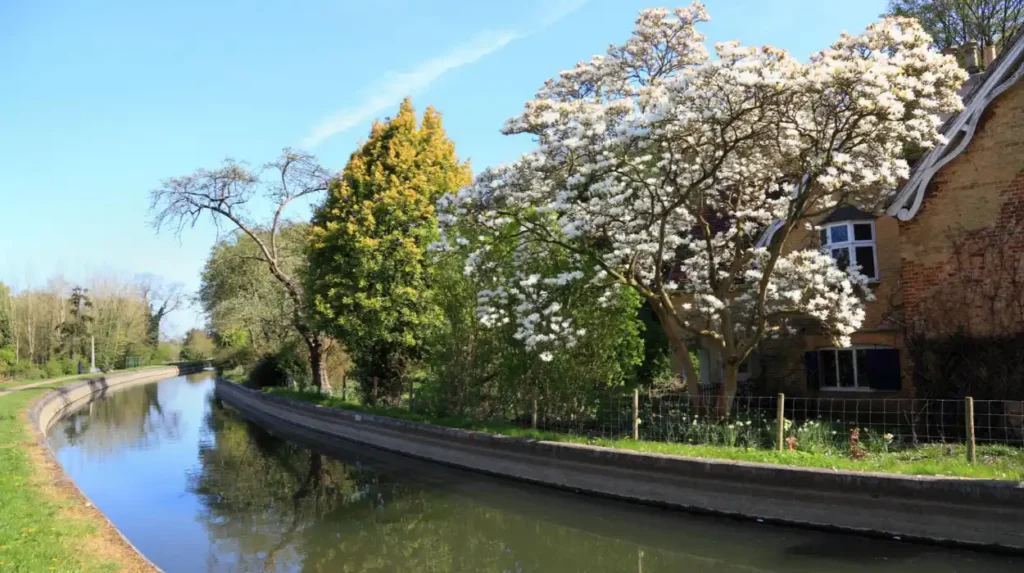
The New River is not a natural river. It is an engineered water channel designed to transport clean drinking water over a long distance using gravity. Its construction marked a major achievement in British civil engineering and public water provision.
Today, the New River remains an important part of Islington’s historical landscape. Sections of its original route survive as waterways, landscaped paths and public green spaces. The New River Walk and New River Head preserve important evidence of its historical role in supplying London.
What Is Islington’s New River?
Islington’s New River is part of a historic artificial watercourse constructed in the early 17th century to supply London with fresh water. It connected Hertfordshire springs to the capital and helped establish a more reliable water supply for London’s expanding population.
The New River was an ambitious engineering project developed during the reign of King James I. It addressed a serious problem facing London: the increasing demand for fresh water as the city’s population expanded.
Before its construction, London relied on several sources of water. These included the River Thames, local wells, springs and smaller watercourses. These sources did not always provide sufficient quantities of clean water for households, businesses and public services.
The New River introduced a more organised system of water transportation. It carried water from natural springs in Hertfordshire towards London through a carefully designed artificial channel.
Islington became an important part of this system because the New River Head was established in the area. This location served as a major collection and distribution point before water entered London’s supply network.
The historic watercourse also influenced the development of surrounding neighbourhoods. Its route shaped local landscapes, created distinctive open spaces and established a lasting connection between Islington’s urban environment and London’s industrial history.
Why Was the New River Built in the 17th Century?
The New River was built because early 17th-century London faced growing pressure on its water supply. Population growth, expanding trade and limited infrastructure increased demand for fresh water, making a dependable source outside the capital increasingly important.
London experienced substantial urban growth during the late 16th and early 17th centuries. More residents required water for drinking, cooking, washing, manufacturing and commercial activities.
The River Thames supplied a significant proportion of London’s water. However, the river also received waste from domestic and industrial activities. Its water quality created serious public-health concerns.
Local wells and springs provided additional supplies, but their availability depended on location and environmental conditions. Many residents also relied on water carriers who collected and delivered water to homes.
This system was increasingly inadequate for a growing capital.
The proposed solution was to transport water from cleaner sources outside London. Hertfordshire offered suitable springs and a geographical route towards the city.
The New River addressed three important infrastructure requirements:
- Reliable water access: It transported water from natural springs rather than depending entirely on local urban sources.
- Long-distance distribution: It connected rural water sources with London’s developing urban infrastructure.
- Gravity-based engineering: Its carefully planned route allowed water to flow towards the capital without requiring modern pumping technology.
The project represented an important transition towards organised public water provision. It also demonstrated how engineering could address the infrastructure pressures created by urbanisation.
Who Founded the New River and Who Designed It?
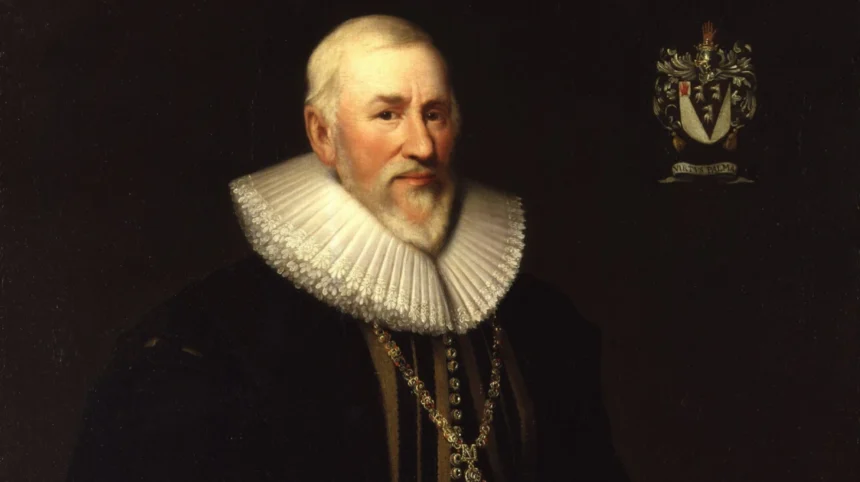
The New River project was led by Hugh Myddelton, a Welsh entrepreneur and goldsmith, with important engineering contributions from Edmund Colthurst. Their work established the artificial watercourse that transported Hertfordshire spring water towards London.
Hugh Myddelton, also known as Sir Hugh Myddelton, was the principal promoter and organiser of the New River project. He was a successful businessman who recognised the commercial and public importance of improving London’s water supply.
His involvement required substantial financial investment, negotiations and coordination. Constructing a watercourse across a long distance involved purchasing land, obtaining permissions and managing difficult engineering conditions.
Edmund Colthurst was an earlier promoter and engineer associated with the original proposal. He helped establish the project’s technical foundations before Myddelton became its principal driving force.
Myddelton secured support from King James I. Royal backing helped strengthen the project’s position, although financial difficulties continued throughout construction.
The Crown also became involved in financing the scheme. The partnership between Myddelton and the monarchy helped the project progress despite its considerable costs.
Myddelton’s contribution became central to the history of London’s water infrastructure. His name remains associated with the New River and its establishment as a major public water-supply system.

When Was the New River Completed and Opened?
The New River was completed and officially opened on 29 September 1613. Construction began in 1609 under Hugh Myddelton’s direction, creating an artificial watercourse approximately 40 miles long between Hertfordshire and New River Head in Islington.
The construction process involved several years of surveying, excavation and negotiation. Workers created a channel that followed the natural contours of the landscape to maintain a gradual downward flow.
The original route was approximately 40 miles long, although some historical accounts give slightly different measurements because of subsequent changes to the channel.
The official opening took place on Michaelmas Day, 29 September 1613. Water entered the receiving basin at New River Head in Clerkenwell, marking the completion of the main engineering project.
The ceremony established the New River as a functioning water-supply route for London.
The project faced several difficulties during construction. Landowners opposed the route because the channel crossed private estates and agricultural land. Myddelton also encountered financial problems as construction costs increased.
King James I eventually agreed to finance half the project in exchange for half its profits. This financial arrangement helped secure completion.
The New River became one of the most significant infrastructure achievements of early modern London. Its opening created a foundation for a commercial water-distribution system that expanded over subsequent centuries.
How Did the New River Transport Water from Hertfordshire to Islington?
The New River transported spring water through an artificial channel that followed the landscape’s natural contours. Its gradual downhill route used gravity to move water from Hertfordshire towards the Round Pond at New River Head in Islington.
The New River’s engineering depended on maintaining a controlled gradient. Unlike a conventional river, it did not follow a naturally formed valley. Engineers designed its route to carry water towards London while avoiding steep changes in elevation.
The original water sources included springs at Chadwell and Great Amwell in Hertfordshire. These locations provided the water that entered the artificial channel.
The route crossed several rural areas before approaching north London. Its winding alignment followed the land’s contours to prevent water from flowing too quickly.
The channel was approximately three metres wide in some historical descriptions. Its depth and width varied according to the terrain and engineering requirements.
The system relied on several important components:
- Spring sources: Natural springs at Chadwell and Amwell supplied the original water.
- Artificial channel: The excavated watercourse transported water across the countryside.
- Aqueducts and crossings: Engineered structures carried water across difficult sections of the landscape.
- Receiving reservoir: The Round Pond at New River Head collected incoming water.
- Distribution pipes: Wooden pipes transported water from the reservoir towards consumers in London.
The use of gravity reduced the need for mechanical pumping along the original route. This made the system particularly advanced for its period.
The New River’s design also required regular maintenance. Workers inspected the channel, repaired damaged sections and managed its flow to protect the water supply.
The London Archives and Historic England preserve records documenting these engineering developments and the gradual modification of the original route.
Why Was New River Head Established in Islington?
New River Head was established in Clerkenwell, within modern Islington, because its elevated position offered suitable conditions for collecting and distributing water. Its reservoirs and waterworks became the central destination of the original New River system.
New River Head was the southern terminus of the original New River. It occupied strategically suitable ground near Clerkenwell, north of the historic City of London.
The location provided several advantages. Its elevation supported the distribution of water through gravity-fed pipes, while the surrounding landscape offered space for reservoirs and supporting infrastructure.
The Round Pond was the principal receiving reservoir. It collected water arriving from Hertfordshire before distribution into the capital.
The original waterworks gradually developed into a larger operational site. Its infrastructure included additional ponds, cisterns, filtration facilities and buildings associated with the management of the water supply.
The Water House stood beside the Round Pond. It contained important water-control equipment and accommodation associated with the site’s management.
The site became closely connected with the New River Company, the organisation responsible for operating the watercourse and distributing its supply.
New River Head is now an important heritage location. Historic England recognises the later New River Head building at 173–177 Rosebery Avenue as a Grade II* listed building.
Its historic significance comes partly from its connection with the development of London’s public water infrastructure. The building also incorporates important interior features from the earlier Water House, including the historic Oak Room.
The surviving site connects Islington’s present-day urban environment with more than four centuries of water-supply history.
How Did the New River Change London’s Water Supply?
The New River improved London’s access to fresh water by creating a dedicated supply route from Hertfordshire. It reduced dependence on local wells and polluted urban water sources while supporting households, businesses and the capital’s expanding population.
Before the New River became operational, London residents obtained water through several different methods. These included public conduits, private wells, river water and commercial water carriers.
Access varied considerably between neighbourhoods. Wealthier households often had better access to private water supplies, while poorer residents depended on shared facilities and purchased water.
The New River introduced a more organised distribution arrangement. Water companies and their predecessors supplied customers through networks of pipes connected to receiving reservoirs.
The original pipes were commonly constructed from hollowed-out elm trunks. These wooden conduits transported water from New River Head into different parts of London.
The system supported domestic and commercial activities. Households used the supply for drinking, cooking and cleaning. Businesses also needed water for manufacturing, workshops and other operations.
Historical accounts from the Amwell Society indicate that by around 1670, up to two-thirds of houses in some parts of London had running water supplied through the New River system.
This demonstrates the scale of its early influence, although coverage varied across the city.
The New River also helped establish a commercial model for organised water distribution. The New River Company developed a long-term business around supplying customers and maintaining the infrastructure.
However, the system did not eliminate London’s water-quality problems. Open channels remained vulnerable to environmental contamination, and the city’s increasing population created additional pressure on available supplies.
The New River therefore represented an important improvement rather than a complete solution to London’s water and sanitation challenges.
What Was the New River Company’s Role in London’s Development?
The New River Company was established by royal charter in 1619 to manage the watercourse and organise its commercial distribution. It became a major institution in London’s infrastructure, expanding reservoirs, maintaining channels and supplying water to customers.
The New River Company received its royal charter from King James I in 1619. Hugh Myddelton became its first Governor.
The company provided an organisational structure for managing the water supply. Its responsibilities included maintaining the channel, controlling water distribution, managing infrastructure and collecting payments from customers.
Its work expanded as London’s population and commercial activity increased.
The company also invested in additional infrastructure beyond the original New River channel. These developments included new reservoirs, filtration facilities and pumping equipment.
Its records provide valuable evidence about London’s changing urban infrastructure. The London Archives holds surviving New River Company collections, including historical documents, financial records and operational material.
These archives also demonstrate the scale of the company’s activities over several centuries.
The organisation’s importance extended beyond water distribution. Its property holdings and development activities influenced parts of Clerkenwell and the surrounding Islington area.
Myddelton Square, for example, became associated with the New River Company’s estate development during the 19th century. The square forms part of the wider historic landscape around the company’s former headquarters.
The company therefore played two connected roles: supplying water to London and shaping the built environment around New River Head.
How Did the New River Develop During the 18th and 19th Centuries?
The New River underwent major changes during the 18th and 19th centuries as London’s population increased. The company constructed additional reservoirs, introduced pumping technology, improved filtration and shortened sections of the original watercourse.
The original channel was designed for the conditions of early 17th-century London. However, the capital’s continuing growth created demand for greater capacity and improved water quality.
The company gradually modified the route to make water transportation more efficient.
Some winding sections were shortened through tunnels, aqueducts and underground pipes. These changes reduced the original journey and improved the management of the watercourse.
The development of additional reservoirs became particularly important.
Reservoirs were constructed at Stoke Newington in 1831 and 1833. Another reservoir development took place at Cheshunt in 1837.
These facilities allowed the company to store larger quantities of water and improve supply management.
Technology also changed how water moved through the wider system. Steam-powered equipment and pumping facilities supplemented gravity-based transportation where additional pressure or elevation was required.
Another major development involved public-health regulation.
The Metropolis Water Act 1852 introduced important requirements for filtering domestic water supplies and storing water in covered reservoirs. The legislation responded to growing concerns about contaminated drinking water and urban sanitation.
The New River Company responded by developing filtration works at several locations, including Stoke Newington, Hornsey and New River Head.
These developments reflected a wider transformation in London’s water infrastructure. Water companies increasingly needed to provide not only sufficient water but also a more controlled and reliable supply.
The 19th-century improvements established the foundations for the modernised water network that followed.
What Was the New River’s Connection to London’s Public Health?
The New River contributed to London’s public-health development by improving access to organised water supplies. However, contaminated sources and inadequate sanitation remained serious problems, making filtration, covered reservoirs and stronger water-quality regulation essential.
During the 19th century, London experienced repeated outbreaks of waterborne disease. Cholera became a major public-health concern, particularly in densely populated neighbourhoods with inadequate sanitation.
Dr John Snow, a London physician, investigated the 1854 Soho cholera outbreak. His work helped establish the connection between contaminated drinking water and disease transmission.
His research increased public understanding of the relationship between water quality and public health.
The New River Company’s water supply was not automatically free from contamination. Open channels and inadequate storage arrangements created risks that required additional engineering and regulation.
The Metropolis Water Act 1852 introduced filtration and covered-storage requirements. These measures helped improve the safety of water supplied to London households.
The New River Company’s filtration works formed part of this wider response.
The company’s investment in filtration and reservoirs represented an important shift in water management. Infrastructure increasingly focused on the quality of drinking water rather than simply transporting sufficient quantities.
The New River’s history therefore forms part of London’s wider public-health transformation during the Victorian period.
What Happened to the New River During the 20th Century?
During the 20th century, the New River became part of a larger public water-management system. The Metropolitan Water Board took control of London’s water companies, and the original channel was eventually shortened to Stoke Newington in 1946.
The New River Company’s private management continued until the early 20th century. However, growing demand for coordinated water services encouraged government intervention.
The Metropolis Water Act 1902 established the framework for transferring London’s water companies into public ownership.
The Metropolitan Water Board took over the New River Company and other water undertakings in 1904. This created a more centralised approach to managing the capital’s water infrastructure.
The former company headquarters at New River Head continued to serve an important administrative function.
A new headquarters building was constructed between 1915 and 1920. Designed by Herbert Austen Hall, it incorporated historic interior features from the earlier Water House.
The most significant change to the original watercourse came in 1946.
The New River was shortened so that its open channel terminated at Stoke Newington rather than continuing to New River Head. Water was subsequently transported through the wider infrastructure network.
Another institutional change occurred in 1973–74, when Thames Water succeeded the Metropolitan Water Board in managing the relevant water infrastructure.
These developments marked the transition from a historic private water company to a modern regional water-management system.
Does the New River Still Supply Water to London Today?
Yes, the New River remains part of London’s water-supply infrastructure. Its modern operation differs from the original system, with treated water transported through a combination of open channels, reservoirs, pumping facilities and underground infrastructure.
The New River has not disappeared from London’s water network. Parts of the historic watercourse continue to operate as engineered water channels.
Its original function has changed considerably since 1613. Modern water treatment, storage and distribution systems now operate on a much larger scale.
The watercourse forms part of the infrastructure managed by Thames Water.
Its route has been shortened and modified over time. The surviving channel is especially visible in north London, including sections around Stoke Newington and areas further north.
Some sections remain open to the public as landscaped waterways and walking routes. Other sections are covered or incorporated into the wider water infrastructure.
The distinction between the historic New River and its modern operational role is important. The original project transported spring water directly towards New River Head. Today’s water network uses more advanced treatment and distribution processes.
The New River therefore remains relevant both as infrastructure and as an important example of London’s engineering heritage.
Where Can Visitors Explore the History of the New River in Islington?
Visitors can explore the New River’s history through New River Head, Myddelton Passage, Myddelton Square and nearby historic landmarks. These locations reveal the connection between Islington’s urban landscape and London’s early water-supply infrastructure.
Islington offers several locations associated with the New River’s history. They provide opportunities to understand the watercourse without travelling to its original Hertfordshire sources.
New River Head
New River Head is the most historically significant location associated with the project in Islington. The former waterworks site stands near Rosebery Avenue and preserves evidence of the original distribution infrastructure.
The Grade II* listed headquarters building incorporates architectural features from the historic Water House.
Myddelton Passage
Myddelton Passage is a narrow historic route close to New River Head. Its location helps visitors understand the relationship between the former waterworks and the surrounding Clerkenwell neighbourhood.
It also provides a useful starting point for exploring the site’s architectural heritage.
Myddelton Square
Myddelton Square is associated with the New River Company’s 19th-century estate development. Its residential architecture reflects the company’s influence on the surrounding area.
The square also illustrates how the water company’s activities extended beyond engineering and water distribution.
Islington Green
Islington Green is another useful landmark for understanding the area’s historical connections. A statue of Sir Hugh Myddelton commemorates the entrepreneur associated with the New River project.
The monument provides a visible reminder of his contribution to London’s development.
New River Walk
Sections of the surviving New River offer opportunities for walking and observing the historic watercourse. Visitors can experience its relationship with north London’s parks, residential streets and green spaces.
The New River Renewal Campaign also promotes the heritage and environmental value of the watercourse.
These locations can form part of a wider exploration of Islington’s historic environment. As you explore the modern neighbourhood, you are crossing land with a deep heritage. Discover the full [History of Islington and Its Historic Neighbourhoods] to understand how its development connects with London’s wider urban history.
Explore More Area Guide
Clerkenwell Printing History: London’s Historic Publishing Industry
Regent’s Canal Islington History: Construction, Trade and Heritage
Why Is the New River Important to Islington’s Heritage Today?
The New River remains important to Islington because it connects the borough with London’s early engineering, commercial development and public-health history. Its surviving infrastructure, historic buildings and open spaces preserve evidence of this transformation.
The New River is more than a historic water channel. It represents a major stage in London’s transition towards organised public infrastructure.
Its construction demonstrated how engineers and entrepreneurs addressed the practical challenges of supplying a rapidly expanding city.
The project also influenced the development of surrounding communities. New River Head became an important employment and administrative centre, while the New River Company’s property activities helped shape parts of Clerkenwell.
Its historical importance extends across several areas.
- Engineering heritage: The original channel demonstrates early long-distance water engineering.
- Urban development: New River Head influenced the growth of Clerkenwell and surrounding neighbourhoods.
- Public health: Its development formed part of London’s transition towards improved drinking-water management.
- Industrial history: The New River Company established a commercial water-distribution organisation.
- Landscape heritage: Surviving sections preserve historic waterways and green corridors.
Historic England’s archaeological assessment identifies New River Head and the former New River route through Islington as an Archaeological Priority Area.
This recognition reflects the historical and archaeological importance of the surviving infrastructure.
The New River also provides an important connection between London and Hertfordshire. Its history demonstrates how the capital depended on resources from surrounding regions to support urban growth.
For tourists, historians and residents, the watercourse offers a practical way to understand London’s infrastructure beyond its famous buildings and monuments.
Its continued presence makes the New River a valuable part of Islington’s historic identity.
What Is the Lasting Legacy of Islington’s New River?
The lasting legacy of Islington’s New River is its contribution to London’s water infrastructure, engineering development and urban history. Built in 1613, it established a long-distance supply system whose influence continued through later public water reforms.
The New River addressed a fundamental challenge in London’s development: providing sufficient water for an expanding population.
Its construction required financial investment, technical planning and cooperation between private entrepreneurs and the Crown.
The project also established a commercial framework for water distribution through the New River Company, which operated for nearly three centuries before public ownership.
Its infrastructure evolved alongside advances in engineering and public-health standards. Reservoirs, filtration facilities, pumping systems and underground pipes gradually transformed the original arrangement.
The New River’s history also explains the importance of Islington in London’s industrial development.
New River Head became a major water-management centre. The surrounding neighbourhoods retain architectural and archaeological evidence of that role.
Today, the watercourse remains an important part of London’s historic environment and water-supply heritage.
Understanding the New River provides visitors with a different perspective on Islington. It reveals how a historic engineering project helped shape the capital’s growth and continues to influence the landscape.
What is Islington’s New River?
Islington’s New River is an artificial watercourse built in the early 17th century to transport fresh spring water from Hertfordshire to London. It supplied the capital through New River Head in Clerkenwell.