Key Points:
- Industrial Action Cancelled: About 1,500 bus drivers in eight depots in North and East London have agreed to the workplace agreement and stopped the strike action.
- Installation of Air Conditioners: Arriva North London and TfL have promised to install air conditioning units in all the buses by May 2027.
- 35-Minutes Rule for Relief: Drivers of diesel and hybrid buses having issues in their climate control system can stop the bus after 35 minutes and come back to the depot during very hot and cold conditions.
- Policy Change for Defects: If a vehicle is found with faulty heating and cooling units, then it has to be fixed properly before allocating the same to any other driver.
- 11 Months Strike Mandate Valid: Unite the Union will continue its strike mandate for 11 months to ensure that Arriva strictly follows maintenance and retrofits schedule.
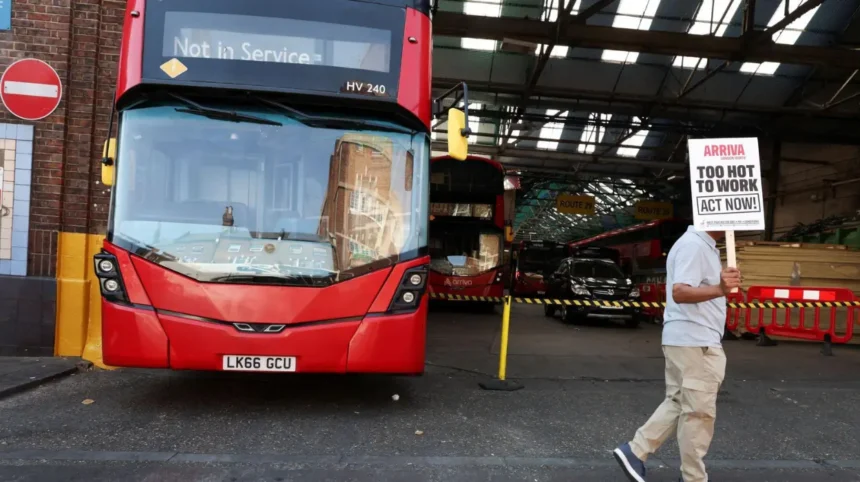
North London (North London News) September 7, 2025 – Around 1,500 bus drivers operating across eight major depots in London and Essex—including Barking, Edmonton, Enfield, Grays, Palmers Green, Stamford Hill, Tottenham, and Wood Green—have formally voted to accept a comprehensive new workplace agreement, bringing an end to a high-profile dispute over summer cabin temperatures. Strikes that had been scheduled to commence on 7 September were officially cancelled after members approved the negotiated settlement between union officials and depot management.
The dispute stemmed from prolonged driver dissatisfaction with workplace conditions during seasonal temperature spikes. As reported by the press office of Unite the Union, union members took industrial action last month to protest severe heat levels inside driver cabs. Under the newly ratified terms, Arriva London North alongside Transport for London (TfL) confirmed they will retrofit and fit full air conditioning units across the operator’s vehicle fleet by May 2027.
At present, the majority of vehicles in service across Arriva London North routes rely on air cooling systems rather than dedicated air conditioning. According to trade union representatives, standard air cooling systems offer inadequate protection during extreme heatwaves, lowering cab temperatures by a maximum of two to three degrees Celsius.
As reported by Sharon Graham, General Secretary of Unite the Union, “Unite will leave no stone unturned to fight for workers. Thank you to all our members at Arriva North who stood together to achieve this landmark win.” She added: “Unite is determined that the conditions of bus drivers are improved in London and beyond. We expect bus operators to treat workers with dignity and respect and will be ensuring that this happens.”
How Will The 35-Minute Rule Protect Bus Drivers During Extreme Weather?
A central element of the newly ratified deal establishes clear, binding limits on how long staff are expected to drive vehicles experiencing climate control failures. To protect drivers while long-term retrofits take place, an agreement has been finalized specifying that if an air conditioning or heating unit fails on a diesel or hybrid vehicle, the driver will only be required to operate the vehicle for a maximum of 35 minutes before stopping the service and returning the bus directly to its respective garage.
This measure effectively removes the expectation for transport staff to remain on duty for full shifts inside overheated driver cabins. The 35-minute operational limit will also apply during winter periods for cold-weather faults, reducing the previous threshold where drivers were expected to remain on public routes for at least an hour under failing cabin conditions.
For electric vehicles (EVs), union negotiators noted that the 35-minute delay rule will not be required because electric climate systems engage effectively within a few minutes of start-up. Furthermore, the agreement mandates that any vehicle identified with a defect in its heating or cooling equipment must undergo complete mechanical repair before being cleared to re-enter service. This policy is designed to eliminate the historical practice of reassigning defective vehicles to different drivers on subsequent shifts.
As reported by Onay Kasab, National Lead Officer at Unite the Union, “This is an excellent win for our members, who stood together on picket lines to fight for and win an agreement that means that drivers are not simply expected to sweat it out.” He noted: “We have secured an agreement with concrete immediate measures, ongoing action to ensure repairs are carried out in a timely fashion and a target for fitting all buses with air conditioning. Unite members have once again shown the value of collective union action.”
To ensure compliance, Unite confirmed it will not cancel its current legal strike mandate, which remains valid for 11 months. Retaining the mandate allows the union to hold Arriva management directly accountable if retrofits suffer delays or if the firm defaults on its commitment to run a “robust ongoing audit of heating and aircon systems through the year supported with scheduled bi-weekly run out checks and repairs carried out in a timely fashion.”
Background Of Arriva North London Climate Control Dispute
The dispute over temperature controls in London’s public transport infrastructure has built over successive summer heatwaves, during which driver cabs frequently reached interior temperatures far higher than ambient outside levels. Standard TfL bus specifications previously relied on air cooling units rather than compressor-based air conditioning for lower-deck driver compartments.
Trade unions representing London transport workers have repeatedly argued that excessive heat creates severe occupational health risks, including dehydration, exhaustion, and reduced driver alertness on busy urban routes. While TfL introduced strict specifications for full air conditioning on all newly manufactured buses entering the capital’s fleet, hundreds of existing diesel and hybrid vehicles operated by private contractors like Arriva remained dependent on legacy cooling mechanisms.
Future Impact And Predictions For London Bus Operations
This landmark settlement between Unite, Arriva North London, and TfL is expected to establish an immediate precedent across the wider UK public transport network.
- Impact on Transport Operators: Private bus contractors operating under TfL contracts will face heightened pressure from trade unions to accelerate retrofitting timelines for legacy fleets or face similar industrial action.
- Impact on Bus Drivers: London bus drivers gain immediate operational protections, allowing them to legally refuse prolonged driving shifts in unsafe thermal conditions without fear of disciplinary action or lost pay.
- Impact on Passengers: The agreement ensures greater route reliability during severe weather events by reducing sudden vehicle breakdowns, while eliminating the safety risk of driver fatigue caused by heat stress.