Key Points:
- Nitrogen dioxide levels on Barnet High Street dropped from 51 in 2013 to 25.3 in 2025.
- Barnet Council plans to expand its on-street electric vehicle charging network to accelerate emission reductions.
- Pollution concentrations on local high streets remain noticeably lower than on heavy traffic corridors such as Hendon Way.
- A London mayoral report indicates the August 2023 outer London ULEZ expansion reduced nitrogen dioxide by 21 per cent and exhaust particulates by 31 per cent.
- The local initiatives support broader targets, including World Health Organisation guidelines by 2030 and Barnet Council’s net zero objective by 2042.
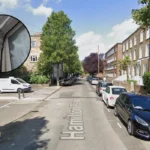
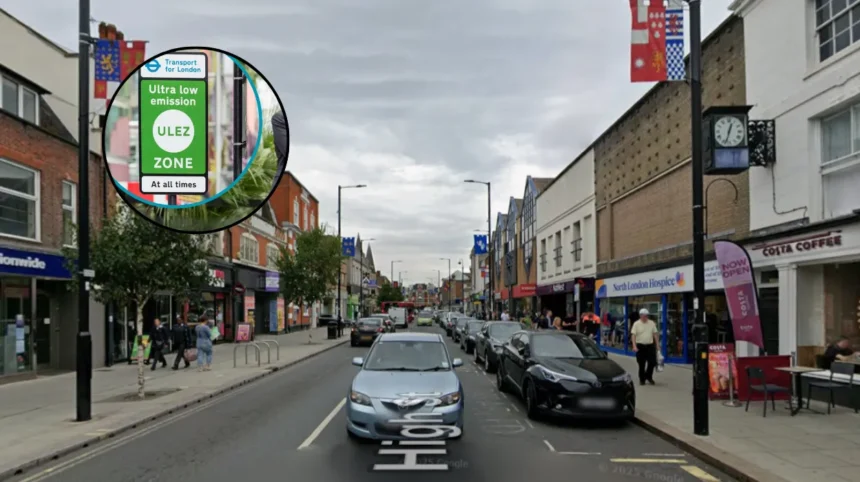
Barnet (North London News) August 17, 2026 – A steady and significant improvement in air quality across High Barnet town centre is continuing to be recorded by scientific services, with data indicating that nitrogen dioxide levels are dropping as electric vehicle adoption increases alongside the expansion of London’s Ultra Low Emission Zone. According to monitoring data released by local authorities, air quality measurements taken along Barnet High Street show that concentrations of nitrogen dioxide (NO2) have dropped from a reading of 51 in 2013 down to 25.3 in recent testing through 2025. Council officials state that these reduced figures are comparable with readings taken at similar local commercial hubs, including High Road Whetstone and Ballards Lane, proving that vehicular exhaust emissions in high street shopping areas are systematically declining.
What is driving the reduction in nitrogen dioxide across Barnet High Street?
The sustained decline in nitrogen dioxide levels throughout High Barnet town centre is largely attributed to two intersecting developments: the widening uptake of zero-emission electric vehicles and the structural impact of traffic management policies.
Barnet Council’s scientific services have monitored air quality across multiple zones due to historically elevated road traffic emissions. Recent sampling confirms that shopping thoroughfares like Barnet High Street are experiencing lower concentration levels of nitrogen dioxide compared to heavily trafficked major arterial roads, such as Hendon Way, where vehicular volume remains significantly higher.
To ensure that emission levels continue on a downward trajectory, local administrators are planning further enhancements to public charging infrastructure.
Barnet Council stated that more on-street electric vehicle charging points will be added across the borough to support residents switching away from combustion-engine models. Officials noted that Barnet already operates one of the largest on-street charging networks in the country, and adding infrastructure is viewed as a primary lever to encourage further progress towards cleaner air.
How has the expansion of the Ultra Low Emission Zone affected outer London boroughs?
A major report released by the Mayor of London evaluated the broader regional impacts of expanding the Ultra Low Emission Zone (ULEZ) across outer London boroughs in August 2023. As detailed in the mayoral report, the expansion achieved a 21 per cent reduction in nitrogen dioxide concentrations across outer London within its first year of operation.
Furthermore, the report documented that particulate matter (PM2.5) originating directly from vehicle exhaust emissions dropped by 31 per cent over the same period.
These measurable reductions across outer London boroughs reflect strategic environmental goals established at both regional and local levels.
The Mayor of London’s overarching target aims to bring capital-wide air quality into full compliance with World Health Organisation (WHO) guidelines by 2030. At the local authority level, Barnet Council has aligned its infrastructure investments and transport policies with a broader commitment to transform Barnet into a net zero carbon borough by 2042.
Explore More Barnet News
Barnet Council Extends £586k Contract with Local Disability Charity Barnet 2026
Former Volvo Cars Site to Become 139 Homes in Barnet 2026
Background of the particular development
Air quality monitoring in the London Borough of Barnet was established in response to long-term concerns regarding vehicle emissions on commercial high streets and residential transit corridors.
Historically, high concentrations of nitrogen dioxide—a toxic gas predominantly produced by diesel and petrol engines—prompted localized testing by municipal scientific teams to track public health risks.
In August 2023, the Ultra Low Emission Zone was extended to cover all London boroughs, requiring non-compliant, higher-emitting vehicles to pay a daily charge to drive within the zone. Initial regional assessments indicated rapid fleet compliance, as drivers transitioned to compliant petrol, hybrid, or fully electric models.
Alongside regulatory charges, Barnet Council prioritized local charging infrastructure development, installing hundreds of on-street charging points to facilitate the transition for residents without private driveways. The combined effect of national fleet modernization, regional ULEZ enforcement, and localized charging access has steadily shifted vehicle traffic composition across High Barnet, delivering the lower NO2 readings recorded between 2013 and 2025.
Prediction: How this development will affect local residents and high street businesses
The ongoing reduction in exhaust emissions and the planned expansion of charging infrastructure will impact the High Barnet community across health, economic, and logistical areas:
- Local Residents and Pedestrians: A continuous decrease in nitrogen dioxide and fine particulate matter significantly lowers environmental health risks, particularly for vulnerable groups such as children, elderly residents, and individuals with pre-existing respiratory conditions. Clearer air quality along shopping corridors makes pedestrian environments healthier and more attractive for daily movement.
- High Street Retailers and Business Owners: Reduced ambient pollution creates a more pleasant outdoor environment for shoppers, potentially increasing footfall and dwell time along Barnet High Street, High Road Whetstone, and Ballards Lane.
- Vehicle Owners and Commuters: As Barnet Council expands its on-street charging network, residents relying on street parking will encounter fewer barriers when switching to electric vehicles. However, motorists driving non-compliant petrol or diesel vehicles will continue to face financial pressure from ULEZ charges, accelerating the local phase-out of older combustion engines.