
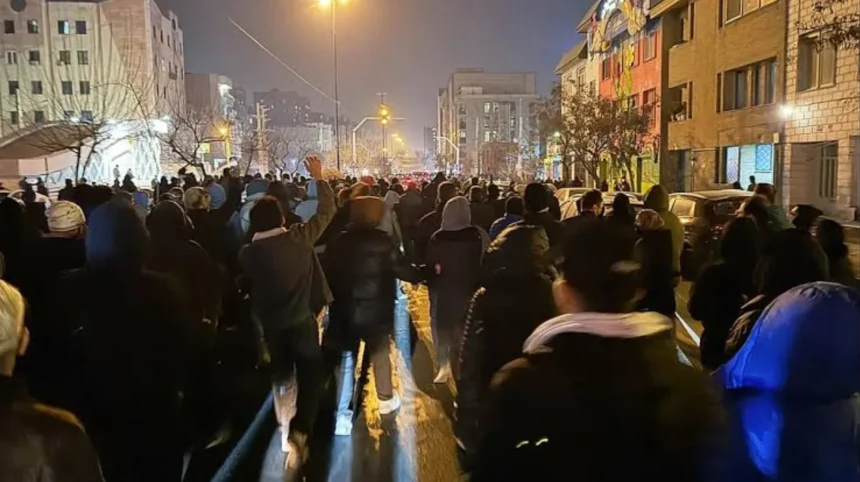
A social, political, economic, cultural, and spiritual crisis produces mass movements that accelerate progressive change, address the crisis, and offer alternatives to future crises. Passionate leaderships with an emotional connection to the masses shape visions, grasps the crisis, guides the struggles and turns it into an opportunity for the progressive transformation of society, with mass participation upholding the collective interests of individuals and societies across the world. Such mass movements produce new ideas and new leadership to sustain the politics of change that protects and promotes the interests of people and the planet.
Contemporary movements, however, lack visionary, charismatic leadership with revolutionary character. As a result, issue-based movements are short-lived and incapable of the radical transformation needed when the reactionary old order breaks down and gives way to new radical ideas that address the needs and desires of people, place, and time. The world is facing one of its worst crises in contemporary times, one that questions the very foundation of a habitable future for human existence.
Political parties, trade unions, professional associations, pressure groups, civil society groups, issue-based groups, and NGOs often organise meetings with preordained leaders elected through a stage-managed internal organisational democracy, even without popular support among their members. This so-called internal democracy, whether in centralised or decentralised form is designed to control dissent, domesticate spontaneity, manage oppositional and alternative ideas, and adopt a predictable bureaucratic organisational performance in order to impose ideas, decisions, and actions on people through a manufactured majoritarian consensus before protesting in the streets on various issues.
Such an undemocratic organisational process produces fundamentally undemocratic bureaucratic leaders behind liberal and democratic façades. These leaders give revolutionary speeches in public but practice the most reactionary ideas in their everyday lives. There is an unfathomable distance between their public pronouncements and private actions. Yet in revolutionary politics, there can be no separation between personal and political ideas.
The hierarchical organisational routine of committees, elections, meetings, and decision-making is replicating the feudal and capitalist systems that these leaders promised to fight in order to ensure liberty, equality, justice, and citizenship for all. The routinisation of politics and the ritualisation of revolution undermine mass confidence in leadership, organisation and its ideas. Leaders are imposed organisationally on people without an authentic mass base or revolutionary movement.
There is little difference between corporate and political leaders: leadership in both fields is bureaucratic, authoritarian, and lacking the charismatic qualities of mission, vision, passion and emotional connection with the masses. These leaders lead issue-based movements and then return to their well-fed offices to rest, without critical or revolutionary reflection on society’s past, present, and future or on their own actions, organisational practices or their role in politics. Both corporate and political leaders are self-serving and lack any commitment to people beyond ritual speeches during protest movements—speeches devoid of the revolutionary character defined by commitment, sacrifice, and organic spontaneity, humane emotions.
Rallies, meetings, ideas, slogans, and protests are curated in political party offices just as corporate decisions are made in boardrooms. This bureaucratic leadership in politics is designed by protocols of power that do not replace the structure with revolutionary processes but sustain power through manageable cosmetic changes. Such reforms absorb the revolutionary potential of people and depoliticise them by creating a culture of trust-free politics, where revolution is neutralised, its spontaneity is institutionalised, and its energy is domesticated and destroyed to impose reform rather than continue revolution.
State-managed leaders act like administrators rather than dynamic revolutionary leaders with passion and vision. Rigid organisational culture, processes, and hierarchies destroy the egalitarian conditions necessary for revolutionary politics. Political parties and organisations thereby produce a political culture in which self-preservation and promotion replaces revolutionary goals. They work for co-option, pacification, institutionalisation, and neutralisation of revolutionary politics, allowing the existing power structure to reproduce itself. Such a process depoliticises and dismantles the essential conditions for political and ideological trust. Trustless ideological politics produces anti-politics machine which works for power and undermines the working masses and their everyday needs, desires and interests.
In this context of crisis, the history of successful revolutions can guide present revolutionary politics so that it protects and promotes the interests of people and the future of planet. To achieve this foundational goal, it is imperative to move away from the curated routinisation of politics and ritualisation of revolution. Let revolution be spontaneous—not led by self-serving leaders manipulated from above but by passionate visionaries committed to the politics of sacrifice. Steve Biko was killed by white racist police officers of apartheid South Africa but never surrendered his ideals. Gandhi, Ambedkar, Mandela, and Martin Luther King were imprisoned by colonial and white racist rulers, yet they did not break their commitment to their people or their struggles for emancipatory ideals. Remember the words of Che Guevara, John Harris, Bhagat Singh, and his friends, who stood on the gallows without compromising their revolutionary idealism and did not forget to learn from the people while leading them.
History is overcrowded with idealistic revolutionary leaders who inspire present struggles for emancipation from all forms of war, conflict, discrimination, inequality, and exploitation. These revolutionary objectives can be achieved only after defeating the self-serving, passionless, stage-managed leaders and their organisational machinery that dilutes revolution and revolutionary path. Revolutions can clean these useless, reactionary and reformist leaders from politics as well. The stage-managed leaders and their curated official ideals are a burden on politics of revolutionary social change guided by people. Let collective struggle guided by collective decisions and collective leadership with accountability.