Key Points
- Surprise Defeat Ends Winning Streak: Arsenal suffered an unexpected 3-0 defeat against Brighton & Hove Albion, marking their first loss of the season following seven consecutive Premier League victories.
- Tactical Evolution and Increased Risk: Reigning Premier League champions Arsenal have transitioned into a more ambitious 3-1-6 shape in possession, moving away from last season’s control-heavy structure to take greater tactical gambles.
- Trust in Youth: Mikel Arteta has maintained faith in 20-year-old Myles Lewis-Skelly in a single-pivot midfield role, continuing a midfield reconfiguration that sees Declan Rice playing deeper alongside Ezri Konsa and Gabriel Magalhães.
- Hurzeler’s Tactical Triumph: Brighton head coach Fabian Hürzeler defied expectations by deploying an aggressive, high-pressing setup rather than a pragmatic stance, thoroughly outclassing the champions at the Amex Stadium.
- Post-Loss Reaction: Arteta publicly conceded that Brighton “were really good,” leaving the squad to process tactical adjustments during the three-week international break ahead of their return against Leeds United.
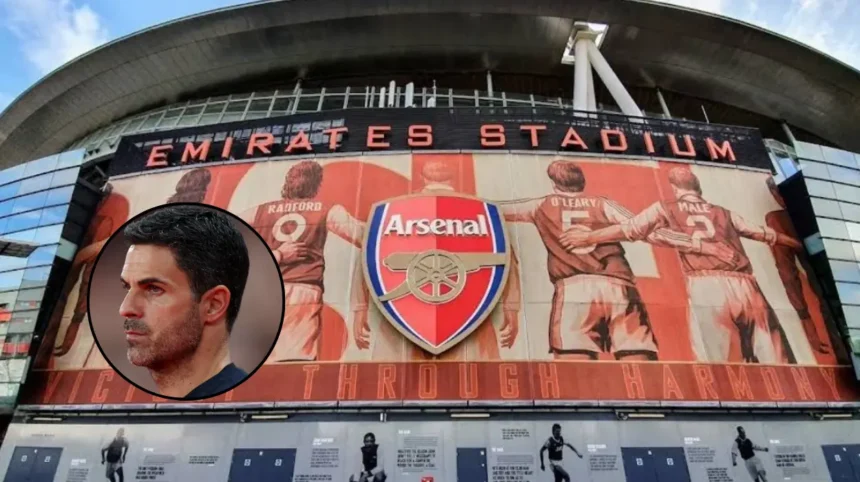
Arsenal (North London News) October 9, 2026 – Mikel Arteta has fashioned many versions of Arsenal since taking charge of the club. Taking over a side in need of new life in 2019, he won the FA Cup in his first season by playing a defensive style of football, unafraid of using a back five. As time passed, the Gunners played a free-flowing style of attacking football—best seen in 2022—before creating a side that reduced the variance of a match, maximised control, and became physically difficult to compete with. Having finally won the Premier League title last season, Arteta is reinventing his side again. Perhaps freed by having lifted the trophy, the Spaniard has taken more gambles in personnel and tactics. However, while an increased appetite for risk means the wins can be greater, so can the losses.
- Key Points
- How did Fabian Hürzeler dismantle Arsenal’s new system at the Amex Stadium?
- Why has Mikel Arteta decided to introduce more tactical risk this season?
- What is the background to this tactical evolution at Emirates Stadium?
- How will Arteta’s response affect Arsenal’s squad and fans moving forward?
“Brighton were really good,” Mikel Arteta confessed after Arsenal’s 3-0 defeat before the international break. Fabian Hürzeler masterminded the dominant victory against the reigning champions, defiantly opting against a pragmatic approach. It is rare Arsenal are totally outclassed, so the loss to Brighton left a lingering sense of uncertainty going into the extended break. Given the timing of the defeat, it has been easy to forget that Arteta’s men had won every game prior to that this season.
So what can be made of Arsenal’s new approach? Last season, the heart of Arsenal had Martín Zubimendi at its base with Declan Rice in a more box-to-box role to the left of him. Arsenal lost some momentum as the end of the season approached, but it was the surprise use of Myles Lewis-Skelly in holding midfield that reinvigorated Arsenal, helping them over the line. Arteta has since continued to trust the 20-year-old in that key role.
This season, Arsenal have used a 3-1-6 shape in possession, formed by Declan Rice dropping deep—rather than pushing on as he did in the first part of last season—to create a back three alongside Ezri Konsa and Gabriel Magalhães. Lewis-Skelly plays as the single pivot, linking the back part and the front part of the team.
How did Fabian Hürzeler dismantle Arsenal’s new system at the Amex Stadium?
The loss to Brighton provided a sharp, analytical breakdown of how Arteta’s high-risk 3-1-6 formation can be exposed by an opponent willing to match their intensity. As observed by football reporters covering the fixture, Brighton head coach Fabian Hürzeler refused to sit in a low block to absorb pressure from the reigning champions. Instead, Hürzeler set up his side to aggressively target the transitional space around Arsenal’s single pivot.
With Declan Rice pulled back into a secondary defensive line alongside Ezri Konsa and Gabriel Magalhães, Myles Lewis-Skelly was left as the solitary link between the defense and a heavy six-man attack. Brighton targeted this structure by employing intense central pressing, cutting off passing lanes to the 20-year-old midfielder and forcing turnover after turnover in dangerous regions.
As reported by sports analysts across British media outlets following the clash, Arsenal were unable to regain control once Brighton broke through their initial counter-press. Hürzeler’s forward line punished the space vacated by Arsenal’s committed attackers, scoring three unanswered goals to seal an emphatic victory. The defeat served as a stark tactical baseline, demonstrating that while Arteta’s open system can overload defensive setups, it leaves significant central exposure against top-tier pressing sides.
Why has Mikel Arteta decided to introduce more tactical risk this season?
Having finally broken their title drought and claimed the Premier League crown last season, Arteta’s strategic vision appears to have shifted from pragmatic risk mitigation to dynamic dominance. As highlighted in recent press briefings prior to the match, Arteta believes that remaining static in modern football allows tactical rivals to decode a team’s playing style.
During his opening years at the Emirates Stadium, Arteta prioritized structural stability. The early 2019 FA Cup victory relied heavily on compact defensive structures, which evolved over time into the highly organized, possession-oriented unit of 2022. By last season, Arsenal had perfected a low-variance model designed to suffocatingly restrict opposition chances through physical dominance and dual-pivot midfield control featuring Martín Zubimendi and Declan Rice.
However, the shift toward a 3-1-6 build-up shape reflects a desire to break down increasingly deep defensive blocks that Arsenal face as champions. By committing six players into advanced attacking zones, Arteta aims to overwhelm defensive backlines and create higher-value scoring opportunities. The structural tradeoff, as proven during the journey to the Amex Stadium, requires flawless execution from the central pivot and precise defensive recovery from the trailing unit.
What is the background to this tactical evolution at Emirates Stadium?
The foundation for Arsenal’s current tactical setup was laid during the dramatic run-in to the previous Premier League campaign. Having led the table for substantial portions of the season, Arsenal experienced a period of mid-spring fatigue where their established tactical patterns became predictable to opposition managers. The original foundation relied on Martín Zubimendi operating as the main orchestrator at the base of midfield, with Declan Rice operating box-to-box to provide physical coverage.
When structural fatigue threatened to derail their title charge, Arteta turned to academy graduate Myles Lewis-Skelly. Deployed as an inverted holding midfielder, Lewis-Skelly’s press resistance, agile turning circle, and direct progressive passing added an unpredictable dynamic to Arsenal’s build-up play. His introduction allowed Arsenal to maintain forward momentum and secure the necessary points to cross the finish line as Premier League champions.
Encouraged by Lewis-Skelly’s impact, Arteta integrated the setup permanently ahead of the current campaign. Rather than returning to the dual-pivot structure that served as the backbone of their championship season, Arteta elected to refine the system into a permanent 3-1-6 configuration, placing full trust in the 20-year-old as a single pivot while adjusting Declan Rice’s defensive positioning to bolster the backline build-up alongside summer arrival Ezri Konsa and Gabriel Magalhães.
How will Arteta’s response affect Arsenal’s squad and fans moving forward?
The immediate impact of the 3-0 defeat against Brighton will directly influence how Arsenal handle their squad rotation, tactical versatility, and mentally approach their title defense. For the players, the three-week international break provides an crucial window of reflection. Arteta’s history indicates he rarely abandons his overarching tactical philosophies after a single setback, meaning the squad will be expected to master the demands of the 3-1-6 shape rather than revert to a conservative style.
For Myles Lewis-Skelly, the performance and subsequent media focus place a heightened level of scrutiny on his operational role as the team’s single pivot. Opposition managers will inevitably review Hürzeler’s blueprint to replicate Brighton’s pressing traps. Consequently, Arteta may be forced to offer greater tactical protection to his young midfielder, potentially re-introducing Martín Zubimendi or shifting Declan Rice higher up the pitch during high-stakes fixtures against top-six rivals.
For the Arsenal fanbase and observers of the club, this development signals that the current season will likely feature more open, volatile encounters compared to the controlled, low-scoring victories of last year. While the increased appetite for risk offers higher offensive yield against mid-table units, supporters must adjust to the reality that occasional balance disruptions will occur against tactically sharp opposition. How Arteta fine-tunes this system in upcoming fixtures, starting against Leeds United, will determine whether this strategic evolution represents a permanent progression or an experiment requiring tactical moderation.