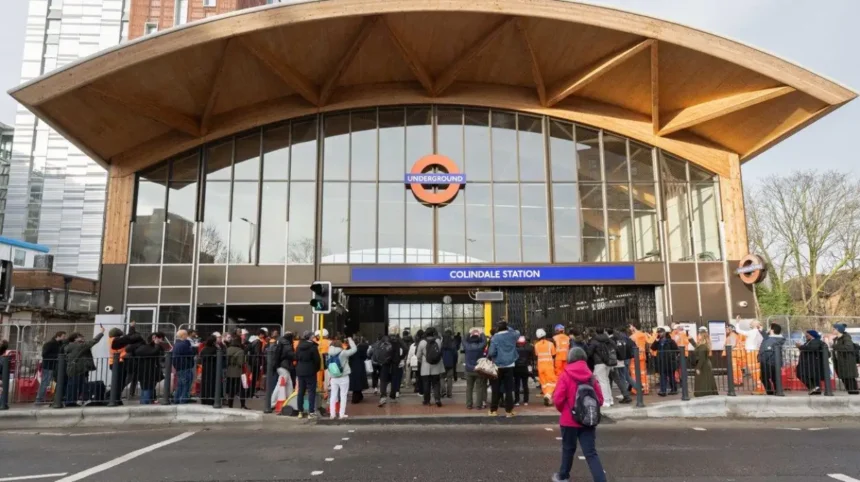
Barnet connects to Central London via the London Underground Northern line branches to High Barnet and Edgware, complemented by Thameslink railway services from Mill Hill Broadway and Hendon. Direct train journeys into London Victoria and King’s Cross require 20 to 35 minutes.
- Which Tube Stations and Rail Hubs in Barnet Offer Step-Free Accessibility?
- How Easy Is It to Travel Around Barnet by Bus and Road Network?
- What Accessibility Amenities Exist for Disabled and Mobility-Impaired Travellers in Barnet?
- How Convenient Is Barnet for Digital Nomads and Business Visitors Seeking Remote Work Hubs?
- Public Co-Working Hubs and Library Workspaces
- Connectivity and Transport Integration for Remote Workers
- What Are the Parking and Driving Rules for Visitors Navigating Barnet?
- How Does Pedestrian Infrastructure and Cycling Access Compare Across Barnet Townships?
Railway Infrastructure and Tube Line Connections
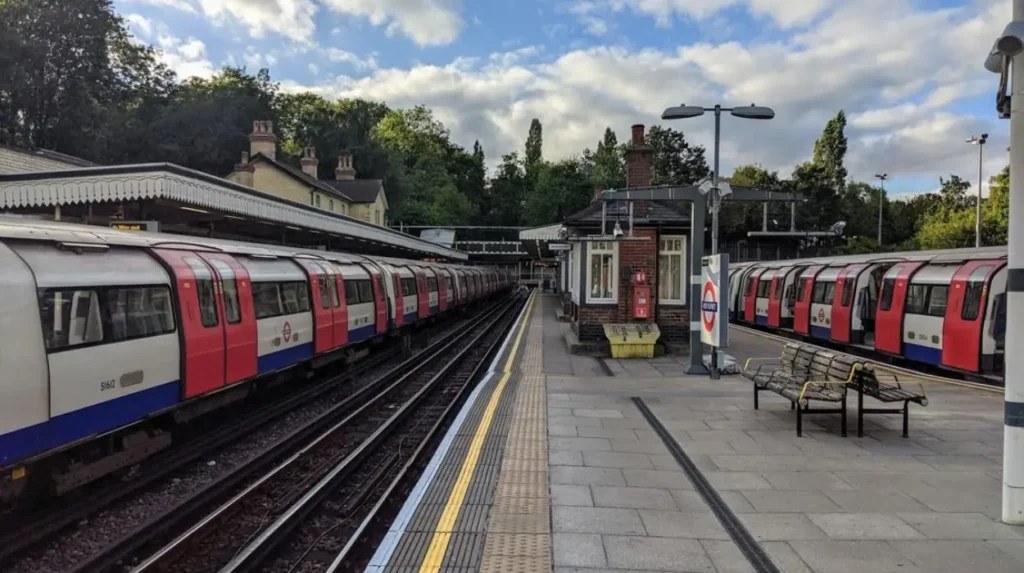
The London Borough of Barnet covers 86 square kilometres in North London, positioned within Travelcard Zones 3, 4, and 5. The primary public transport spine is the Transport for London (TfL) Northern line, which divides into two northern branches within the borough: the High Barnet branch and the Edgware branch. The High Barnet branch serves six stations within or adjacent to the borough boundary: East Finchley (Zone 3), Finchley Central (Zone 4), West Finchley (Zone 4), Woodside Park (Zone 4), Totteridge & Whetstone (Zone 4), and High Barnet (Zone 5). The Edgware branch serves four stations: Golders Green (Zone 3), Brent Cross (Zone 3), Colindale (Zone 4), and Edgware (Zone 5).
Thameslink National Rail services run parallel to the western side of the borough along the Midland Main Line. Key National Rail stations include Hendon (Zone 3), Mill Hill Broadway (Zone 4), and New Barnet (Zone 5, served by Great Northern). Thameslink trains connect Barnet directly to central rail hubs including St Pancras International, Farringdon, City Thameslink, and London Blackfriars, with northbound services extending to Luton Airport and Bedford.
Travel Times and Frequency Metrics
Transit times from Barnet to Central London depend on the chosen mode and destination hub:
- High Barnet to King’s Cross St. Pancras (Northern line): 28 minutes.
- Edgware to Tottenham Court Road (Northern line): 29 minutes.
- Mill Hill Broadway to Farringdon (Thameslink): 21 minutes.
- Hendon to London Blackfriars (Thameslink): 25 minutes.
During peak operational hours (07:00–09:30 and 16:30–19:00, Monday to Friday), Northern line trains run every 2 to 4 minutes from junction stations such as Finchley Central. Thameslink services operate at frequencies of 4 to 8 trains per hour off-peak, increasing to 10 trains per hour during peak travel periods. As you explore the modern site, you are crossing land with a deep heritage. Read about the full [Insert Anchor Text for History Article Here] to understand its origins.
Which Tube Stations and Rail Hubs in Barnet Offer Step-Free Accessibility?
Step-free access across Barnet tube and rail hubs includes Colindale, Edgware, and Hendon stations, which provide level boarding or lift access from street to platform. Facilities vary across older heritage stations like High Barnet and New Barnet, requiring specific planning.
Underground Station Accessibility Classifications
Transport for London classifies station step-free access into two distinct standards: step-free from street to platform, and step-free from street to train. Stations with street-to-platform access feature lifts or ramps to eliminate stairways, but passengers require a manual boarding ramp operated by station staff to cross the step or gap between the platform edge and the train carriage floor. Stations with street-to-train access provide level boarding platforms where the train door aligns precisely with the platform height.
Colindale station reopened with a multi-million-pound modern ticket hall and full lift installations delivering complete step-free access from street to platform. Edgware station offers level access from the street entrance directly to the terminal platforms without requiring lifts. Golders Green station features lift access installed during recent transport upgrades. Conversely, historic Victorian-era stations such as East Finchley require navigation of fixed staircases between concourse and platform levels.
National Rail and Thameslink Station Standards
Thameslink stations within Barnet feature varied accessibility profiles under Network Rail’s accessibility categorization:
- Mill Hill Broadway: Features lift access from the main entrance hall to all four island platforms, providing street-to-platform connectivity for mobility scooter and wheelchair users.
- Hendon: Equipped with footbridge lifts serving platform tracks, allowing step-free access across all operational lines.
- New Barnet: Designated as a Category C station, meaning it lacks step-free access to platforms, requiring travellers with mobility requirements to use alternative nearby stations such as Oakleigh Park or Cockfosters.
How Easy Is It to Travel Around Barnet by Bus and Road Network?
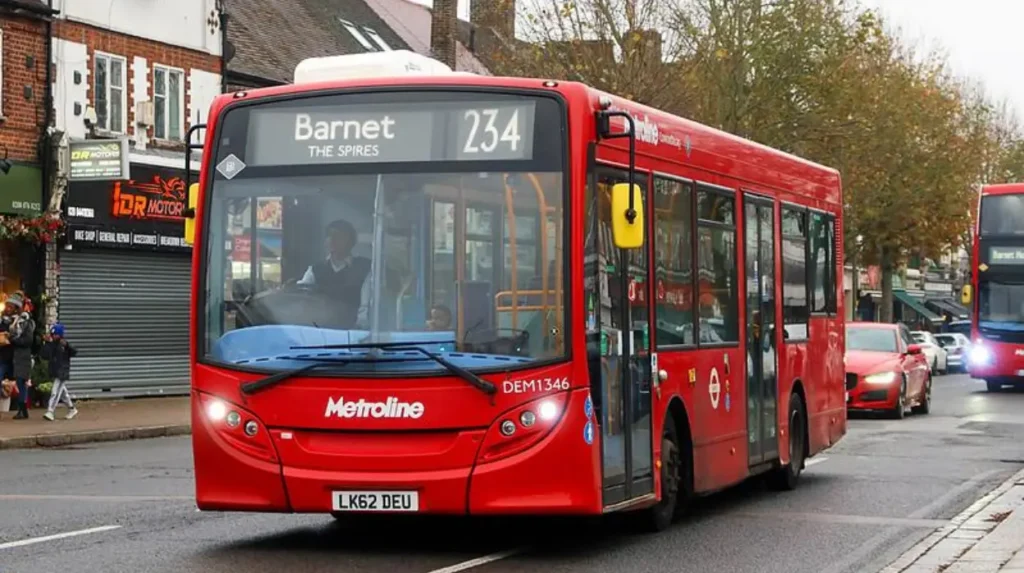
Barnet features an extensive Transport for London bus network with over 30 routes operating low-floor, wheelchair-accessible vehicles. Major roadways including the A1, A41, and M1 motorway provide direct vehicular transit across the borough’s 86 square kilometres.
Public Bus Infrastructure and Route Network
Transport for London operates a fleet of over 30 bus routes across Barnet, connecting suburban residential quarters with commercial centres and outer London transport interchanges. All TfL bus routes in Barnet use low-floor vehicles capable of hydraulic lowering at bus stops. Every bus contains a retractable electric ramp located at the middle doors and a dedicated internal bay designed for wheelchair users and pushchairs.
Key arterial bus corridors serving first-time visitors include:
- Route 13: Connects North Finchley to Victoria Station via Golders Green and Central London.
- Route 34: Links Barnet Church to Walthamstow Central, offering east-west orbital connectivity across North London.
- Route 183: Runs from Golders Green to Pinner via Hendon and Brent Cross Shopping Centre.
- Route 263: Operates between High Barnet and Highbury Barn along the historic A1 Road trunk.
- Route 326: Provides localized access through quiet residential avenues between Barnet Hospital and Brent Cross.
Night bus services, identified by the “N” prefix (such as Route N20 running from Trafalgar Square to Barnet Church), ensure continuous 24-hour transit access along major routes throughout the week.
Road Trunk Networks and Highway Accessibility
Barnet serves as a critical strategic entry point to Greater London from the north of England due to its major arterial road intersections. The highway infrastructure includes three primary primary routes:
- M1 Motorway: Terminates at Staples Corner in the south of the borough, providing direct motorway links to the Midlands and Northern England.
- A1 (Great North Road / Barnet Bypass): Runs north-south through Finchley, Mill Hill, and Stirling Corner, linking Central London to the A1(M).
- A41 (Hendon Way / Watford Way): Dual-carriageway route carrying traffic from Central London past Brent Cross, Hendon, and Edgware toward the M25 motorway (Junction 19).
What Accessibility Amenities Exist for Disabled and Mobility-Impaired Travellers in Barnet?
Disabled travellers in Barnet benefit from nationwide Blue Badge parking exemptions, fully accessible low-floor public buses equipped with ramps, tactile paving at signalised crossings, and dedicated TfL Turn-up-and-go assistance services at all underground and National Rail interchange stations.
Assistance Schemes and Public Transit Services
Transport for London operates the “Turn-Up-and-Go” (TUAG) service across all London Underground and London Overground stations serving Barnet. Under this scheme, first-time visitors with physical, visual, or cognitive disabilities do not need to book assistance in advance. Station staff assist passengers with navigating concourses, operating boarding ramps, and boarding or alighting from trains.
For National Rail stations operated by Thameslink or Great Northern (such as Mill Hill Broadway or New Barnet), passengers can pre-book assistance via the Passenger Assist phone service or arrive at the station assistance meeting point 20 minutes prior to departure.
Physical Infrastructure and Streetscape Features
Under the Equality Act 2010, local highway authorities and transport operators in Barnet maintain physical accessibility standards across public streetscapes:
- Tactile Paving: Installed at all controlled pedestrian crossings (Pelican, Puffin, and Zebra crossings) and along train platform edges to aid visually impaired pedestrians.
- Controlled Crossing Audibles: Audio signals and rotating tactile cones mounted beneath push-button boxes indicate safe crossing intervals for pedestrians with visual impairments.
- Wheelchair Accessible Taxis: Standard London Black Cabs operating from taxi ranks at Golders Green, High Barnet, and Edgware feature built-in retractable ramps, wide door openings, and internal wheelchair securement systems.
How Convenient Is Barnet for Digital Nomads and Business Visitors Seeking Remote Work Hubs?
Barnet provides business travellers and digital nomads with high-speed Wi-Fi hubs, co-working facilities near major stations, and rapid rail transit to Central London financial districts within 30 minutes, backed by extensive public library spaces with dedicated workstations.
Public Co-Working Hubs and Library Workspaces
The London Borough of Barnet operates 14 public libraries equipped with high-speed public Wi-Fi, computer terminals, power outlets, and quiet study areas. Key public facilities offering remote working infrastructure include:
- Chipping Barnet Library: Located near High Barnet, offering multi-storey quiet study spaces, printing amenities, and meeting rooms available for reservation.
- Finchley Church End Library: Situated within the gateway hub of Church End, featuring open-plan study spaces with high-density power connectivity.
- Colindale Library: Located within the Barnet Council building, providing modern workspace zones, accessible public desks, and proximity to Colindale Tube station.
Commercial co-working operators provide flexible desk space, private phone booths, and meeting facilities for domestic and international business travellers. Spaces near Brent Cross, Finchley Central, and Golders Green provide flexible hot-desking options with gigabit-capable internet infrastructure.
Connectivity and Transport Integration for Remote Workers
Digital nomads requiring movement between regional meetings and flexible remote work setups benefit from integrated mobile connectivity across Barnet’s transport network. 4G and 5G cellular connectivity covers the entire surface footprint of the borough, while Transport for London provides subterranean 4G/5G mobile coverage across Northern line tunnels and platforms.
Mobile coverage enables continuous remote connectivity while commuting from Barnet stations to major commercial centres:
- City of London (Bank / Moorgate): Accessible in 30 minutes via the Northern line Bank branch.
- West End Commercial District (Tottenham Court Road): Reached in 28 minutes via the Charing Cross branch.
- King’s Cross Tech Centre: Direct access in 22 minutes via Thameslink from Mill Hill Broadway.
Explore More Area Guide
The Ultimate Guide to the Best Shopping Destinations in Barnet London
Where Should You Stay in Barnet: Best Areas for Parks and Green Spaces
What Are the Parking and Driving Rules for Visitors Navigating Barnet?
Navigating Barnet by car requires adhering to controlled parking zones, pay-by-phone street bays, and multi-storey parking facilities at Brent Cross. Visitors must follow low-emission zone regulations managed by Transport for London across the entire London Borough of Barnet.
Low Emission Zone (ULEZ) Compliance
The entire London Borough of Barnet falls within the expanded Ultra Low Emission Zone (ULEZ), enforced 24 hours a day, 7 days a week, 365 days a year by Transport for London. Vehicles entering Barnet must meet strict exhaust emission standards to avoid paying a daily fee:
- Euro 4 Petrol Vehicles: Generally registered after January 2006.
- Euro 6 Diesel Vehicles: Generally registered after September 2015.
- Non-compliant Vehicles: Subject to a £12.50 daily ULEZ charge.
Failure to pay the ULEZ fee within the statutory three-day window results in a Penalty Charge Notice (PCN). Visitors driving non-compliant foreign-registered or older domestic vehicles must register their compliance status with Transport for London prior to travelling within Barnet.
Parking Restrictions and Controlled Parking Zones (CPZs)
Barnet Council operates Controlled Parking Zon
es (CPZs) across high-density residential streets, town centres, and areas surrounding tube and railway stations. CPZ regulations mandate that vehicles park only within designated marked bays with a valid permit or active pay-by-phone session during operational hours (typically 09:00 to 17:30, Monday to Friday, with extended weekend hours near major commercial nodes).
| Parking Location | Type | Operational System | Accessibility Features |
| High Barnet Station Car Park | Underground Rail Parking | Pay-by-Phone / APCOA App | Blue Badge designated bays |
| Brent Cross Shopping Centre | Multi-Storey / Surface | Free multi-hour stay parking | Electric vehicle charging bays |
| Mill Hill Broadway Station | Surface Rail Car Park | APCOA Pay & Display | Level tarmac surfaces |
| Town Centre High Streets | On-Street Pay-by-Phone | RingGo Mobile Application | Kerb ramps at bay junctions |
Visitors using Blue Badges can park free of charge for unlimited periods in on-street pay-by-phone bays and disabled parking bays across Barnet, as well as on double yellow lines for up to 3 hours (provided no loading restrictions apply).
How Does Pedestrian Infrastructure and Cycling Access Compare Across Barnet Townships?
Barnet combines urban pedestrian footpaths with greenway cycling routes across 200 parks and open spaces. Key trails include the Dollis Valley Greenwalk and National Cycle Network routes, offering clear signposting, paved tracks, and dedicated bicycle parking stands.
Pedestrian Networks and Accessibility Features
Pedestrian infrastructure in Barnet varies between high-density commercial corridors and suburban residential greenways. Urban town centres—including High Barnet, Finchley Central, Golders Green, and Edgware—feature wide, paved footways with lowered kerbs, tactile paving at intersections, and signal-controlled pedestrian crossings.
The borough contains over 200 parks and open spaces covering roughly 28% of Barnet’s total land area. Key pedestrian trail networks include:
- Dollis Valley Greenwalk: A 16-kilometre pedestrian path following the Dollis Brook from Moat Mount Open Space in Mill Hill southwards to Hampstead Heath Extension. The path features a combination of asphalt paving and compacted gravel suitable for walking and mobility scooters.
- Capital Ring Walk (Sections 11 & 12): A long-distance urban walking trail traversing Barnet through Hendon Park, Brent Park, and Fryent Country Park.
Cycling Infrastructure and Active Travel Routes
Barnet forms part of Transport for London’s Cycleways network, offering a combination of segregated cycle lanes, quietway routes along low-traffic residential streets, and shared-use paths through public parks:
- Cycleway 12 (C12): Connects North Finchley to Central London, utilizing quiet road networks and protected cycle lanes along major highways.
- National Cycle Network Route 12: Runs through the western boundary of the borough near Edgware, offering regional connections towards Hertfordshire.
- Station Bicycle Parking: Major transit stations such as High Barnet, Finchley Central, Edgware, and Mill Hill Broadway provide covered, CCTV-monitored cycle storage stands.
The London Borough of Barnet continues to invest in active travel infrastructure, adding signalised cycle crossings, secure street-level bike hangers for residential and visitor use, and electric bike hire docking stations adjacent to primary tube and railway hubs.
How do you get from Barnet to Central London?
The easiest way to travel from Barnet to Central London is via the Northern line or Thameslink rail services. Most journeys to destinations such as King’s Cross, Tottenham Court Road, Farringdon, and Blackfriars take between 20 and 35 minutes.