Barnet is a large north London borough with distinct neighbourhoods shaped by separate histories, town centres, transport routes, housing patterns and community institutions. Areas such as High Barnet, East Barnet, Finchley, Hendon, Mill Hill and Golders Green have recognisable identities that visitors can experience within a relatively compact part of London.
- Which Barnet neighbourhoods have the strongest local identity?
- Why does Barnet have so many distinct neighbourhood identities?
- What gives High Barnet its strong local identity?
- How does East Barnet differ from High Barnet?
- Why is Finchley considered a distinct Barnet community?
- What makes Golders Green’s local identity different?
- How does Hendon maintain a strong local identity?
- Why does Mill Hill have a separate community identity?
- Which Barnet neighbourhood is strongest for historic character?
- Which Barnet neighbourhoods have the strongest food and shopping identity?
- Which Barnet neighbourhoods are strongest for parks and outdoor identity?
- Which Barnet neighbourhoods are best for understanding everyday local life?
- How do transport connections shape Barnet’s neighbourhood identities?
- How should visitors compare Barnet neighbourhoods?
- What makes Barnet’s local identities important for the future?
Which Barnet neighbourhoods have the strongest local identity?
High Barnet, East Barnet, Finchley, Hendon, Mill Hill and Golders Green have some of Barnet’s strongest local identities. Their character comes from historic centres, independent businesses, parks, community institutions, architecture, religious sites and long-established transport connections.
Barnet London Borough Council was created in 1965 through the merger of several former local government areas. The borough covers approximately 86.7 square kilometres and contains a wide range of residential and commercial environments.
The name Barnet itself has older roots. High Barnet developed around a historic market centre, while neighbouring settlements retained their own identities as London expanded northwards.
For visitors, this distinction matters. Barnet is not a single uniform destination. Each neighbourhood offers a different combination of high streets, green spaces, historic buildings, cafés, restaurants, cultural venues and transport connections.
The strongest local identity generally appears where a neighbourhood has a recognisable centre and a long-established community structure. Historic market areas are particularly important because they combine commerce, public space and local services.
Why does Barnet have so many distinct neighbourhood identities?
Barnet has distinct neighbourhood identities because its modern borough combines older villages, market towns and suburban districts that developed at different times. Historic settlement patterns, transport infrastructure, religious communities, housing development and local town centres preserved these differences.
Barnet’s geography explains much of this diversity. The borough extends from areas close to the North Circular Road towards the Hertfordshire boundary.
Before the creation of Greater London in 1965, many present-day Barnet neighbourhoods belonged to different administrative areas. The historic county of Middlesex covered several southern and central parts of modern Barnet, while areas further north had strong Hertfordshire connections.
Railway development also transformed the area. New routes connected northern settlements with central London and encouraged suburban housing growth during the nineteenth and twentieth centuries.
The result is a layered urban landscape. A historic village centre can sit close to Victorian terraces, interwar housing estates and modern apartment developments.
Local identity is therefore not based on one characteristic. It reflects the interaction of history, architecture, commerce, transport and community life.
As you explore the modern borough, you are crossing land with a deep heritage. Read about the full to understand its origins.
What gives High Barnet its strong local identity?
High Barnet has one of the clearest historic identities in the borough because it developed around a medieval settlement and long-established market. Barnet Hill, the High Street, St John the Baptist Church and nearby historic sites reinforce its distinctive town-centre character.
High Barnet is commonly associated with the historic town around Barnet Hill and the High Street.
The area’s identity is closely connected with Barnet Market. Markets have played an important role in the settlement’s development for centuries, creating a commercial focus that remains visible today.
St John the Baptist Church is another important historic landmark. The church stands near the traditional centre and reflects the area’s long religious and architectural history.
The Battle of Barnet took place in 1471 during the Wars of the Roses. The battle was fought near the historic settlement and became one of the most significant events associated with the area.
The historic battlefield landscape extends beyond the present-day town centre. Visitors interested in local history can therefore connect High Barnet’s modern streets with events from medieval England.
High Barnet also benefits from strong transport identity. High Barnet Underground Station is the northern terminus of the Northern line’s High Barnet branch. This connection places the historic centre directly within London’s public transport network.
The combination of market activity, heritage, transport and local services gives High Barnet an unusually recognisable identity.
How does East Barnet differ from High Barnet?
East Barnet has a more village-like suburban identity than High Barnet, with its own historic centre, independent businesses, churches, residential streets and green spaces. Its separate development gives the neighbourhood a community character rather than functioning simply as an extension of High Barnet.
East Barnet developed around an older settlement pattern and remains distinct from High Barnet.
The area contains a traditional village centre around East Barnet Road and nearby streets. Local shops, cafés, restaurants and community facilities support everyday activity.
St Mary the Virgin Church is one of the area’s historic landmarks. Its presence reflects the long-established settlement that existed before twentieth-century suburban expansion.
East Barnet also contains residential streets with a mixture of housing styles. Victorian and Edwardian properties sit alongside later suburban homes.
Green spaces reinforce the area’s identity. Oak Hill Park provides open space, walking areas and recreational facilities. The park is an important local destination rather than simply a piece of undeveloped land.
The neighbourhood’s separation from the main High Barnet centre is also significant. East Barnet developed its own commercial and social routines.
For visitors, East Barnet is therefore useful for understanding the borough beyond its best-known historic town centre. Its identity is based on village-scale streets, local services and access to green space.
Why is Finchley considered a distinct Barnet community?
Finchley has a strong local identity because it contains established town centres, historic buildings, suburban neighbourhoods, parks and major transport connections. North Finchley, Finchley Central and East Finchley function as recognisable local areas while remaining part of the wider Finchley identity.
Finchley is one of the largest and most recognisable areas in Barnet.
Its identity is distributed across several centres rather than concentrated in one historic market town. North Finchley has a substantial commercial centre around Tally Ho Corner and North Finchley High Road.
Finchley Central developed around transport connections and suburban expansion. Finchley Central Underground Station is on the Northern line, providing a direct connection with central London.
East Finchley has another distinctive identity. Its high street, independent businesses and residential streets create a separate local centre.
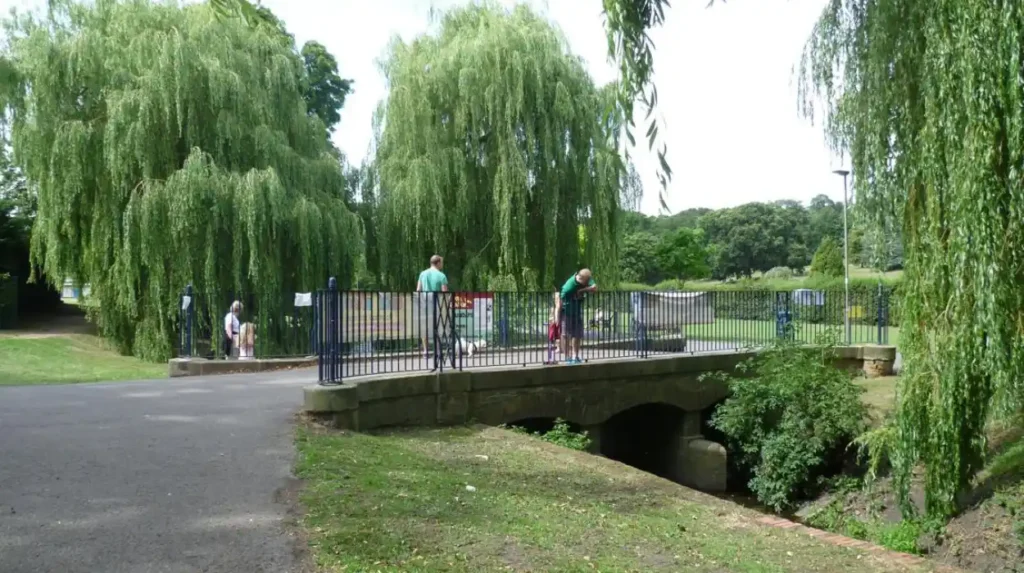
Finchley’s history also includes notable institutional landmarks. Stephens House and Gardens, formerly Avenue House, is a historic property and public green space in Finchley. It provides an example of the area’s older suburban landscape.
Victoria Park in Finchley is another important recreational space. The area combines established housing with accessible public open space.
The presence of multiple local centres explains why people often describe Finchley through specific subareas. North Finchley and East Finchley have different commercial environments and streetscapes even though both form part of the broader Finchley area.
What makes Golders Green’s local identity different?
Golders Green has a distinctive identity shaped by its Jewish community, international population, commercial high street, religious institutions and transport connections. Its restaurants, shops, synagogues, cafés and cultural businesses create a particularly recognisable community environment within Barnet.
Golders Green is one of Barnet’s most distinctive multicultural neighbourhoods.
The area developed rapidly during the late nineteenth and twentieth centuries. Transport improvements encouraged residential and commercial expansion.
Golders Green Underground Station opened in 1907 as part of the railway development that became associated with the Northern line. The station helped strengthen the area’s connection with central London.
Jewish community life is a major feature of Golders Green. The neighbourhood contains synagogues, kosher food businesses, community organisations and Jewish schools and institutions.
The high street also demonstrates the area’s international character. Shops and restaurants serve residents and visitors from different cultural backgrounds.
Golders Green Crematorium is another notable landmark. Established in 1902, it is one of Britain’s oldest crematoria and contains memorials associated with prominent figures.
Golders Hill Park lies nearby and connects the neighbourhood with Hampstead Heath. Its landscaped environment provides a contrast to the busy commercial streets.
The combination of religious institutions, food businesses, transport, public spaces and established community networks gives Golders Green a strong and easily identifiable character.
How does Hendon maintain a strong local identity?
Hendon has a strong identity based on its historic centre, diverse communities, commercial districts, educational institutions, parks and transport infrastructure. Hendon Central and Hendon town centre provide recognisable urban areas, while Hendon’s older buildings preserve evidence of its earlier settlement history.
Hendon occupies an important position in northwest London.
The area has a long history that predates modern suburban expansion. Hendon was historically a parish and rural settlement before London’s growth transformed its landscape.
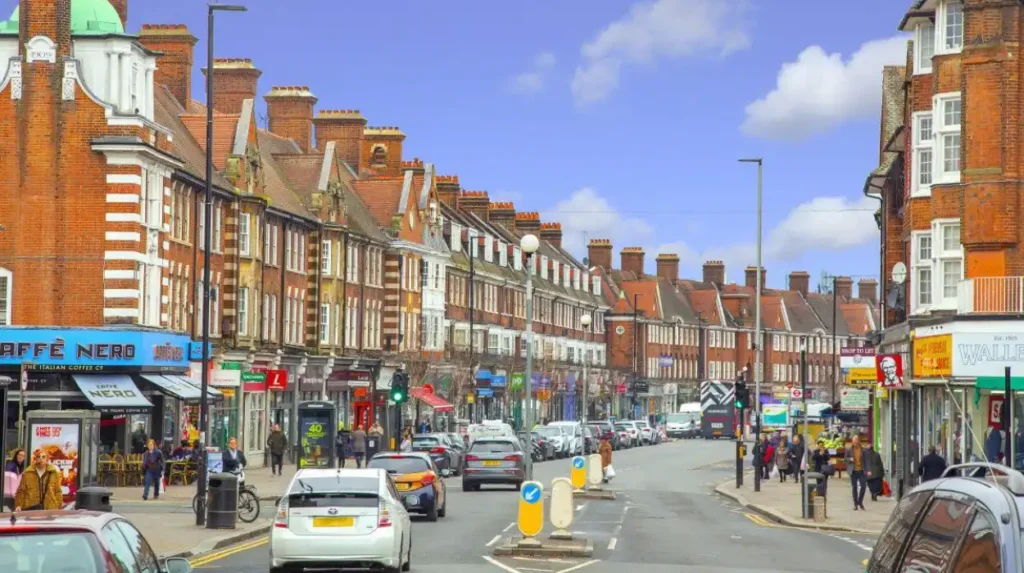
Hendon Central is now a major transport and commercial point. Hendon Central Underground Station is on the Northern line’s Edgware branch.
The area also has strong Jewish community connections, particularly around Hendon and nearby neighbourhoods.
Hendon Park provides a substantial green space for residents and visitors. The park includes recreational facilities and open areas that contribute to local quality of life.
The Royal Air Force Museum in Hendon is one of the area’s most significant visitor attractions. It documents the history of military aviation and contains historic aircraft and related collections.
The museum gives Hendon an identity that extends beyond residential life. It is also an important destination for domestic and international visitors.
Hendon’s combination of heritage, transport, community institutions, green space and aviation history makes it one of Barnet’s most varied neighbourhoods.
Why does Mill Hill have a separate community identity?
Mill Hill has a distinct identity because of its elevated landscape, village-style centres, historic institutions, green spaces and suburban development. Mill Hill Village and Mill Hill Broadway represent different aspects of the area, combining older rural character with modern transport and commercial facilities.
Mill Hill is located in the northern part of Barnet and has a different physical character from denser neighbourhoods closer to central London.
Mill Hill Village retains a comparatively traditional appearance. Historic buildings and older roads reflect the settlement’s rural origins.
Mill Hill Broadway provides a more modern commercial centre. Shops, restaurants, cafés and services support the surrounding residential communities.
The area’s geography also contributes to its identity. Mill Hill contains some of the higher ground in northwest London, creating a distinctive landscape within the borough.
Mill Hill School and other historic institutions contribute to the area’s educational identity.
The nearby green belt is important to the wider landscape. Barnet contains a substantial area of Metropolitan Green Belt, which limits urban development across designated land.
Mill Hill East Underground Station provides a Northern line connection. The station sits within a neighbourhood that has experienced significant residential development.
This mixture of historic village character, suburban housing, education, green space and transport makes Mill Hill different from High Barnet, Finchley or Golders Green.
Which Barnet neighbourhood is strongest for historic character?
High Barnet has the strongest concentrated historic character because its market centre, medieval associations, historic church, old streets and Battle of Barnet connections remain closely linked. Mill Hill Village and East Barnet also retain important evidence of older settlement patterns.
Historic character is strongest where several heritage elements remain close together.
High Barnet meets this condition particularly well. Barnet Market, St John the Baptist Church and Barnet Hill form part of a historic townscape.
The Battle of Barnet provides an additional historical layer. Fought on 14 April 1471, the battle was a decisive encounter in the Wars of the Roses.
East Barnet has a different heritage profile. Its historic church and village centre provide evidence of the settlement’s earlier development.
Mill Hill Village retains elements of its pre-suburban landscape. Historic properties and institutional buildings provide further evidence of the area’s past.
Visitors interested in heritage should therefore distinguish between concentrated historic character and individual historic landmarks. High Barnet provides the clearest concentration, while other neighbourhoods offer more dispersed heritage.
Which Barnet neighbourhoods have the strongest food and shopping identity?
Golders Green and North Finchley have particularly strong commercial identities, while High Barnet, East Finchley, Hendon and Mill Hill provide additional local shopping centres. Their high streets combine independent businesses, restaurants, cafés, specialist shops and everyday services.
High streets are important indicators of local identity because they provide places where residents regularly interact.
Golders Green has one of the borough’s most recognisable food cultures. Jewish bakeries, kosher food businesses, restaurants and specialist shops form an important part of the area’s commercial identity.
North Finchley has a larger mainstream commercial centre. North Finchley High Road contains shops, restaurants, cafés and services serving a large residential population.
High Barnet combines traditional market activity with modern retail and hospitality businesses.
East Finchley’s high street has a smaller-scale neighbourhood character. Independent businesses and local services contribute to its identity.
Hendon contains several commercial centres, while Mill Hill Broadway provides a strong shopping and dining focus for northern Barnet.
For visitors, these differences are useful. A traveller looking for historic market-town character can focus on High Barnet, while someone interested in multicultural food and specialist businesses has strong reasons to explore Golders Green.
Which Barnet neighbourhoods are strongest for parks and outdoor identity?
Mill Hill, East Barnet, Finchley, Golders Green and Hendon all have strong connections with green space. Key examples include Arrandene Open Space, Oak Hill Park, Victoria Park, Golders Hill Park and Hendon Park, creating different outdoor experiences.
Barnet is one of London’s greener boroughs, with extensive parks, playing fields, woodlands and protected open land.
Oak Hill Park in East Barnet provides formal parkland and recreational facilities.
Victoria Park in Finchley provides another established green space within a suburban environment.
Golders Hill Park forms part of the wider Hampstead Heath landscape. Its landscaped gardens and open areas provide a major recreational resource.
Hendon Park offers sports facilities and open space close to residential areas.
Arrandene Open Space in Mill Hill provides a more natural landscape. It includes meadows and open countryside-like areas within the urban borough.
These spaces demonstrate why local identity cannot be judged only through buildings and shopping streets. Parks influence how residents use their neighbourhood and how visitors experience it.
Which Barnet neighbourhoods are best for understanding everyday local life?
East Barnet, East Finchley, Mill Hill and High Barnet provide strong opportunities to experience everyday local life through neighbourhood cafés, parks, high streets, community facilities and residential streets. These areas combine visitor-accessible places with routines shaped primarily by local residents.
Everyday local identity is often most visible away from major tourist attractions.
East Barnet provides a clear example through its village centre, independent businesses and Oak Hill Park.
East Finchley has a strong neighbourhood high street where cafés, restaurants and shops serve a predominantly local customer base.
Mill Hill combines local shopping with parks, schools, community facilities and residential areas.
High Barnet offers both visitor interest and everyday commercial activity. Barnet Market remains particularly useful for seeing how a historic centre continues to function as a local destination.
Golders Green also provides everyday community experiences, although its cultural and religious identity gives it a more specialised character.
Visitors who want to understand Barnet as a lived-in part of London should therefore spend time in local centres rather than limiting their visit to major attractions.
How do transport connections shape Barnet’s neighbourhood identities?
Transport has strongly influenced Barnet’s neighbourhood identities by connecting separate settlements with central London while supporting local town centres. Northern line stations, railway stations and major roads helped drive suburban growth and created distinct commercial hubs around transport corridors.
The Northern line is particularly important in Barnet.
High Barnet, East Finchley, Finchley Central, Golders Green, Hendon Central and Mill Hill East are connected to the London Underground network through different branches and stations.
Railway connections also serve the borough. National Rail stations such as Hendon and Mill Hill Broadway connect northern Barnet with wider London and regional destinations.
Transport stations frequently become local centres because businesses cluster around them. This creates a relationship between mobility and local identity.
High Barnet demonstrates the historical version of this process. Its transport connection supports a historic market centre.
Golders Green demonstrates the commercial version, with a busy high street closely connected to its Underground station.
Mill Hill demonstrates another pattern, where rail and Underground connections support residential growth across a geographically larger area.
Understanding transport therefore helps visitors understand why Barnet contains several separate local identities rather than one continuous urban centre.
Explore More Area Guide
Where Does Barnet Begin and End? Borough Boundaries Guide
Main Districts of Barnet: High Barnet, Finchley and More
How should visitors compare Barnet neighbourhoods?
Visitors should compare Barnet neighbourhoods through four factors: historic character, commercial activity, community institutions and green space. High Barnet suits heritage exploration, Golders Green offers strong cultural identity, Finchley provides varied town centres, and Mill Hill combines village character with open landscapes.
High Barnet is particularly suitable for visitors interested in history, markets and traditional town-centre architecture.
Golders Green is particularly distinctive for Jewish heritage, international food and multicultural community life.
Finchley provides variety because its separate centres offer different shopping, dining, architectural and recreational environments.
Hendon combines aviation heritage, parks, transport and diverse residential communities.
East Barnet provides a smaller-scale village and neighbourhood experience.
Mill Hill combines historic village character, suburban development, education and extensive open space.
No single neighbourhood represents the whole borough. Comparing several areas provides a more accurate understanding of Barnet’s geographical and cultural diversity.
What makes Barnet’s local identities important for the future?
Barnet’s local identities remain important because established town centres, heritage sites, community institutions and green spaces provide continuity as the borough grows. Protecting distinctive neighbourhood character alongside appropriate development helps maintain the borough’s varied urban structure for residents and visitors.
Barnet continues to experience housing development, transport investment and changing retail patterns.
These changes affect every neighbourhood differently. Established centres need to accommodate new housing and services while retaining their recognisable characteristics.
Heritage buildings provide physical evidence of earlier communities. Parks and open spaces provide environmental and recreational value.
Community institutions also preserve social identity. Religious organisations, schools, libraries, cultural venues and local businesses contribute to the character of individual neighbourhoods.
The future identity of Barnet will therefore depend on how these existing assets interact with new development.
For visitors, this makes the borough particularly useful for exploring different versions of north London within one administrative area. High Barnet’s historic market identity, Golders Green’s cultural character, Finchley’s multiple centres, Hendon’s aviation heritage, East Barnet’s village environment and Mill Hill’s open landscape demonstrate the breadth of Barnet’s local geography.
Barnet is best understood as a collection of established communities rather than a single homogeneous destination.
Which Barnet neighbourhood has the strongest local identity?
High Barnet has one of the strongest local identities in Barnet because of its historic market, High Street, St John the Baptist Church and links to the 1471 Battle of Barnet.