
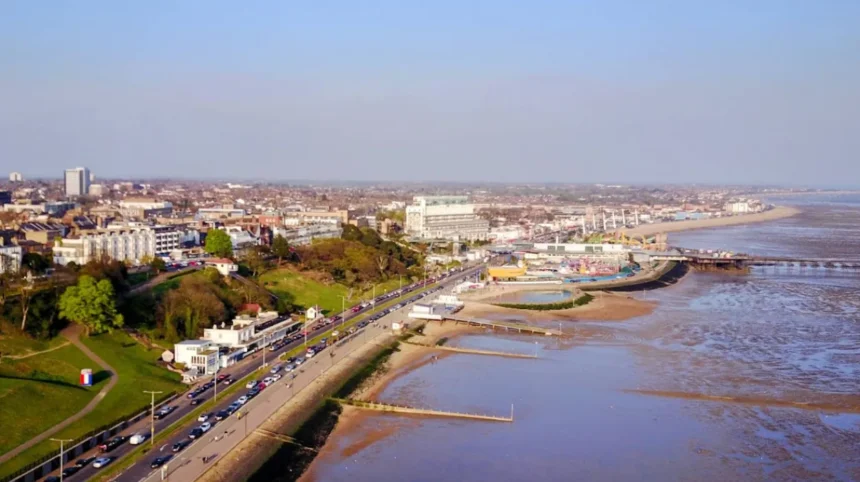
Southend-on-Sea, commonly known as Southend, is a historic and beautiful seaside town in southeast Essex, England. It is only about 40 miles away from the east of London. Its sun, sea, children’s amusement park, theatres, Southend Pier—the longest pleasure pier in the world—and seven miles of sandy beaches attract hedonistic Londoners, holidaymakers, weekend day-trippers, and families on weekend getaways to this historic seaside town. The crimson colour of a September weekend sky looks like a painting on the horizon at sunset, while Southend Pier sprawling out into the sea like a rebellion in water reminds us of the end of the British spring and summer.
The growth of population, business, and tourism has transformed the quiet fishing hamlet of 13 houses into the fashionable coastal resort city of Southend. In 2026, it is home to 186,629 people, making it one of the most densely populated coastal cities in eastern England today. From a small Saxon settlement in the 6th or 7th century to the 20th-century Southend High Street, the burgeoning Victorian resort town transformed into a city and witnessed to different waves of its rise and fall, including radical political rebellions, mutinies, and countercultural movements. These historic episodes remind about the city’s radical past amidst its contemporary ruins, caused by government neglect of urban regeneration.
The shopkeeper mentality of the British government and local city council has left the city’s future in the hands of private investors while taking a rent-seeking approach to the tourism revenue the city generates today. Despite its urban decline, the city continues to anchor its historical rebellions. which continue to anchor its past in a domesticated shoreline designed to generate revenue without any investment in regenerating the city and its cultural heritage. Southend is not merely a place in pursuit of leisure and pleasure aided by sun and sea but also a city with revolutionary history. Underground subcultures in the city continue to support various radical and subversive activities, ranging from civil rights and anti-war activism to solidarity with Palestine.
The ideals of the French Revolution and the successful Spithead Mutiny in Portsmouth inspired the Nore Mutiny of 1797, when Royal Navy sailors stationed at the Nore anchorage revolted for better pay and working conditions. The shores of Southend bore witness to this inspiring sailors’ mutiny for equality; despite its failure due to lack of provisioning in the ship, it had wider significance. The government used the militia to suppress the mutiny. The mutineers’ president, Richard Parker was hanged from the yardarm of the HMS Sandwich on 30th of June, 1797 and eighteen of his fellow comrades and sailors were shot dead. Despite its failure, the sailors’ mutinies reveal a rising working-class consciousness in the late eighteenth century England—one that inspired a 50% increase in mutinies among European navies and merchant companies and also helped shape working-class solidarity in wider society. Local taverns such as The Ship in Southend have witnessed rebel sailors coming to drink and socialise there.
The Women’s Social and Political Union (WSPU) branch and the Women’s Tax Resistance League in Southend led the regional suffrage movement, demanding “no taxation without representation.” The Southend Libertarian and Anarchist Broadsheet (SLAB), led by employees working in Southend’s HM Revenue and Customs (HMRC) office, produced radical and anarchist literature, published a newsletter, and organised communes; these activities add to the city’s revolutionary history. The punk band Crass reveals lively subcultures and radical music scene in the city. The working people built the city and its culture, but England’s ruling classes failed the people by denying them the chance to celebrate their past, understand and enjoy their present, while the future of the city looks gloomy with Southend’s streets in decline. The city awaits a socialist revolution to regenerate itself and bring life back to Southend.
The views expressed in this article are the author’s own and do not necessarily reflect (North London News) editorial policy.