
Vermin problems in Enfield housing areas should be reported to the landlord, housing association, managing agent, or Enfield Council, depending on who controls the property and where the infestation appears. The correct route depends on whether the issue is in a council home, private rented home, or shared estate area.
- What counts as a vermin problem in housing?
- Who should deal with vermin in Enfield housing?
- How do you report vermin in council housing?
- How do you report vermin in private rented housing?
- What should you include in the report?
- What happens after you report it?
- What if the problem is in shared areas?
- What rights do tenants have?
- Why does fast reporting matter?
- What is the best reporting route in Enfield?
What counts as a vermin problem in housing?
A vermin problem in housing means an infestation of rats, mice, or similar pests in a home, garden, bin store, or communal area. It becomes a housing issue when it affects health, hygiene, safety, or the condition of the property.
Vermin in housing usually refers to rodents, especially rats and mice. In practice, the problem often appears through droppings, gnaw marks, nesting material, bad smells, or repeated sightings near food stores, drains, bins, or walls.
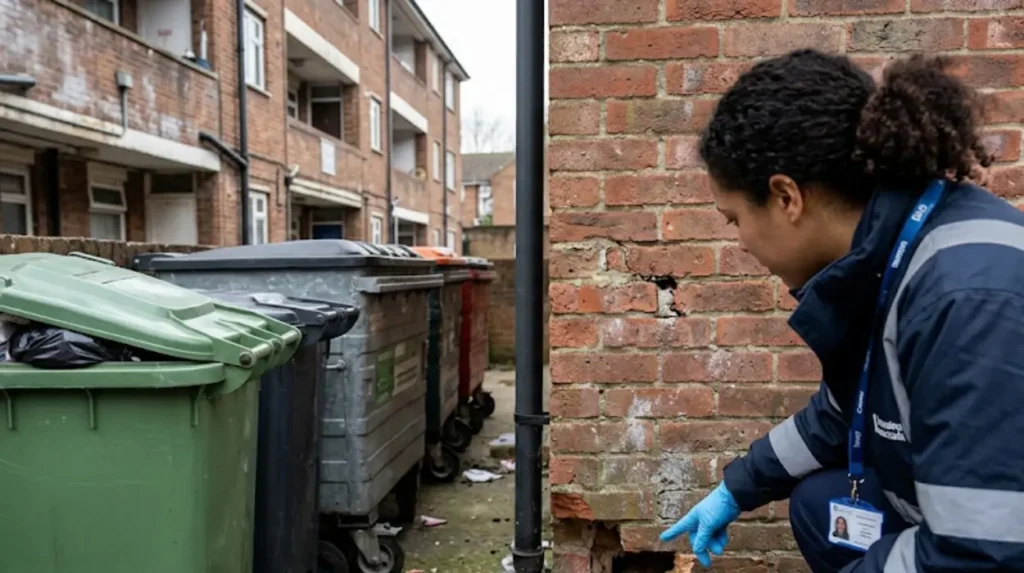
The issue is important because it often points to a wider fault. Broken drains, damaged brickwork, open waste areas, gaps in walls, and poor refuse handling all create conditions that let pests enter and spread.
Who should deal with vermin in Enfield housing?
The first contact is usually the landlord or housing manager. For council housing, Enfield Council handles repair reports and nuisance complaints, especially where vermin is linked to disrepair or communal estate problems.
In council housing, vermin linked to broken structures, bins, drains, or other repair defects should be reported as a housing repair. If the problem affects a wider estate or shared area, it should also be reported as a nuisance issue.
In private rented housing, the landlord or managing agent should be informed first. If the issue is caused by a defect in the property or the landlord does nothing, the council can become involved through environmental health or nuisance reporting.
In shared blocks, hallways, stairwells, bin stores, and gardens often fall under the responsibility of the building manager or landlord, not a single tenant. That means communal infestation should be reported as a building-wide issue.
How do you report vermin in council housing?
For council housing, report vermin through the housing repairs route if the infestation is linked to disrepair. If it is a wider local pest issue, use the council’s nuisance reporting route and give full details of the problem.
The most useful report includes the exact address, block name, flat number, and the type of pest seen. It should also say where the signs appear, how often the pests are seen, and whether the issue affects communal areas or only one home.
Photos, videos, and written notes help a lot. Include dates, times, smells, droppings, holes, damaged bins, or any signs that show where the pests are entering.
How do you report vermin in private rented housing?
In private rented housing, report the problem to the landlord or managing agent first. If the infestation comes from a repair fault or is not dealt with quickly, contact the council for further action.
The landlord is normally responsible when the infestation is caused by a repair issue, a structural fault, or a condition that makes the home unsafe or unfit to live in. That can include holes in walls, broken waste storage, defective drains, or poor maintenance.
Write to the landlord in clear terms and keep a copy of everything sent. State what pests are present, how long the problem has lasted, and what action you want taken, such as proofing, repairs, or pest treatment.
If nothing changes, the council can inspect the property and decide whether enforcement is needed. This is especially important when the issue affects health or spreads to neighbouring homes.
What should you include in the report?
A strong vermin report includes the address, the type of pest, the locations affected, the duration of the issue, and evidence such as photos or videos. It should also explain whether the problem is in a single flat or a shared area.
The more precise the report, the faster the issue can be assessed. Mention if rats appear near bin stores, mice enter kitchens, or droppings show up in lofts, cupboards, or stairwells.
If there are repeated sightings, say how often they happen. If the problem is linked to waste collection, building defects, or broken fencing, include that too. These details help identify the source of the infestation.
What happens after you report it?
After a report, the landlord or council should inspect the area, identify the source, and decide whether repairs, pest control, proofing, or waste changes are needed. If the problem is severe, follow-up enforcement or repeat visits may be required.
For council homes, the repairs team may treat the problem as both a pest issue and a structural issue. That means the response can include sealing entry points, repairing damage, or improving waste areas.
For private rented homes, the landlord may need to arrange pest treatment and repair the defect that allowed the pests in. If the landlord refuses to act, council officers can step in.
For shared estates, the cause is often outside one household. In that case, the solution usually involves estate management, bin storage improvements, or wider proofing work across the block.
What if the problem is in shared areas?
If vermin appears in stairwells, hallways, bin stores, gardens, or other communal spaces, report it as an estate problem. Shared-area infestations usually need landlord or council action across the whole building or block.
Shared areas are important because pests move easily between flats and service spaces. A single bad bin store, broken wall, or open service area can affect many residents at once.
A report should make it clear that the issue is communal, not private. This helps prevent delays and makes it harder for the problem to be treated as one household’s fault.
What rights do tenants have?
Tenants have the right to live in a safe and habitable home. If vermin is caused by a repair defect, structural fault, or existing condition in the property, the landlord is responsible for fixing it.
Tenants should report the issue as soon as it appears and keep records of every message, response, and inspection. Written evidence matters if the problem continues or needs escalation.
If the landlord does not act, the council can inspect and require action where the infestation creates a housing or health problem. That route is especially important where the issue affects multiple homes or persists over time.
Explore More Help & Resources
What to do about poor estate maintenance in Enfield?
How to Report Broken Street Lighting in Enfield Estates: Simple Steps
Why does fast reporting matter?
Fast reporting reduces the chance of the infestation spreading, protects neighbours, and makes it easier to find the source before the problem becomes harder to control. It also creates a written record that supports future enforcement.
Rodents breed quickly and move through walls, drains, lofts, and service areas. Delays give them more time to spread through a block or estate.
Early reporting also helps with cleaning, proofing, and waste control. The sooner the issue is raised, the easier it is to fix the root cause rather than only treating the visible pests.
What is the best reporting route in Enfield?
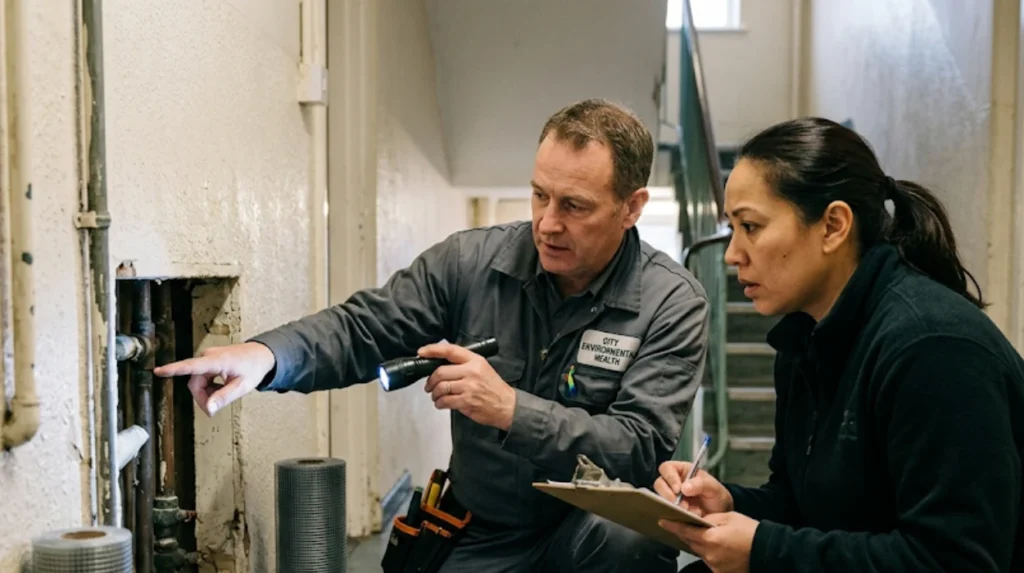
The best reporting route depends on the housing type. Use housing repairs for council-home defects, landlord reporting for private rentals, and nuisance or environmental health routes when the infestation affects shared areas or is not fixed quickly.
Council tenants should treat vermin linked to disrepair as a repair issue. Private tenants should write to the landlord first, then escalate if nothing happens.
For communal or estate-wide infestations, report the problem as a shared housing issue. That approach gives the clearest path to inspection, treatment, and repair work.
What counts as a vermin problem in housing?
A vermin problem includes infestations of rats, mice, or similar pests in homes, gardens, communal areas, bin stores, or buildings where they create health, hygiene, or safety concerns.