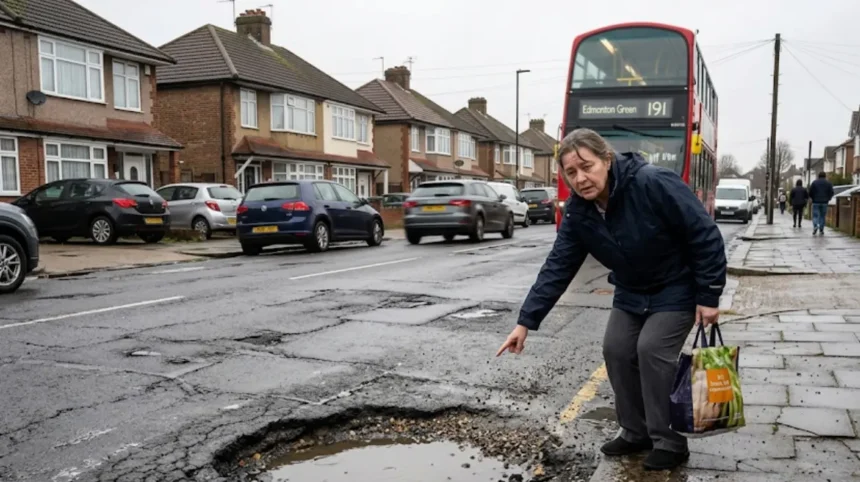
Residents across North London’s London Borough of Enfield frequently report roads damaged by potholes, with repair times that often feel unacceptably slow. The core reasons are a long-term decline in preventative maintenance, a shift toward reactive patching, and pressure on funding after external A-road grants disappeared.
- What is the current state of Enfield’s road network and pothole problem?
- Why have potholes become more common in Enfield?
- How has Enfield Council’s funding changed over recent years?
- What does Enfield Council’s transparency data say about road conditions?
- Why are pothole repairs sometimes delayed in Enfield?
- How does Enfield prioritise which roads and potholes to repair?
- What role do weather and traffic play in pothole formation?
- How can residents report potholes and track repairs in Enfield?
- What improvements or changes have been proposed for Enfield road maintenance?
- What are the implications for residents and road users in Enfield?
- What does this mean for the future of Enfield’s road network?
Enfield has the seventh-largest road network in London (584 km), with nearly 80% unclassified residential streets that have seen maintenance levels fall as capital was redirected to keep A-roads in better condition. Over the last five years, more than 13,000 potholes were filled, but the proportion of preventative work dropped from 72% to a projected 25%, while resurfacing collapsed by around 70%.
What is the current state of Enfield’s road network and pothole problem?
Enfield manages 584 km of roads, the seventh-largest network in London, with about 12% of unclassified roads in poor RED condition and over 13,000 potholes filled in five years despite a collapse in preventative maintenance.
The borough’s road network consists of 67 km of A-roads (11.5%), 53 km of B and C roads (9.1%), and 464 km of unclassified (U) roads (79.5%). A-roads have remained broadly stable, with around 75% in good (green) condition in 2024, but B and C roads have declined, with 8% in RED condition and 28% in amber, while 12% of U-roads have been in RED for five straight years.
Pothole repair volumes show a heavy reliance on reactive fixes: 3,117 potholes were filled in 2020/21, 1,865 in 2021/22, 2,202 in 2022/23, 3,241 in 2023/24, and 2,626 in 2024/25, totaling 13,051 over five years. The council expects around 2,500–2,800 potholes to be filled in 2025/26 if winter weather is mild, confirming that reactive repair remains the default approach.
Why have potholes become more common in Enfield?
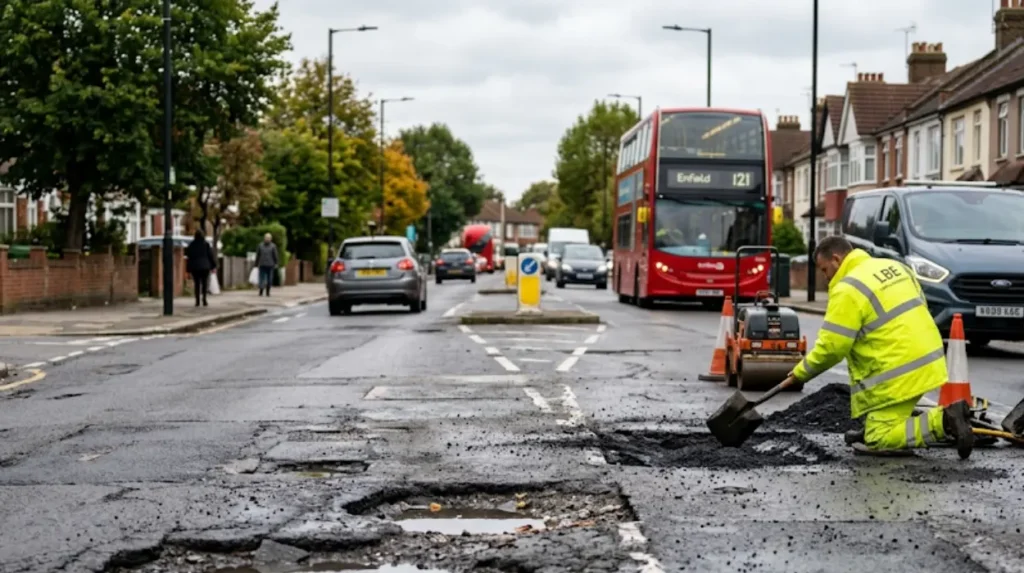
Potholes have increased because Enfield’s preventative maintenance share fell from 72% to a projected 25%, resurfacing dropped from 12.5 km to 3.77 km per year, and the council admitted that maintenance of B, C and unclassified roads has declined.
The shift from a “predict and prevent” model to a “patch-first” model is documented in Enfield’s own 2025 Local Highways Maintenance Transparency Report, which states that the 2025/26 programme is split 25% preventative works to 75% reactive works. This means most funding is used to respond to defects that have already formed, rather than to treat roads before they deteriorate into potholes.
Carriageway resurfacing has fallen sharply: from 12.5 km in 2020/21 to 11.32 km in 2021/22, 9.43 km in 2022/23, 5.18 km in 2023/24, and 3.77 km in 2024/25, with only 1.1 km planned for 2025/26 on a 584 km network. Resurfacing replaces weak pavement layers and prevents water ingress, so this 70% reduction directly increases the likelihood of pothole formation, especially on residential streets already flagged as being in poor condition.
How has Enfield Council’s funding changed over recent years?
Enfield’s external A-road funding ended around 2018/19, forcing the council to redirect its own capital to protect A-roads, which it acknowledges has reduced maintenance levels for B, C and unclassified roads.
Before 2018/19, Enfield received approximately £1 million per year specifically to maintain its A-road network. Since then, this external funding reduced significantly while deterioration continued, leading the council to invest its own capital in A-roads to address that deterioration. This reallocation means less money is available for the local roads that most residents use daily.
The Department for Transport (DfT) allocated £310,000 in 2023/24 and 2024/25, rising to £1.007 million for 2025/26. Enfield’s projected capital spend for 2025/26 is around £3.0 million, more than triple the DfT allocation, which gives the council a “GREEN” spend scorecard. However, the DfT still rates Enfield’s best practice as “RED” because the proportion of preventative work has collapsed and the maintenance strategy prioritises reactive repairs over long-term prevention.
Lower traffic neighbourhoods (LTNs) introduced in Enfield also shift traffic onto classified A, B and C roads while reducing use of unclassified local roads. The council notes that the long-term impact of this traffic shift on road conditions remains to be seen, but it may concentrate wear on main routes while leaving some local roads under-maintained despite continued deterioration.
What does Enfield Council’s transparency data say about road conditions?
Enfield’s own five-year survey data shows A-roads broadly stable, B and C roads declining, and unclassified roads persistently around 12–15% in RED condition, despite yearly AI surveys of the entire 584 km network.
The council uses AI road surveying technology to monitor the entire network annually, including all 464 km of unclassified roads, and classifies condition as RED (should be considered for maintenance), amber (monitor) or green (good) [}. This system gives the council detailed knowledge of where deterioration is occurring.
For A-roads, the proportion in RED condition ranged from 3% to 6% between 2020 and 2024, with green-condition roads at 70–82%, indicating relative stability. For B and C roads, RED condition rose from 6% in 2020 to 8% in 2024, while green roads fell from 71% to 65%, showing a clear decline. For unclassified roads, RED condition has been between 10% and 15% for five years, sitting at 12% in 2024, which means roughly 56 km of residential streets remain in poor condition.
Despite this data, the council’s maintenance programme does not always reflect proactive treatment. The 2025/26 plan includes only 1.1 km of carriageway resurfacing plus 2.24 km of surface treatment across the entire 584 km network, less than 0.6% of total road length. This indicates that even where AI surveys identify deterioration, the budget and strategy are set to patch defects rather than systematically renew weak sections.
Why are pothole repairs sometimes delayed in Enfield?
Repair delays occur because Enfield prioritises reactive maintenance first, uses severity-based time targets (2-hour/emergency, 24-hour, 7-day, 28-day), and faces high volumes of defects with limited resurfacing and preventative works.
Enfield repairs carriageway and footway defects on different schedules depending on severity: emergency defects within 2 hours, high-risk defects within 24 hours, medium-risk within 7 days, and lower-risk within 28 days. A pothole that is not immediately dangerous may be classified as medium or lower risk, which legally allows longer repair times even if residents experience it as slow.
With around 2,500–3,200 potholes filled per year across 584 km of roads, crews must prioritise urgent safety issues first. When many defects exist simultaneously, lower-risk potholes may queue behind emergency repairs, utility works, or resurfacing projects, extending the time between report and repair. The council’s own report states that funding for reactive maintenance is allocated first, with remaining funds then used for preventative works, which reinforces a reactive-first backlog.
Utility and water works also cause temporary road closures and parking suspensions across Enfield, as seen in notices for Cattlegate Road, Lavender Hill, Goodwin Road, Trinity Avenue, Broadlands Avenue and Fore Street in June 2025, which can delay or complicate road maintenance access. Such works often require coordinated traffic management and phased operations, which can further extend the time needed to complete pothole repairs in affected areas.
How does Enfield prioritise which roads and potholes to repair?
Enfield prioritises by road class and risk, protecting A-roads with more capital, while using AI surveys and risk-based inspections to decide which B, C and unclassified roads need attention, but still allocates reactive funds first.
The council explicitly states that prior to 2018/19 it received external A-road funding, and since then it has invested its own capital in A-roads to address deterioration, which has reduced maintenance levels for B, C and unclassified roads. This means A-roads receive a higher share of resurfacing and major works, while local roads rely more on patching and reactive repairs.
Within the unclassified network, Enfield uses yearly AI surveys and risk-based safety inspections ranging from monthly to yearly depending on traffic and footfall to prioritise spend. Roads with higher traffic, bus routes, or areas with significant pedestrian activity are inspected more frequently, while quieter residential streets may be inspected less often. This risk-based approach is intended to focus resources where safety risks are greatest, but it also means that some low-traffic roads can sit in RED condition for longer before receiving major treatment.
The council’s transparency report explains that reactive maintenance funding is allocated first to ensure the network is “fit for purpose”, and remaining funds are then used for preventative works targeting areas with higher deterioration. This formal priority order ensures urgent safety defects are addressed quickly, but it also means that preventive treatments on roads that are deteriorating but not yet critical may be delayed or reduced.
What role do weather and traffic play in pothole formation?
Water ingress and traffic loading are the primary physical causes of potholes: rain penetrates weak pavement, washes away support, and repeated vehicle loads break the surface into cavities.
Potholes commonly form where the pavement structure is already weakened by age, poor original construction, or previous repairs. Water enters cracks and small defects, saturating the underlying layers and reducing their strength. When vehicles drive over these weakened areas, the repeated stress causes the surface to crack further and eventually collapse, creating a hole.
Enfield’s high volume of pothole repairs (around 7 per day on average over five years) reflects both the size of the network and the combination of aging infrastructure, winter weather, and traffic loads. Severe winters with repeated freezing and thawing can accelerate damage, while heavy traffic on A-roads and diversion traffic around LTNs increases stress on certain routes, contributing to faster deterioration in those sections.
How can residents report potholes and track repairs in Enfield?
Residents can report potholes via Enfield Council’s online form at enfield.gov.uk/report-a-problem, and track or view reports on FixMyStreet and other local platforms.
Enfield encourages road users to report potholes they find in their neighbourhood using the council’s online reporting system, which feeds directly into the highways maintenance team’s defect management process. Each report includes location, description, and often photos, which helps the council assess severity and assign a risk category.
FixMyStreet also hosts numerous Enfield pothole reports, with categories such as “Pothole in the road” alongside other highway issues like road resurfacing problems and road works. These public platforms allow residents to see when and how many defects have been reported in their area, and sometimes to follow updates on repair status, increasing transparency and accountability.
What improvements or changes have been proposed for Enfield road maintenance?
New government funding of £1.007 million for 2025/26 is expected to allow Enfield to fill around 13,936 potholes, but the council’s overall maintenance strategy still prioritises reactive work over preventative resurfacing.
In late 2024, the UK government announced £1.6 billion in road maintenance funding for local councils in England, with Enfield receiving an additional £1.007 million from April 2025, enough to fill approximately 13,936 potholes over 2025/26. Enfield’s transport and waste cabinet member described this as a “potholes purge” and encouraged residents to report defects so the council can use the funding effectively.
Despite this increase, Enfield’s projected 2025/26 programme remains 25% preventative and 75% reactive, with only 1.1 km of carriageway resurfacing planned across the 584 km network. The council continues to invest in AI surveying and innovation such as in-situ recycling and waste plastics in asphalt, but the overall strategy still treats reactive patching as the primary approach rather than a systematic renewal of deteriorating roads.
Explore More Help & Resources
What to do if bins are not collected in Enfield?
How to report overflowing communal bins in Enfield estates?
What are the implications for residents and road users in Enfield?
Residents face higher risks of vehicle damage, slower travel, and repeated disruption from potholes and associated road works, especially on unclassified residential roads where maintenance levels have declined.
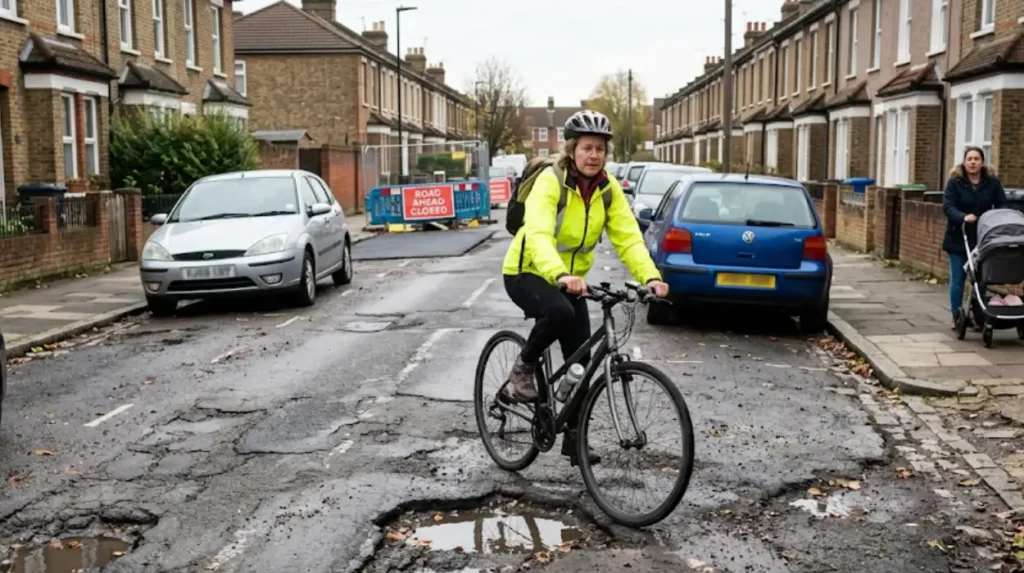
With around 12% of unclassified roads in RED condition persistently, many residential streets remain prone to potholes and surface defects, increasing the likelihood of tyre, suspension or wheel damage for drivers and cyclists. The council’s own admission that maintenance of B, C and unclassified roads has declined while A-roads are prioritised means that local road users are effectively bearing the cost of that reallocation.
For daily commuters and families, frequent potholes and associated temporary restrictions for utility or maintenance works can cause delays, noisy disruptions, and reduced accessibility for pedestrians and disabled users. The combination of high defect volumes, severity-based repair windows, and limited resurfacing means that visible problems may remain for weeks or months, particularly on quieter streets where risk ratings are lower.
What does this mean for the future of Enfield’s road network?
If the current reactive-first model continues, Enfield’s unclassified and B/C roads will likely continue to show persistent poor condition, with potholes remaining a long-term issue unless preventative resurfacing is significantly increased.
The council’s transparency data shows that 10–15% of unclassified roads have been in RED condition for five years, with only small portions of the network resurfaced annually. Without a major shift toward preventative maintenance and larger resurfacing programmes, deteriorating roads will continue to generate new potholes, creating a cycle of repeated patching rather than long-term improvement.
Government funding and innovation tools such as AI surveys, recycling, and waste-plastic asphalt offer opportunities to improve efficiency and extend road life, but they do not replace the need for substantial capital invested in preventative works. For Enfield’s road network to move from chronic pothole problems to sustained improvement, the balance between reactive and preventative spending must shift, and maintenance levels for B, C and unclassified roads must be restored to match the condition data the council already collects.
Why are there so many potholes in Enfield?
Enfield has one of London’s largest road networks, and many residential roads have received less preventative maintenance over recent years. The council now relies more heavily on reactive pothole repairs than resurfacing, allowing more defects to develop before they are repaired.