Key Points
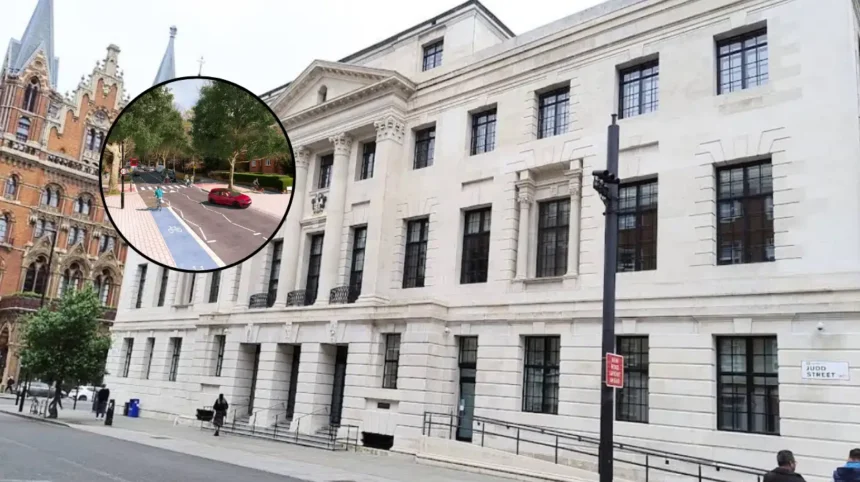
- £1.7 million Scheme Endorsed: The council has endorsed an extensive £1.7 million ‘Safe and Healthy Streets’ project for Fitzjohn’s Avenue, Hampstead, slated for installation later this year.
- Infrastructure Enhancements: This proposal will entail provision of some 900 metres of segregated cycling tracks, zebra crossings and parallel crossings, sustainable rain gardens, and relocation of bus stops.
- School Street Trial: The vehicle traffic ban from College Crescent at times of school entry/exit of children from University College Pre-Prep School will be tried out.
- Public Consultation Rejection: Data obtained from the public consultation process shows that while three residents to one rejected the proposal, just 23 percent approved of it.
- Non-Borough Response in Favor: The approval of the proposal was enhanced by the response of people not belonging to the borough, where 75 percent of people voted in favor.
Hampstead (North London News) August 29, 2026 – Fresh road upgrades and traffic control measures will go ahead in North London despite residents petitioning their council to change course. A new ‘Safe and Healthy Streets’ scheme at Fitzjohn’s Avenue in Hampstead was approved by Camden Council in March this year. The £1.7m project will install new segregated cycling lanes, zebra crossings, rain gardens, remove parking spaces and relocate several bus stops. A traffic ban on College Crescent during school drop-off and pick-up times, commonly known as a School Street, will also be trialled. These proposals were largely rejected by the 950 people who responded to the public consultation. Residents living within the area affected opposed the scheme by almost three to one, with just 23 per cent of people backing the plans – though three in four respondents who lived outside the borough were in favour.
- Key Points
- What Are the Key Details of the £1.7m Fitzjohn’s Avenue Scheme?
- How Did the Public Consultation Expose a Split Between Local Residents and External Respondents?
- Why Are Local Politicians and Resident Groups Opposing the Changes?
- What Is the Background to Camden’s ‘Safe and Healthy Streets’ Programme?
- What Is the Prediction for How This Development Will Affect the Local Audience?
What Are the Key Details of the £1.7m Fitzjohn’s Avenue Scheme?
The £1.7 million ‘Safe and Healthy Streets’ project on Fitzjohn’s Avenue represents one of the most substantial active travel interventions undertaken by Camden Council in North London in recent years. As detailed in the public consultation documentation released by Camden Council, the core framework includes 900 metres of segregated cycle tracks designed to protect cyclists from motor vehicles along the primary gradient of Fitzjohn’s Avenue.
The development encompasses continuous footways across several major junctions, including Belsize Park, College Crescent, Belsize Lane, Maresfield Gardens, Nutley Terrace, Akenside Road, and Netherhall Gardens. To facilitate pedestrian movement, parallel crossings designed for both walking and cycling are scheduled for construction near Nutley Terrace, Belsize Park, Maresfield Terrace, and outside St Mary’s School. Additionally, the council plans to install ten new secure cycle hangars, introduce dedicated dockless hire bike bays, and plant rain gardens aimed at enhancing local biodiversity and stormwater drainage.
A central component of the physical realignments involves public transport infrastructure. As documented by Camden Council officers, bus stops along the northbound, uphill section of Fitzjohn’s Avenue will be reconfigured into “floating” bus stop bypasses, running cycle paths between the footway and the bus boarding platforms.
How Did the Public Consultation Expose a Split Between Local Residents and External Respondents?
The results of the consultation process highlighted a deep geographical divide over transport planning in the London Borough of Camden. Data published in Camden Council’s post-consultation evaluation report indicates that 950 individuals submitted responses. Of the respondents who reside directly within the affected Hampstead catchment area, nearly three-quarters rejected the proposals, with only 23 per cent recording their support.
Conversely, the initiative gained strong support from respondents residing outside the borough. Approximately 75 per cent of non-Camden residents who participated in the consultation expressed explicit support for the scheme. Active travel advocates, including representatives from local cycling organisations, submitted detailed representations endorsing the measures.
As recorded in official campaign submissions from Camden Cyclists, representative John Chamberlain stated that the organization fully backed the 900 metres of segregated cycle tracks and junction improvements, noting that
“this is a significant and long-awaited scheme and is fully consistent with Camden’s Transport Strategy and the 2025-2028 Delivery Plan”.
Why Are Local Politicians and Resident Groups Opposing the Changes?
Political opposition to the traffic changes has been voiced by local ward representatives and community groups. Local Conservative representatives argued that the council’s consultation strategy failed to reflect the needs of the immediate community.
As reported by Councillor Steve Adams, Leader of the Camden Conservative Councillors, in an official statement published by the Hampstead and Highgate Conservatives:
“The statistics provided for the cycle use of Fitzjohn’s Avenue indicate an average of 16 cycles per hour. This number is far too low to warrant the considerable disturbance and risks proposed. There are better alternative side roads available for cycling. This road already has a fantastic, mature array of trees and grass verge”.
Councillor Adams further added regarding the council’s decision-making process:
“Camden holds lots of ‘consultations’. Sadly, the Camden approach to consulting about works they want to pursue has become so slick that the outcome of many of the consultations they conduct has been written into the questions being asked. The effect of these actions diminishes the credibility of consultation and delivers a strong message that the authority will do what the authority wants to do”.
Concerns were also raised regarding the impact on local educational institutions and public transport users. As reported by Liberal Democrat Councillors Tom Simon, Judy Dixey, and Matthew Kirk of the Camden Liberal Democrats:
“We welcome plans to improve pedestrian safety and cycling networks, but there are some real flaws in the scheme as proposed. We’re most concerned about big gaps between the bus stops, which will make access to public transport harder for those with mobility issues, and floating bus-stops – we know that these are unsafe for elderly and vulnerable people, especially those with impaired vision, or for those with children and pushchairs”.
Opposition was also expressed regarding the trial Healthy School Street on College Crescent, which restricts motor vehicles outside University College Pre-Prep School between 7:45 am and 8:45 am, and 2:45 pm and 4:15 pm on weekdays. Conservative representatives highlighted that young children attending pre-prep settings are not at an age where autonomous travel is viable, arguing that vehicle restrictions will displace parking and drop-off traffic onto neighbouring residential streets.
What Is the Background to Camden’s ‘Safe and Healthy Streets’ Programme?
The approval of the Fitzjohn’s Avenue project follows a multi-year policy initiative by Camden Council to overhaul its highway network under the broader ‘Safe and Healthy Streets’ strategy. Aligned with the borough’s Transport Strategy, Climate Action Plan, and Clean Air Action Plan, the council has systematically implemented pedestrian priority schemes, low-traffic neighbourhoods, and segregated cycle networks across North London.
Camden Council’s strategic policy is driven by local demographic data indicating that approximately 69 per cent of households within the borough do not own a private motor vehicle. The local authority maintains a public target to construct 45 kilometres of segregated cycling infrastructure across the borough by 2028. Similar schemes previously executed along Haverstock Hill, Prince of Wales Road, and throughout the Fitzrovia network faced similar pushback during public consultation phases before being formally ratified and made permanent by council executive decisions.
Explore More Hampstead News
Dr Josevania Martins Suspended Over Partner Ozempic Prescriptions Hampstead 2026
Cyclist Hospitalised After Pond Street Crash in Hampstead, 2026
What Is the Prediction for How This Development Will Affect the Local Audience?
The implementation of the £1.7 million Fitzjohn’s Avenue scheme is expected to produce immediate operational shifts for several distinct groups across the Hampstead community:
- For Local Residents and Motorists: Private vehicle owners living on or near Fitzjohn’s Avenue and College Crescent will experience reduced on-street parking availability and altered traffic circulation patterns. The timed vehicular access ban on College Crescent will require parents and guardians driving children to University College Pre-Prep School to adjust morning and afternoon routines, likely increasing vehicle filtering into surrounding residential side streets.
- For Cyclists and Active Travel Commuters: Cyclists travelling between Swiss Cottage and Hampstead Village will receive continuous physical separation from motor traffic along the steep uphill grade of Fitzjohn’s Avenue. The new route will connect northern parts of the borough directly to wider Central London cycling corridors, potentially increasing cycle journey volumes.
- For Bus Passengers and Pedestrians: Pedestrians will gain safer crossing facilities through raised parallel and zebra crossings. However, public transport users—particularly elderly residents, disabled passengers, and caregivers with young children—will need to navigate lengthened distances between relocated stops and cross active cycle lanes to access new “floating” bus stop platforms.