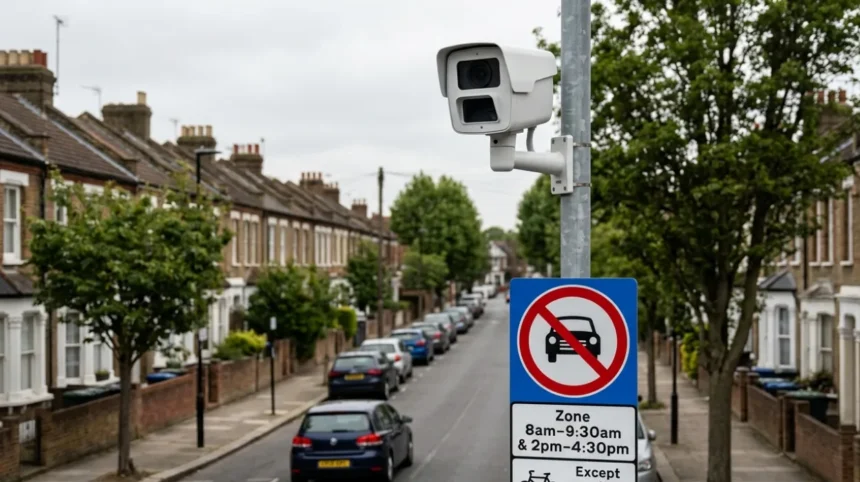
A PCN is issued for entering a low traffic zone because the vehicle has entered a road or area where motor traffic is restricted, and the driver has broken a traffic control rule. In North London, these restrictions are usually enforced through road signs, camera enforcement, and local traffic orders designed to reduce through-traffic, improve safety, and support cleaner air.
- What is a low traffic zone?
- Why is a PCN issued?
- What traffic rule is broken?
- How do low traffic zone PCNs work?
- What are common reasons for a PCN?
- Why do councils enforce these zones?
- How do signs and exemptions matter?
- What examples show this in practice?
- What does the evidence show?
- What should drivers check?
- Why this issue keeps increasing
What is a low traffic zone?
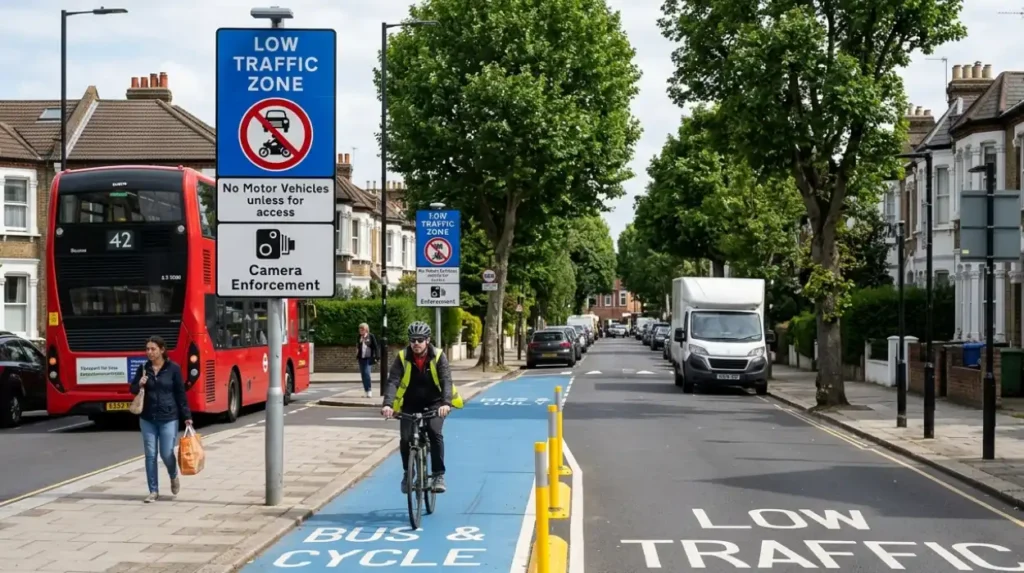
A low traffic zone is a road area where access for motor vehicles is limited or controlled to reduce unnecessary through-traffic. These schemes appear under different names, including Low Traffic Neighbourhoods, low traffic zones, and similar local traffic management areas. The core purpose is to keep roads available for residents, buses, cyclists, pedestrians, and essential access while discouraging rat-running.
Low traffic zones are created by local authorities using traffic management powers and enforcement rules. In practice, they often use signs, road markings, camera enforcement, bus gates, modal filters, or physical barriers. The exact restriction depends on the scheme and the borough or council that runs it.
Why is a PCN issued?
A PCN is issued when a vehicle enters a restricted low traffic zone without permission or outside the terms of an exemption. The law treats this as a contravention of a traffic restriction, not as a parking issue alone. Councils issue PCNs to enforce compliance and make the restriction effective, because a scheme without enforcement does not control traffic volume.
In simple terms, the camera or enforcement officer records the vehicle in a place where motor vehicles are not allowed, then the council sends a penalty notice to the keeper or driver according to the enforcement rules. This is the standard mechanism used for many local traffic restrictions in London, including low emission zones and other controlled areas.
What traffic rule is broken?
The usual breach is driving past a sign that prohibits motor vehicles, entering a filtered street, or using a route restricted to permitted traffic only. The restriction can apply at all times or only during certain hours, depending on the local traffic order. If a driver ignores the sign, misunderstands the layout, or follows a satnav into a restricted street, the restriction still applies if the vehicle was not permitted.
The legal basis is the traffic regulation order or local enforcement scheme created by the authority. Councils are required by legislation to enforce restrictions they have introduced, which is why PCNs are used when drivers do not follow the rule.
How do low traffic zone PCNs work?
Most low traffic zone PCNs are issued through camera enforcement or automated number plate recognition. Cameras record the vehicle entering or moving through the restricted area, then the authority checks whether the number plate has an exemption, permit, or permitted route. If no valid exemption applies, a PCN is generated and sent to the registered keeper.
The process is designed to be fast and consistent because many low traffic zones cover busy urban streets with constant traffic flow. In London, separate traffic schemes can also create separate penalties for separate contraventions or separate charging days, depending on the scheme rules. That is why the exact wording on the notice matters.
What are common reasons for a PCN?
A PCN commonly follows one of these situations:
- The driver entered a street closed to through-traffic, such as a filtered road.
- The driver ignored a sign showing “no motor vehicles”.
- The vehicle was not registered for an exemption or local permit.
- The route was allowed for buses, cycles, or residents only, not general traffic.
- The driver used the restricted road at a time when the restriction was active.
These are the main enforcement triggers because low traffic zones are built around access control, not speed limits or congestion charging alone. The key issue is the act of entering or using the restricted section in a vehicle without permission.
Why do councils enforce these zones?
Councils enforce low traffic zones to improve safety, reduce congestion, and support cleaner local air. Newham Council states that PCN enforcement helps improve road safety, reduce traffic congestion, enable vulnerable people to travel, balance road user needs, improve air quality, support the local economy, and deliver transport strategy objectives. Those goals are typical across London boroughs.
Enforcement also stops “displacement traffic”, where drivers use residential streets as shortcuts. Without enforcement, traffic restrictions lose their effect because drivers continue to pass through the area instead of using main roads. This is why councils use cameras and PCNs rather than signs alone.
How do signs and exemptions matter?
Signs matter because the restriction is usually legally active only where it is signed and described in the local order. A driver is expected to obey the road signs at the point of entry, even if the area looks open or the road layout feels normal. Exemptions also matter because some schemes allow buses, taxis, residents, disabled badge holders, delivery vehicles, or emergency services, depending on the scheme design.
The exact exemption list is local, not national, so two low traffic zones can operate differently. A driver who has an exemption in one borough does not automatically have it in another. For that reason, checking the council’s scheme rules is essential before using the route.
What examples show this in practice?
A common example is a driver following satnav into a residential street that has been filtered to stop through-traffic. The vehicle passes a sign showing that motor vehicles are prohibited, and the camera records the entry. The council then issues a PCN because the vehicle used the restricted road without permission.
Another example is a borough with permit-only access for residents during certain hours. A visitor enters during the restricted period and receives a PCN because the vehicle does not have the required local authorisation. In both cases, the issue is not intent but the fact that the vehicle entered a controlled zone in breach of the rules.
What does the evidence show?
London authorities use PCNs widely because they are the main enforcement tool for traffic restrictions and emission controls. Transport for London states that separate PCNs can apply for separate charging days in the LEZ, which shows how camera-based enforcement is used to support compliance. Councils also publish reasons for issuing PCNs, showing that enforcement is tied to public-safety and transport policy goals rather than revenue alone.
The broader policy logic is consistent across these schemes: where a zone is created to reduce vehicle volume, enforcement is necessary for the restriction to work. That is the central reason a PCN is issued for entering a low traffic zone.
What should drivers check?
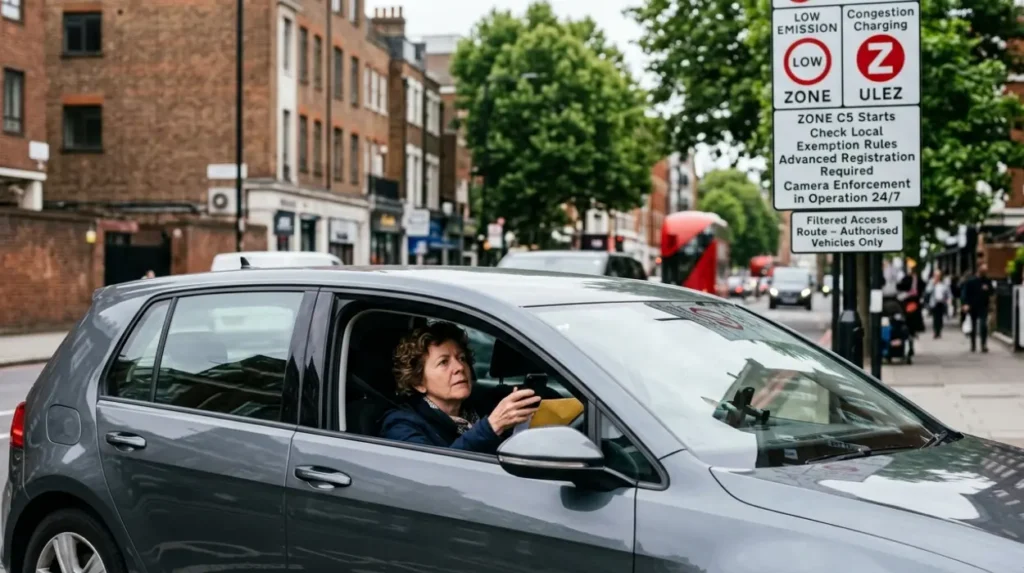
Drivers should check the exact zone boundary, the signs at entry points, the local exemption rules, and whether the vehicle needs to be registered in advance. They should also check whether the route is a genuine access route or a filtered street with camera enforcement. In London, scheme rules vary by borough and by road type, so assumptions are risky.
A careful check of the notice is also important after a PCN arrives. The notice should identify the date, time, location, contravention code, and issuing authority. If any of that information appears inconsistent, the motorist should compare it with the council’s published scheme rules before deciding what to do next.
Why this issue keeps increasing
Low traffic zones remain common because boroughs continue to use them as part of transport, safety, and air-quality policy. London also uses wider enforcement regimes, such as the Low Emission Zone, where camera-based PCNs remain part of the enforcement structure. As urban roads get busier, more streets are being redesigned to manage access rather than allow unrestricted through-traffic.
That means PCNs for entering low traffic zones stay relevant and likely remain common in cities with active traffic management. The practical reason is straightforward: if a road is restricted, a vehicle entering without permission creates a legal contravention. The PCN is the enforcement response that makes the restriction real.
A PCN is issued for entering a low traffic zone because the vehicle has entered a restricted area in breach of a local traffic rule. Councils use these penalties to enforce access controls, reduce through-traffic, improve safety, and support cleaner air and more liveable streets. In London, that enforcement is usually camera-led and tied to the specific signs, rules, and exemptions of the local scheme.
Why is a PCN issued for entering a low traffic zone?
A PCN is issued because the vehicle entered a restricted road or controlled area where motor traffic was not permitted under the local traffic rules. Councils use penalties to enforce compliance with access restrictions and reduce unnecessary traffic.