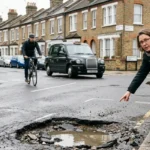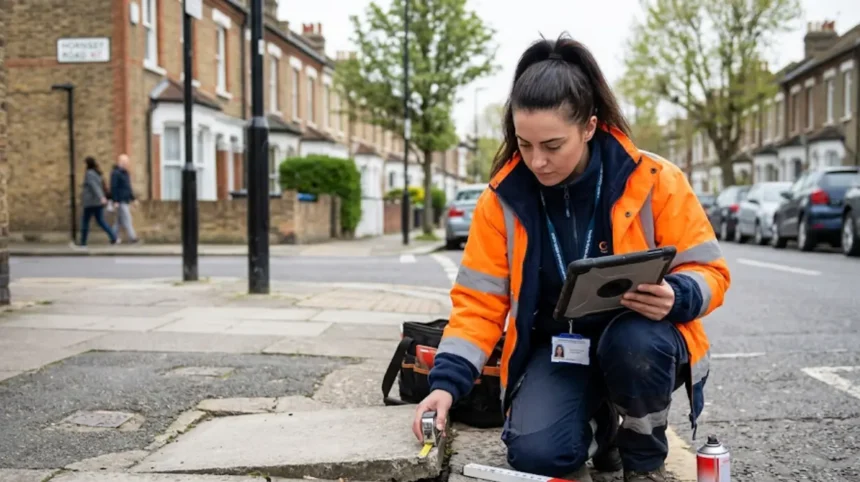
When you report pavement damage to your North London council, the council inspects the site within 5–10 working days, prioritizes repairs based on risk severity, and fixes high-priority defects within 7 days while medium-priority issues receive repairs within 28 days. You receive a case reference number immediately, and the council updates your report status through their online portal or via email confirmation.
- How do you report pavement damage to your North London council?
- What happens immediately after you submit your pavement damage report?
- How does the council assess and prioritize pavement damage?
- What are the repair timelines for different priority levels of pavement damage?
- What happens if your pavement damage report gets classified as low priority?
- Can you track the progress of your pavement damage report online?
- What should you do if pavement damage isn repaired within the expected timeframe?
- How does reporting pavement damage through Fill That Hole differ from direct council reporting?
- What evidence should you include when reporting pavement damage for fastest resolution?
- What are the legal responsibilities of councils regarding pavement maintenance in North London?
- How can you prevent future pavement damage in your North London neighborhood?
How do you report pavement damage to your North London council?
You report pavement damage online through your council’s official website using their “Report a fault” form, which requires your location, a photo, and contact details. The process takes 3–5 minutes and generates an instant case reference number for tracking.
North London residents can report pavement damage through multiple council-specific platforms. Each of the seven North London boroughs—Islington, Barnet, Brent, Camden, Enfield, Hackney, and Haringey—operates its own online reporting system. Islington Council uses the “My Islington” portal and the Love Clean Streets app, while Brent Council provides a dedicated pothole and broken pavement form. Camden Council integrates reporting into its “Report it” system, and Hackney uses a similar online fault-reporting platform.
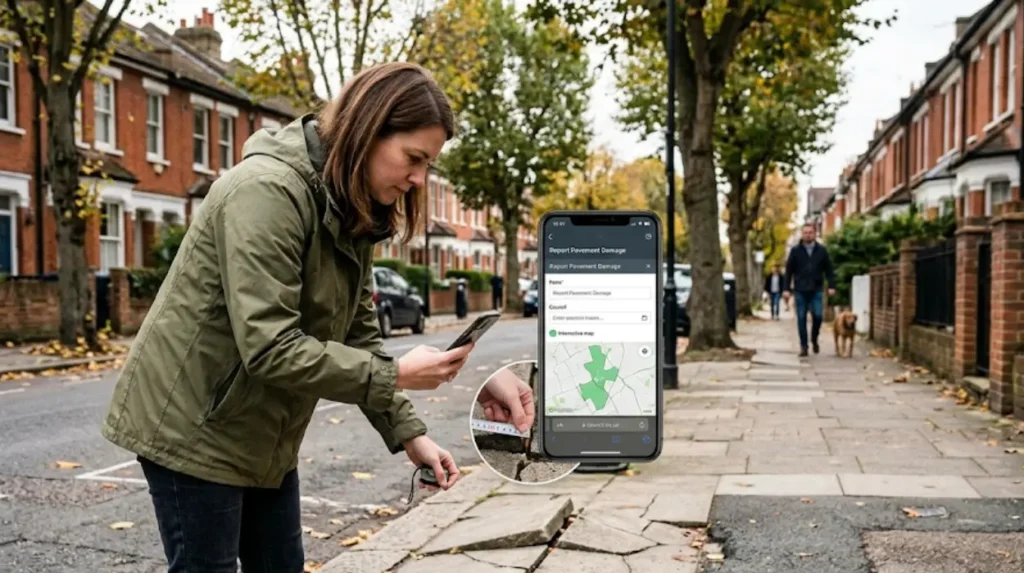
The reporting process follows a consistent structure across all boroughs. You must pinpoint the exact location using an interactive map, where green roads indicate council-maintained areas. Non-green sections are not maintained by the council and require different reporting channels. You upload a clear photograph showing the damage size and severity, enter the approximate dimensions (depth and width in centimeters), and provide your contact information for progress updates.
Some councils offer alternative reporting methods. The Love Clean Streets phone app works across multiple boroughs and sends reports directly to highways repair teams. Fill That Hole (fillthathole.org.uk) is a national platform that reports to councils on your behalf after you enter a postcode and problem details. Emergency situations involving imminent safety hazards require calling the council contact centre directly rather than using online forms.
What happens immediately after you submit your pavement damage report?
Your report generates an instant case reference number, enters the council’s highways management system, and queues for inspection assignment. The system automatically confirms submission via email or displays confirmation on-screen, and your report becomes visible in your online account’s tracking portal.
The immediate post-submission phase involves automated system processing. The council’s highways management software categorizes your report as a pavement defect, assigns it a unique reference number (typically 8–12 digits), and logs the timestamp, location coordinates, and reported severity. This reference number enables you to track progress through the council’s online portal or by contacting the highways team.
Your report enters a queue for inspection assignment based on submission date and geographic area. The system routes it to the highways supervisor responsible for your ward or street network. Islington Council’s system automatically forwards reports to the highways repair team within minutes of submission. Brent Council’s system flags the report for inspection within 10 working days as their standard response target.
The confirmation you receive includes essential tracking information: your case reference number, the reported location, submission date, and instructions for accessing progress updates. Some councils send email confirmations with links to the tracking portal. You can access your report history by signing into your council account before starting the form, which allows you to view all active and completed reports.
The system validates your location input against the council’s road maintenance database. If the mapped location falls on non-green (non-council-maintained) road sections, the system may flag the report for manual review or reject it with guidance on alternative reporting channels. This validation prevents misdirected reports to councils that don’t maintain private roads, housing estates, or red routes.
How does the council assess and prioritize pavement damage?
A highway supervisor visits the reported location within 5–10 working days to assess the damage size, location, and risk to pedestrians. The supervisor categorizes defects into four priority levels: Priority 1 (imminent hazard, 2-hour response), Priority 2 (urgent, 24-hour response), Priority 3 (medium, 28-day response), and Priority 4 (low, 28-day response).
The assessment process follows the Department for Transport’s “Management of Pavement Defects” guidelines, which establish risk-based prioritization criteria. The highway supervisor evaluates three critical factors: defect dimensions (depth exceeding 25mm typically qualifies as hazardous), location (near crossings, bus stops, or high-traffic areas increases priority), and observed risk level (whether pedestrians have already avoided the area or shown signs of hazard).
Priority classification determines repair timelines across North London boroughs. Havering Council—whose priority system applies as a reference standard for London—uses four levels: Priority 1 for very high risk with 2-hour response times, Priority 2 for high-risk urgent defects requiring 24-hour response, Priority 3 for medium-risk non-urgent safety defects with 28-day response, and Priority 4 for low-risk serviceability repairs also at 28 days. Brent Council uses a simplified three-tier system: high priority repaired within 7 days of inspection, medium priority completed within 28 days after further checks, and low priority recorded with no action.
Islington Council maintains stricter standards for potholes specifically, targeting 95% repair within 72 hours of identification. As of autumn 2025, they achieved 100% compliance with this 72-hour timeframe. This exceeds the standard pavement defect timelines because potholes present immediate vehicle safety risks.
The supervisor’s assessment determines whether the defect requires patch repair, full resurfacing, or temporary安全措施. High-priority defects receiving imminent safety hazard classification trigger emergency repair protocols. Medium-priority defects may require additional checks to confirm severity before work ordering. Low-priority defects get recorded in the maintenance database but don’t generate immediate repair jobs.
Context matters significantly in prioritization. Pavement damage near schools, healthcare facilities, or wheelchair-accessible routes receives elevated priority due to higher vulnerability of expected users. Damage on steep slopes or in poorly lit areas also increases risk classifications. The supervisor documents findings with photos and measurements, uploading them to the council’s highways management system for job creation.
Explore More Help & Resources
How to Report Dangerous Potholes in Local Roads Across North London
Can council be claimed against for pothole damage?
What are the repair timelines for different priority levels of pavement damage?
High-priority pavement damage gets repaired within 7 days of inspection, medium-priority issues within 28 days, and low-priority defects get recorded without immediate action. Emergency hazards receive 2-hour response times, while urgent defects complete within 24 hours across London boroughs.
Repair timelines vary significantly based on priority classification and borough-specific standards. Brent Council’s three-tier system provides clear examples: high-priority defects undergo repair within seven days following inspection completion, medium-priority defects receive further verification checks before work ordering with completion within 28 days, and low-priority defects get recorded in the maintenance database without active repair scheduling.
Havering Council’s four-tier system demonstrates more aggressive response times for critical hazards. Priority 1 defects classified as very high risk with imminent safety hazards receive 2-hour response times, meaning crews arrive within 2 hours to implement temporary安全措施 or begin repair. Priority 2 defects marked as high-risk urgent defects complete within 24 hours. Priority 3 and 4 defects (medium and low risk) both have 28-day response windows.
Islington Council’s pothole-specific standard exceeds general pavement timelines. Their target repairs or makes safe 95% of potholes within 72 hours (3 days) of identification. By autumn 2025, they achieved 100% compliance with this 72-hour standard, demonstrating exceptional performance for this specific defect type.
Bromley Council provides another reference point with their five-day inspection target and 35-day maximum repair window. They aim to inspect and assess reported problems within five working days when location details are provided. For actionable safety defects, they raise suitable jobs immediately. Full repair works complete within up to 35 calendar days depending on priority and risk.
Waltham Forest Council offers a 20-day standard repair timeline for potholes meeting correct criteria, with next-day completion for dangerous defects. This demonstrates variation across boroughs even for similar defect types.
The inspection-to-repair gap affects total timelines. If inspection occurs at the 10-day maximum (Brent’s standard), high-priority repairs complete by day 17 total, medium-priority by day 38 total, and low-priority remains inactive. Emergency hazards bypass inspection delays entirely with immediate response protocols.
Seasonal factors and weather conditions impact repair execution. Winter months with freezing temperatures or heavy rain may delay concrete work or asphalt application. Councils prioritize temporaryMensaje over permanent repairs during adverse conditions to maintain safety while scheduling permanent solutions for favorable weather.
What happens if your pavement damage report gets classified as low priority?
Low-priority pavement damage gets recorded in the council’s maintenance database but receives no immediate repair action. The defect remains logged for future reference and may be addressed during scheduled road resurfacing programmes rather than through reactive repair requests.
Low-priority classification indicates the defect presents non-urgent serviceability issues rather than safety hazards. Brent Council explicitly states low-priority defects are “recorded but no further action is taken,” meaning the council acknowledges the issue but doesn’t allocate immediate repair resources. This classification typically applies to minor surface irregularities, shallow cracks under 25mm depth, or cosmetic damage not affecting pedestrian safety.
The recorded defect enters the council’s long-term maintenance database alongside other low-priority issues. These accumulated records inform future road surfacing programme planning. When the council schedules comprehensive road resurfacing for your street or ward, low-priority defects get addressed as part of the broader works rather than through individual reactive repairs.
Sometimes low-priority defects later receive reclassification if conditions change. Increased wear, water accumulation, or additional damage around the original defect may elevate its priority. Regular monitoring by highways supervisors during routine patrols can identify deterioration prompting reclassification. Residents can submit new reports if low-priority damage worsens, potentially triggering reassessment.
The lack of immediate action for low-priority defects reflects resource allocation priorities. Councils face budget constraints and must prioritize life-safety hazards over cosmetic improvements. High-priority defects affecting pedestrian safety, particularly for vulnerable users like wheelchair users, elderly pedestrians, or children, receive finite repair resources first.
Residents frustrated with low-priority classifications can request reassessment by providing additional evidence. Updated photographs showing deterioration, documentation of pedestrian injuries or near-misses, or evidence of increased usage due to nearby development changes can support priority elevation requests. Contacting the council’s highways team with your case reference number enables reassessment discussions.
Some councils offer alternative resolution pathways for low-priority defects. Community groups or ward councillors can advocate for inclusion in upcoming surfacing programmes. Residents can coordinate with neighbors to submit consolidated reports demonstrating cumulative impact, potentially elevating priority through demonstrated community impact rather than individual safety risk.
Can you track the progress of your pavement damage report online?
Yes, you track progress through your council’s online portal by signing into your account and viewing your report history. The portal displays your case reference number, current status (inspection pending, assessed, job ordered, completed), inspection dates, and repair completion dates with photos of the finished work.
North London councils provide online tracking through their respective customer portals. Islington Council’s “My Islington” portal allows residents to sign in and view all active reports with real-time status updates. Brent Council requires account creation before starting the form, enabling access to report history and case details after submission. Camden Council’s “Report it” system includes tracking functionality for all submitted faults.
The tracking portal displays sequential status stages reflecting the repair workflow. Initial status shows “submitted” or “received” immediately after confirmation. Next stage indicates “inspection pending” as the report queues for supervisor assignment. After inspection, status updates to “assessed” with priority classification visible. Job ordering changes status to “work scheduled” with expected completion dates. Final status shows “completed” with repair date and often photos documenting the finished work.
Some portals provide additional details beyond basic status. Inspection notes from the highway supervisor may include measured dimensions, photographed evidence, and priority rationale. Repair work details show contractor names, materials used (asphalt type, concrete grade), and work duration. Completion photos demonstrate repair quality and verify work completion.
Email notifications complement online tracking for residents preferring automated updates. Councils can send progress notifications at key milestones: inspection completed, job ordered, work started, and work completed. These notifications include your case reference number and brief status descriptions linking to the full portal details.
Mobile app tracking offers alternative access through the Love Clean Streets app, which works across multiple boroughs. The app displays your report history with status updates, location maps, and photo documentation. Push notifications deliver real-time updates without requiring portal login.
Tracking availability depends on council-specific system capabilities. Most North London boroughs provide comprehensive online tracking, but some smaller or older systems may offer limited functionality. Contacting the council’s highways team directly with your reference number provides alternative progress inquiry methods if online tracking proves insufficient.
What should you do if pavement damage isn repaired within the expected timeframe?
Contact your council’s highways team directly using your case reference number to request status updates and delay explanations. If delays exceed 14 days beyond the promised timeline, escalate to your ward councillor or submit a formal complaint through the council’s complaints procedure. Document all communications with dates and responses.
Delay management follows a structured escalation pathway. First contact involves the council’s highways department via phone or email, providing your case reference number for immediate case access. The highways team explains current status, identifies blocking factors (resource constraints, weather delays, pending specialist assessments), and provides updated completion estimates. Islington Council’s contact centre handles emergency situations and can accelerate high-priority cases.
If initial contact produces no resolution within 7 days, escalate to your ward councillor. North London ward councillors represent resident interests and can intervene with council departments to prioritize delayed repairs. Councillors access internal council systems showing queue positions and resource allocation, enabling them to identify and address bottlenecks. Contact details for all North London ward councillors are available through each borough council’s website.
Formal complaints constitute the third escalation step for delays exceeding 14 days beyond promised timelines. Each council maintains a formal complaints procedure accessible through their website. Complaints require your case reference number, original submission date, promised timeline, actual delay duration, and previous沟通 attempts with dates and responses. Councils typically respond within 20 working days with investigation outcomes and remediation actions.
Documentation strengthens all escalation efforts. Keep records of all communications including dates, contact names, responses received, and promised actions. Save email confirmations, screenshot portal status updates, and note phone call details. This documentation supports complaints by demonstrating reasonable pursuit of resolution and council responsiveness (or lack thereof).
Alternative pressure mechanisms exist for persistent delays. Local media outlets sometimes cover council service failures, particularly for safety hazards affecting multiple residents. Submitting stories to North London local news sources can generate public pressure accelerating repairs. Community groups and resident associations can coordinate collective complaints demonstrating broader impact.
Legal action represents the final escalation for severe delays causing injuries. If pavement damage causes pedestrian injuries due to council negligence in timely repair, personal injury claims may pursue compensation. Legal advisors assess claim viability based on delay duration, injury severity, and council knowledge of the hazard. However, legal action remains rare for typical pavement damage delays.
How does reporting pavement damage through Fill That Hole differ from direct council reporting?
Fill That Hole reports to your council on your behalf after you enter a postcode and problem details, adding a third-party layer between you and the council. The platform sends identical information to councils but doesn’t provide direct council communication, case tracking through council portals, or faster response times compared to direct reporting.
Fill That Hole (fillthathole.org.uk) operates as a national third-party reporting platform serving UK residents across all councils. The platform’s workflow differs from direct council reporting in three key ways. First, you interact with Fill That Hole’s interface rather than your council’s official portal. Second, Fill That Hole transmits your report to the appropriate council rather than the council receiving it directly from you. Third, you track progress through Fill That Hole’s system rather than the council’s native portal.
The reporting process on Fill That Hole requires entering a nearby UK postcode or street name with area, locating the problem on their map interface, entering problem details with varying categories by council, and submitting. The platform then automatically sends the report to your council on your behalf. This removes the need to navigate individual council websites but adds an intermediate step in the communication chain.
Third-party reporting doesn’t accelerate council response times. Councils process Fill That Hole reports identically to direct reports within their standard queues. Islington Council, Brent Council, and other North London boroughs handle all reports through the same highways management system regardless of submission source. The inspection timeline, priority assessment, and repair scheduling remain unchanged.
Tracking limitations affect third-party reporting. Fill That Hole’s tracking system may not provide the same detail level as council portals. You might not access inspection notes, supervisor measurements, completion photos, or detailed status transitions available through official council systems. Some councils restrict third-party platform access to internal case details, limiting Fill That Hole’s tracking capabilities.
Direct communication advantages favor council portal reporting. When reporting directly, you contact the council’s highways team using your case reference number for immediate updates. Fill That Hole acts as an intermediate, potentially requiring them to contact the council on your behalf for updates, adding delay. Direct reporting enables faster issue resolution for delays, questions, or reassessment requests.
Fill That Hole’s advantage lies in convenience for residents unfamiliar with council websites or reporting multiple issues across different boroughs. The standardized interface reduces learning curves compared to navigating seven different North London council systems. However, for single-borough residents seeking optimal tracking and communication, direct council reporting remains superior.
What evidence should you include when reporting pavement damage for fastest resolution?
Include a clear photograph showing the damage from multiple angles, precise GPS location pinned on the interactive map, measured dimensions (depth and width in centimeters), and context about nearby hazards like crossings or bus stops. Photos demonstrating pedestrian avoidance or near-miss incidents strengthen priority classification.
Quality evidence directly impacts inspection efficiency and priority accuracy. High-resolution photographs are essential for pre-inspection assessment. Capture multiple angles: overhead showing full damage extent, close-up revealing depth and texture, and angled view showing relationship to surrounding pavement. Photos taken during daylight with good lighting show details clearly. Include a reference object (coin, phone, ruler) in close-up shots for size context.
Precise location pinning prevents inspection delays fromMisidentification. Use the council’s interactive map to pinpoint exact coordinates, ensuring the marker sits on green (council-maintained) road sections. Verify the location matches the marker by checking nearby street names or landmarks. Incorrect pinning on non-council roads causes report rejection or misrouting to incorrect departments.
Measured dimensions provide objective severity data supporting priority classification. Estimate depth using a ruler or known object (coin thickness: 1.5–2mm, phone thickness: 7–8mm). Width measurements use similar reference objects or visual estimation against pavement tiles (typically 30cm). Record both dimensions in centimeters. Depth exceeding 25mm typically qualifies as hazardous per Department for Transport guidelines. Width exceeding 10cm indicates significant surface failure.
Contextual hazard information strengthens priority arguments. Note proximity to crossings, bus stops, school entrances, healthcare facilities, or high-traffic areas. Mention vulnerable user populations (wheelchair users, elderly residents, children) regularly passing the location. Document poor lighting, steep slopes, or water accumulation increasing hazard severity. These factors elevate priority beyond dimensions alone.
Evidence of actual harm or avoidance demonstrates real-world impact. Photos showing pedestrians stepping around the damage, wheelchair users struggling, or near-miss incidents provide compelling priority evidence. If you or others experienced falls, injuries, or equipment damage (wheelchair damage, bicycle accidents), document these with photos and descriptions. Injury documentation significantly strengthens high-priority classification.
Multiple reports from different residents for the same location demonstrate cumulative impact. Coordinate with neighbors to submit coordinated reports with matching location details and complementary evidence. Consolidated community impact sometimes elevates priority beyond individual safety risk assessments.
Complete evidence packages reduce back-and-forth communication. Councils can process well-documented reports without requesting additional information, accelerating inspection scheduling. Missing evidence delays processing as councils contact residents for supplements. Submitting comprehensive evidence upfront maximizes resolution speed.
What are the legal responsibilities of councils regarding pavement maintenance in North London?
Councils hold legal responsibility under the Highways Act 1980 for maintaining most public pavements in their boroughs, requiring them to keep roads and pavements in a reasonable state of repair. The Department for Transport’s “Management of Pavement Defects” guidelines establish risk-based prioritization standards that councils must follow for defect response times.
The Highways Act 1980 Section 41 establishes council legal obligations for highway maintenance, including pavements (sidewalks). This legislation requires local authorities to maintain highways “in a reasonable state of repair” considering expected use. The Act defines highways as including roads, pavements, and carriageways under council control. North London boroughs as local authorities inherit these statutory maintenance responsibilities.
The Department for Transport’s advisory guidance “Management of Pavement Defects” provides operational standards councils follow. While guidance itself isn’t legally binding, courts reference it when assessing council compliance with Section 41 obligations. The guidance establishes risk-based prioritization with specific response time expectations: imminent hazards requiring immediate action, urgent defects within 24 hours, medium-risk within 28 days, and low-risk within reasonable timeframes.
Councils maintain defensible maintenance records proving reasonable state of repair compliance. Inspection logs, repair records, and defect databases demonstrate proactive maintenance programs. When residents report defects, councils must respond within guidance timeframes to maintain legal compliance. Failure to respond appropriately creates liability if injuries occur.
The Legal Framework includes additional regulations affecting pavement maintenance. The Equality Act 2010 requires councils to consider disabled person access, potentially elevating priority for defects affecting wheelchair users or those with mobility impairments. Pavement defects creating accessibility barriers may trigger faster response requirements under equality obligations.
Red routes, private roads, and housing estates fall outside council maintenance responsibility. Transport for London manages red routes (major arterial roads) through National Highways or TfL’s road management. Private roads and housing estates fall to private owners or housing associations. Reporting defects on these roads to councils results in rejection with guidance on appropriate reporting channels.
Council liability for pavement-related injuries depends on compliance with maintenance standards. If councils know about defects (through reports or inspections) and fail to repair within guidance timeframes, they face negligence claims for resulting injuries. However, councils aren’t automatically liable for all injuries; they must demonstrate reasonable inspection programs and appropriate response to known defects.
North London councils operate within budget constraints affecting maintenance capacity. Legal obligations require reasonable maintenance, not perfect conditions. Courts consider resource limitations when assessing compliance, recognizing councils manage multiple priorities within finite budgets. However, budget constraints don’t excuse failure to address imminent safety hazards.
How can you prevent future pavement damage in your North London neighborhood?
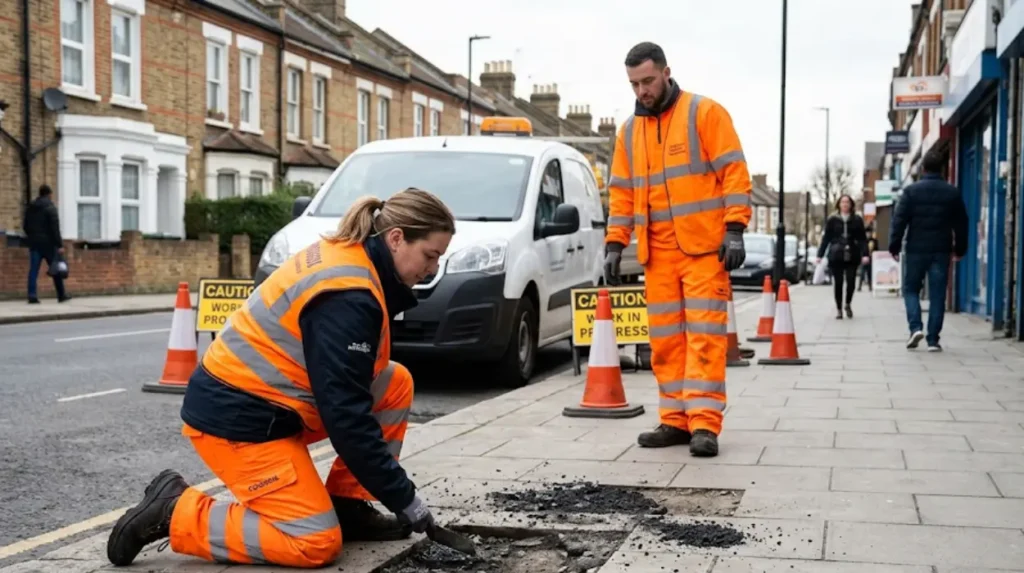
Prevent pavement damage through regular community monitoring, reporting minor defects before they escalate, avoiding illegal dumping that damages surfaces, and supporting council maintenance programmes through resident engagement. Early reporting of cracks under 25mm prevents progression to hazardous potholes requiring emergency repairs.
Proactive prevention focuses on early intervention before minor defects become major hazards. Regular community monitoring identifies emerging problems like shallow cracks, surface erosion, or drainage issues. Residents walking or cycling regularly notice defects before they reach hazardous thresholds. Early reporting of cracks under 25mm depth allows simple patch repairs preventing water infiltration and freeze-thaw damage progression to potholes.
Proper drainage maintenance prevents water-related pavement deterioration. Report blocked drains, overflowing gutters, or water pooling on pavements to councils. Water accumulation accelerates pavement damage through erosion, freeze-thaw cycles, and subgrade weakening. Islington Council’s 72-hour pothole repair standard partially addresses water-related damage, but preventing water accumulation reduces defect formation.
Avoid activities damaging pavement surfaces. Illegal dumping of heavy materials creates compression damage. Parking vehicles on pavements (illegal in most North London areas) causes cracking and surface failure. Construction equipment tracking across pavements damages surfaces. Report vandalism or intentional damage to councils for repair and potential enforcement.
Support council maintenance programmes through resident engagement. Attend ward meetings discussing infrastructure budgets, vote for councillors prioritizing maintenance, and participate in community surveys identifying maintenance needs. Councils allocating sufficient budgets to maintenance programs reduce defect formation rates. Resident advocacy for maintenance funding prevents budget cuts increasing defect rates.
Coordinate neighborhood maintenance initiatives with council programs. Community groups organizing street cleanups, graffiti removal, or minor repairs complement council maintenance efforts. Some councils offer community partnership programs enabling residents to participate in maintenance activities under council supervision.
Educate neighbors about prevention practices. Share information about early reporting benefits, proper drainage importance, and activities causing damage. Neighborhood awareness reduces damage incidence and increases early reporting rates. Social media groups, community newsletters, and ward meetings provide platforms for prevention education.
Monitor council maintenance performance through public data. Many councils publish maintenance statistics showing inspection frequencies, repair timelines, and defect rates. Reviewing这些数据 identifies areas needing improvement and informs advocacy for enhanced maintenance. Transparent performance data enables resident accountability for council maintenance obligations.
Prevention remains more cost-effective than repair. Councils spending adequately on proactive maintenance reduce emergency repair costs and improve pavement longevity. Resident participation in prevention amplifies council efforts, creating safer pavements through combined community and government action.