Key Points
- Intense Competition for Primary Places: Two historic Hampstead primary schools, celebrated for their distinct “village feel,” have been revealed as being among the top 10 most over-subscribed schools across three major north London boroughs.
- Severe Pressure on Single-Form Entry Admissions: The demand heavily outstripped capacity at both Hampstead Parochial School and Christ Church Primary, both of which operate as single-form entry institutions with strictly limited intakes.
- Data Spans Three Major Boroughs: The admissions figures highlight critical localized hotspots of parental choice and school capacity across the London boroughs of Barnet, Camden, and Haringey over the last academic cycle.
- Fierce Ratios at Christ Church and Hampstead Parochial: Sixty-six families selected Hampstead Parochial as their absolute first choice, while fifty-eight families competed directly for a mere 28 available classroom places at Christ Church Primary.
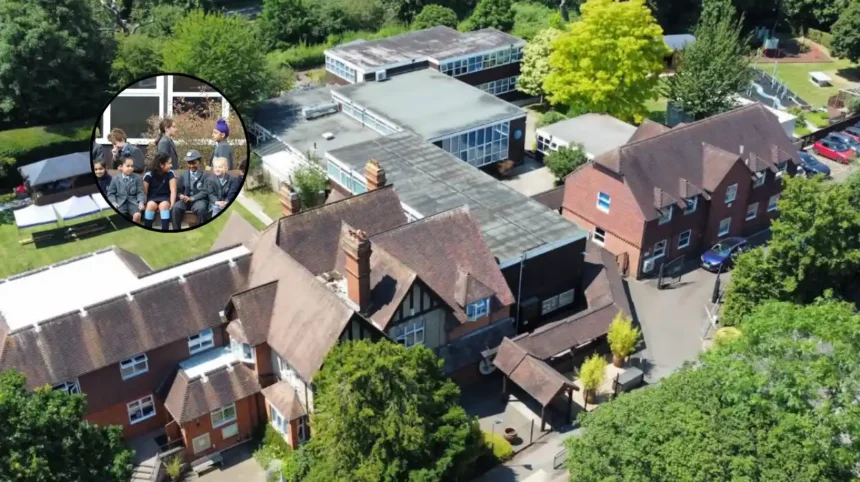
Hampstead (North London News) June 23, 2026 — Local authority data has revealed the precise scale of the primary school admissions pressure gripping parts of north London, with two cherished Hampstead institutions emerging among the most difficult to secure places at within the sub-region. According to official admissions metrics compiled across the boroughs of Barnet, Camden, and Haringey, Hampstead Parochial School, located in Holly Bush Vale, and Christ Church Primary School, situated in Christchurch Hill, both placed within the top 10 most popular and over-subscribed primary schools in the entire area for the previous academic year’s intake. Both institutions operate on a single-form entry system, significantly restricting the total volume of pupils they can accommodate annually, which has consequently driven up competition among local families.
- Key Points
- Which North London Primary Schools Are Facing the Highest Demand?
- How Does Over-Subscription Vary Across Barnet, Camden, and Haringey?
- What Trends Are Visible in Barnet and Haringey Admissions?
- Background of School Admissions and Capacity Issues in North London
- How Will the Ongoing Over-Subscription Affect Local Families and Homebuyers?
Which North London Primary Schools Are Facing the Highest Demand?
The local data highlights that smaller, community-focused schools are experiencing the most acute margins of over-subscription. As documented in the public data release, Hampstead Parochial School saw 66 distinct families designate the institution as their absolute first-choice preference.
Because the school operates as a single-form entry facility, this volume of applications created an immediate deficit in available physical desks, forcing the local authority to turn away a significant percentage of applicants who lived outside the immediate catchment boundary.
Similarly, the competitive pressure was mirrored closely at nearby Christ Church Primary School. The admissions log confirms that 58 families actively competed for just 28 available places at the Christchurch Hill site.
This left more than half of the first-preference applicants facing disappointment on national offer day, redirecting them toward their secondary or tertiary fallback options within the Camden borough boundaries.
The primary driver behind this concentrated surge in applications, as noted within local educational commentary, remains the specific cultural and structural environment of the schools.
Both campuses are heavily favored by local communities because of their small-scale, historic footprints and what parents frequently describe as a highly desirable “village feel” within an otherwise dense urban environment.
How Does Over-Subscription Vary Across Barnet, Camden, and Haringey?
In the borough of Camden, the crisis of over-subscription is heavily localized within affluent pockets like Hampstead, where physical space for expanding existing Victorian-era school buildings is virtually non-existent.
Education departments have noted that while some parts of the borough experience shifting demographics or surplus places due to changing population densities, the demand for high-performing, single-form entry schools remains uniformly high.
The strict cap of 28 to 30 places per year group in single-form schools means that even a minor uptick in localized birth rates or parental migration into the catchment zone can instantly cause a school to become statistically over-subscribed.
What Trends Are Visible in Barnet and Haringey Admissions?
Across the neighboring boroughs of Barnet and Haringey, the most over-subscribed institutions frequently include a mix of highly rated faith schools and academies. As reported by regional education analysts, the top 10 list across the three boroughs shows that parents frequently prioritize smaller school environments or schools with outstanding regulatory ratings, regardless of the longer commute times involved.
The data indicates a clear pattern where a handful of schools receive three to four times the number of first-choice applications relative to their published admission numbers, while under-capacity schools in adjacent postal districts continue to see falling rolls.
Background of School Admissions and Capacity Issues in North London
The pressure on primary school places across Barnet, Camden, and Haringey is rooted in decades of shifting urban demographics, localized property markets, and the physical limitations of historic school estates.
In north London, many of the most sought-after primary schools were established in the 19th or early 20th centuries, meaning their footprints are structurally constrained by surrounding residential streets.
This prevents the physical expansion of classrooms or the addition of extra forms of entry, leaving popular schools permanently locked into their single-form status.
Furthermore, parental choice in the UK is heavily influenced by the hyper-local reputation of schools and their performance tables. Pockets of high affluence, such as Hampstead, attract families who specifically move into targeted catchment areas to maximize their chances of securing a place.
This phenomenon has historically driven up local property prices while simultaneously contracting the geographical size of school catchment bubbles.
Over the past decade, a school’s “neighborhood identity” or “village feel” has increasingly become a key marketing point for parents looking for small-scale communities, leading to an unequal distribution of applications where a small cluster of schools absorbs the vast majority of first-preference choices while others struggle to fill their cohorts.
Explore More Hampstead News
Hampstead Heath Swimmers Cracked Down 2026, North London
Hampstead Heath Ponds Maintain Trans-Inclusive Access With Upgrades: Hampstead 2026
How Will the Ongoing Over-Subscription Affect Local Families and Homebuyers?
The continuation of high over-subscription rates across these specific north London primary schools is projected to have distinct, measurable impacts on local families and prospective homebuyers within the affected catchment zones.
For parents residing in Barnet, Camden, and Haringey, the immediate consequence is a heightened risk of missing out on localized schooling, forcing families to accept placements further away from their homes. This dynamic introduces increased travel times, splits siblings across different educational sites, and disrupts the cohesive community networks that parents actively seek when targeting smaller schools.
For the regional property market, the intense competition for just 28 to 30 places per school will likely cause a further tightening of school catchment areas.
Historically, when a single-form entry school faces this level of demand, the maximum distance an applicant can live from the school gates while still securing a place drops significantly—sometimes to a radius of just a few hundred meters.
Consequently, prospective homebuyers looking to settle in north London with young children will face inflated premium prices for properties situated within these ultra-narrow, verified catchment bubbles. Conversely, families living just outside these shrinking boundaries may find their property values less tied to educational premiums, altering the socio-economic makeup of the immediate neighborhoods over the coming years.