Repeated Enfield Homes repair delays require a written complaint, a full evidence trail, and escalation through the landlord’s complaint process, then the Housing Ombudsman if the problem stays unresolved. In England, social landlords must deal with repairs within a reasonable time, and councils and housing associations must follow a formal complaints route before an ombudsman review.
- What counts as a repeated repair delay?
- Why do delays keep happening?
- What should you do first?
- What evidence should you collect?
- How do you complain properly?
- When do you escalate beyond Enfield Homes?
- What rights do council tenants have?
- What if the repair is urgent?
- What can an ombudsman or claim achieve?
- How can you protect yourself while waiting?
- What is the clearest action plan?
What counts as a repeated repair delay?
A repeated delay is a repair that stays unfinished after you report it, is postponed several times, or keeps being promised without completion. In social housing, the landlord must respond within a reasonable time, and urgent hazards such as heating, damp, mould, electrical safety, and water leaks need faster action than cosmetic work.
A repair problem becomes serious when the same issue keeps returning or the landlord keeps missing dates. Shelter says tenants should report repair problems as soon as possible, then ask how long the repair will take and give the landlord a reasonable time to act. The Housing Ombudsman also accepts complaints about property condition and repairs when a landlord has already had the chance to fix the issue through its own complaint process.
In Enfield, the council’s own housing repairs information directs residents to its repairs service, and its public material says it receives thousands of repair reports each year. Local reporting also states that Enfield Council has prioritised emergency works and paused some non-emergency repairs at times of high demand and rising costs, which makes delays a practical risk for residents with lower-priority repairs.
Why do delays keep happening?
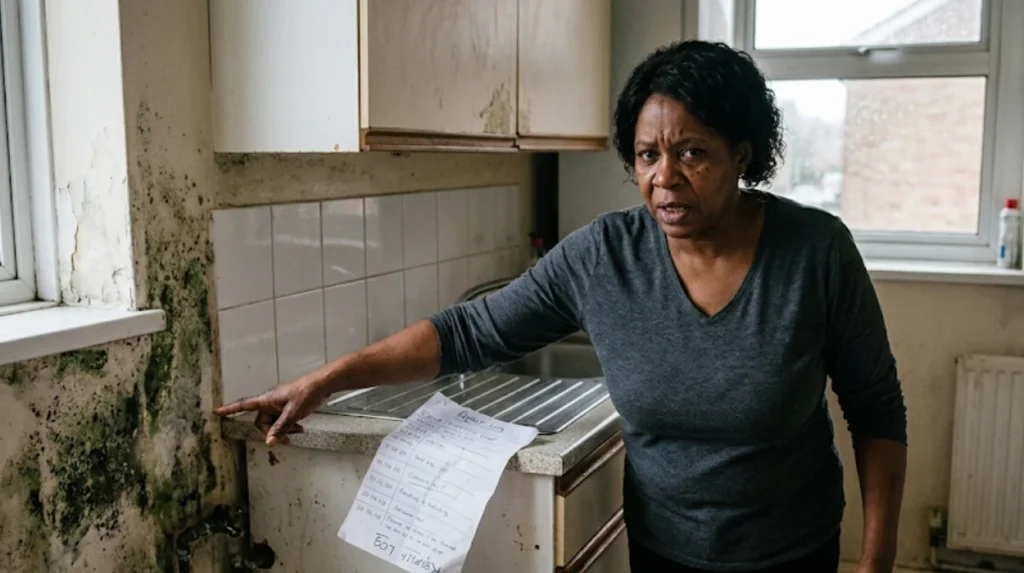
Delays usually come from triage, contractor capacity, access problems, poor record-keeping, or a repair backlog inside the landlord’s system. Enfield Council has publicly said its repairs service handles thousands of defects each year, and that high demand and cost pressures have forced a focus on emergency works.
Social landlords often divide repairs into categories, such as emergency, urgent, and routine. Shelter says landlords should do work at reasonable times, with reasonable notice usually at least 24 hours, and the repair timetable should match the seriousness of the problem. The right-to-repair scheme for council tenants also shows that some small repairs have specific time limits of 1, 3, or 7 working days depending on urgency, which highlights how far some repairs can drift when systems fail.
Access issues also slow repairs. If a landlord cannot enter because appointments are missed, the repair remains open even when the landlord is technically ready to work. Poor communication makes the delay worse because residents stop receiving clear dates, clear ownership, and clear next steps.
What should you do first?
Report every delay in writing, ask for a new completion date, and keep one clear record for every contact. A written record creates evidence that the landlord knew about the defect and failed to fix it within a reasonable time.
Start with the repairs team that handles Enfield Homes or council housing repairs and state four facts in one message: the defect, the date first reported, the health or safety risk, and the latest promised date. Enfield’s public contact pages list housing repairs routes and phone numbers for repairs, including its repairs line and online reporting route. If you speak by phone, follow up the call with an email or letter so the delay remains documented.
Keep the message factual. Use short sentences and ask for a written response. Ask for the exact category of repair, the contractor reference, and the date the work will be completed. That request matters because complaints become stronger when they show repeated failure after notice, not a single missed appointment.
What evidence should you collect?
Keep photos, videos, dates, contractor notes, copies of messages, and records of impact on your home and health. Evidence supports both a complaint and any later disrepair claim, because it shows the condition, the delay, and the harm caused.
A strong file includes:
- Dated photos of the problem.
- Screenshots of texts, emails, and portal messages.
- Call logs with the time, date, and name of the staff member.
- Appointment letters and missed-visit notices.
- Receipts for extra costs caused by the delay, such as heaters or laundry.
- Notes on health effects, such as damp-related symptoms or loss of heating.
Housing groups and legal advisers consistently stress written reporting and evidence gathering before escalation. This matters even more when the repair affects health and safety, because the issue then overlaps with the landlord’s duty to keep the home fit and safe.
How do you complain properly?
Use the landlord’s formal complaints process and ask for stage-one and stage-two decisions in writing. Citizens Advice says tenants should complain to the landlord first, and the Housing Ombudsman only steps in after the landlord’s complaints process is complete or after the landlord fails to respond on time.england.
A good complaint includes:
- Your name, address, and tenancy type.
- The repair problem and when it started.
- Every date you reported it.
- Every missed appointment or false promise.
- The effect on daily life, safety, or health.
- The outcome you want, such as completion by a fixed date, compensation, or a management review.
Shelter says social tenants can complain if the landlord does not do repairs, does them badly, or takes too long. If the delay is serious, ask the landlord to treat the matter as urgent and confirm the exact deadline in writing.england.
When do you escalate beyond Enfield Homes?
Escalate when the landlord ignores the complaint, misses its own deadlines, or gives a final response that still leaves the repair unresolved. The Housing Ombudsman accepts complaints about council and housing association repairs after the landlord process ends or after 8 weeks without a response.
If you rent from the council, Citizens Advice says you can also raise the issue with a local councillor while the complaint is active. That route helps when a repair has turned into a wider service failure or when the case needs political oversight inside the local authority.
If the delay creates serious disrepair, legal advice becomes relevant. A housing disrepair claim normally starts only after the landlord has been informed in writing and given reasonable time to respond. The key point is simple: keep the issue inside the formal complaint process first, then move to the ombudsman or legal route when the landlord does not repair the home properly.england.
What rights do council tenants have?
Council tenants have the right to timely repairs, safe living conditions, and complaint handling that follows the council’s own policy. For many routine defects, the right-to-repair scheme gives defined time limits for qualifying small repairs, including 1, 3, or 7 working days depending on urgency.
For broader repair duties, landlords in England are generally responsible for the structure, exterior, plumbing, heating, sanitation, electrical wiring, and shared parts of the building. Shelter says landlords must do necessary repairs in a reasonable time, and they should not leave residents waiting indefinitely once the defect is reported.
Enfield residents can also use the council’s published housing repairs routes. The council’s own material points residents to its repairs reporting channel and out-of-hours emergency repairs contact, which shows the service has a formal mechanism for both routine and urgent defects. When the issue stays unresolved, the complaint record becomes the main tool for escalation.
What if the repair is urgent?
Treat heating failures, major leaks, dangerous electrics, damp and mould, or lift breakdowns as urgent and ask for emergency handling immediately. Enfield’s public reporting on repairs says the council has prioritised emergency work and specifically listed damp and mould, electrical safety, heating, and lift maintenance among the issues it focused on.
Urgent repairs need faster action because they affect health and safety. Shelter says repairs should be carried out at reasonable times, and the landlord should give reasonable notice for access, but emergency conditions justify immediate contact and faster attendance. If the property becomes unsafe, document the danger, contact the repairs line, and request emergency categorisation in writing.
If the landlord still does not act, the evidence trail becomes essential for escalation. Ombudsman complaints and disrepair claims both depend on showing that the landlord knew about the serious defect and still failed to fix it within a reasonable period.
What can an ombudsman or claim achieve?
A successful complaint can lead to repair completion, service improvements, compensation, and a formal finding of maladministration. The Housing Ombudsman investigates repairs complaints against social landlords and uses the landlord’s complaint history as part of its assessment.
Recent Ombudsman reporting shows that councils can face severe maladministration findings where repairs are delayed for too long. One 2026 report described severe maladministration against a council over significant and avoidable repair delays, which shows that prolonged inaction has real consequences for landlords. That matters because repeated delay is not treated as a minor inconvenience once it becomes systemic, documented, and avoidable.
A disrepair claim is different from an ombudsman complaint. A claim focuses on breach of repairing duty, loss of amenity, and damage or inconvenience caused by the defect. The ombudsman route is usually the first step for social housing residents because it is formal, accessible, and built around the landlord complaint process.
Explore More Help & Resources
How to force action on delayed council services in Enfield?
What happens when Enfield Council closes a case without action?
How can you protect yourself while waiting?
Reduce risk, document everything, and keep asking for written updates until the repair is finished. If the delay affects heating, leaks, mould, or electrical safety, protect the area as far as is safely possible and record every worsening condition.
Keep the landlord informed when the problem changes. A leak that becomes mould, for example, is no longer the same issue in practical terms because the home condition has worsened and the complaint record needs to reflect that. If access appointments are offered, accept the earliest reasonable slot and keep proof of your availability so the landlord cannot blame the delay on missed entry.england.
If the repair remains open for weeks, ask for a case review. Request the name of the officer handling the file and ask whether the repair has been reclassified, paused, or waiting on parts. That request helps expose whether the delay is operational or procedural.england.

What is the clearest action plan?
The clearest plan is report, record, complain, escalate, and seek specialist help if the home remains unrepaired. This sequence matches the way English housing repair rules and social landlord complaints systems work.
Use this order:
- Report the repair in writing.
- Chase every missed date in writing.
- Ask for the formal complaint process.
- Escalate to the Housing Ombudsman after the landlord process ends.
- Seek legal advice if the disrepair is serious and ongoing.
That structure matters because repeated delay is strongest when the evidence shows notice, inactivity, and continuing harm. Shelter, Citizens Advice, and the Housing Ombudsman all point tenants toward written reporting and formal escalation rather than informal chasing alone. For Enfield Homes residents, the best outcome comes from combining the council’s own repair channels with a disciplined paper trail.
What counts as a repeated repair delay in Enfield Homes or council housing?
A repeated repair delay means a repair remains unfinished after being reported, is postponed multiple times, or is repeatedly promised without being completed. It often becomes more serious when the same defect keeps returning or when urgent problems such as leaks, heating failures, damp, mould, or electrical faults are left unresolved.