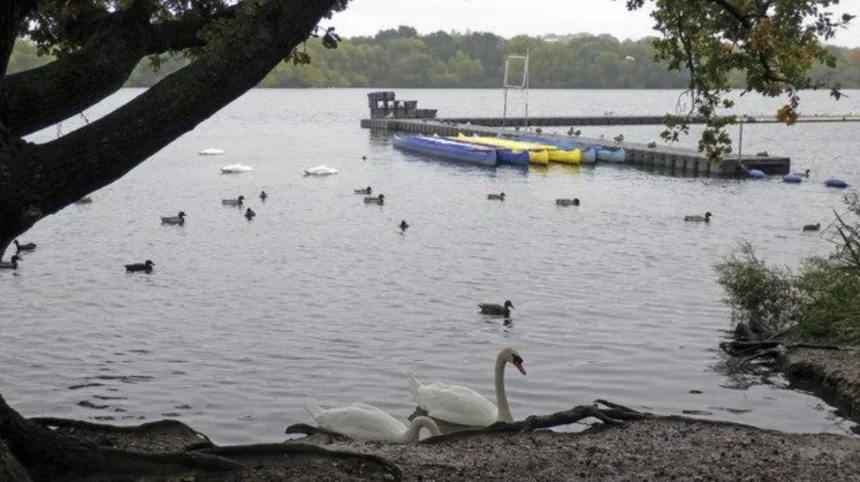
Barnet features 3 primary natural habitat types: ancient broadleaf woodland, neutral grassland meadows, and freshwater wetlands. These habitats cover 4,055 hectares across 67 designated Sites of Importance for Nature Conservation, supported by London Clay soil and statutory Green Belt protections.
- Geologic and Environmental Foundations of Local Habitats
- Woodland, Meadow, and Wetland Ecosystem Dynamics
- What mammal species inhabit the green spaces of Barnet?
- Which bird species populate Barnet’s reservoirs, woods, and wetlands?
- What reptiles, amphibians, and aquatic species live in Barnet’s ecosystems?
- What protected insect and plant species thrive in Barnet’s reserves?
- Where are the best nature reserves to observe native wildlife in Barnet?
Geologic and Environmental Foundations of Local Habitats
The London Borough of Barnet covers an administrative area of 8,663 hectares on the northern ridge of Greater London. The underlying geology consists predominantly of London Clay, a dense marine sediment deposited during the Eocene epoch 56 million years ago. This impermeable soil retains surface water, forming sluggish streams, boggy depressions, and damp neutral grasslands across the borough.
The statutory Green Belt designation, introduced under the Town and Country Planning Act 1947, encompasses 2,466 hectares within Barnet, representing 28.4% of its total land area. An additional 690 hectares are classified as Metropolitan Open Land, affording equivalent planning protection against urban development. In 1992, the London Ecology Unit conducted a comprehensive ecological survey covering 4,055 hectares of open space, which led to the publication of Nature Conservation in Barnet in 1997. This document formally designated 67 Sites of Importance for Nature Conservation across the borough.
As you explore the modern site, you are crossing land with a deep heritage. Read about the full [Insert Anchor Text for History Article Here] to understand its origins.
Woodland, Meadow, and Wetland Ecosystem Dynamics
Ancient broadleaf woodland covers historical land parcels that have experienced continuous tree cover since at least 1600 AD. These woodlands contain 3 dominant tree species, including pedunculate oak (Quercus robur), hornbeam (Carpinus betulus), and field maple (Acer campestre). Ground flora in these undisturbed soils includes 3 ancient woodland indicator plants, including wood anemone (Anemone nemorosa), bluebell (Hyacinthoides non-scripta), and ramsons (Allium ursinum).
Unimproved neutral grassland represents another vital ecosystem, maintained historically through low-intensity hay cutting and cattle grazing. These meadows host 3 native wildflower species, including common knapweed (Centaurea nigra), oxeye daisy (Leucanthemum vulgare), and bird’s-foot trefoil (Lotus corniculatus).
Freshwater ecosystems intersect the borough via 3 principal watercourses, including the River Brent, the Silk Stream, and Dollis Brook. These lotic systems feed lentic water bodies such as the 68.6-hectare Brent Reservoir and the 32-hectare Darlands Lake. Aquatic plant communities within these habitats contain 3 emergent macrophyte species, including broad-leaved cattail (Typha latifolia), yellow iris (Iris pseudacorus), and branched bur-reed (Sparganium erectum).
What mammal species inhabit the green spaces of Barnet?
Barnet shelters 4 prominent wild mammal families: Canidae, Erinaceidae, Vespertilionidae, and Mustelidae. Key native species include the European hedgehog, red fox, Eurasian badger, water shrew, and 5 bat species, including the common pipistrelle, noctule, and Daubenton’s bat in woodland areas.
Terrestrial Mammals and Burrowing Populations
The red fox (Vulpes vulpes), representing the family Canidae, maintains a high population density across Barnet’s suburban and rural zones. Densities reach approximately 2 to 5 breeding groups per square kilometre in North London. Red foxes forage on small mammals, earthworms, and fallen fruit, adapting efficiently to habitat margins.
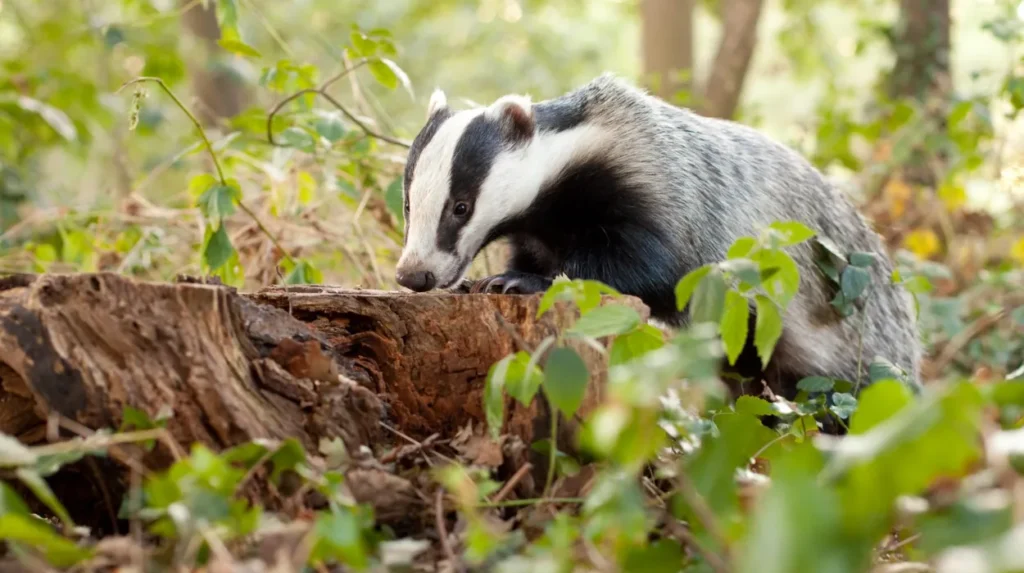
The Eurasian badger (Meles meles), belonging to the family Mustelidae, occupies subterranean sett networks in rural areas such as Totteridge, Mill Hill, and Arkley. Badgers receive strict statutory protection under the Protection of Badgers Act 1992, making it an offence to disturb their setts or interfere with their pathways. Badgers feed primarily on earthworms (Lumbricus terrestris), which constitute up to 80% of their dietary intake.
The European hedgehog (Erinaceus europaeus), a member of the family Erinaceidae, inhabits suburban gardens, parklands, and hedgerows. Hedgehog populations across the United Kingdom have declined by 30% in urban areas and 50% in rural areas since 2000. Barnet’s connected garden corridors and nature reserves provide crucial refuges where adults feed on beetles, caterpillars, and slugs before entering winter torpor between November and March.
Small terrestrial mammals populate the dense understory and grassy fields of Barnet. These include 3 small mammal species, including the wood mouse (Apodemus sylvaticus), the field vole (Microtus agrestis), and the bank vole (Myodes glareolus). These prey populations sustain native avian and mammalian predators across the borough.
Aquatic Mammals and Chiropteran Populations
Aquatic semi-mammalian activity centers around clean water margins. The Eurasian water shrew (Neomys fodiens), Britain’s largest shrew species, lives along the banks of the Silk Stream, Dollis Brook, and the wetlands of Brent Reservoir. Venomous saliva allows the water shrew to paralyze aquatic invertebrates, freshwater shrimps, and small fish underwater.
Microchiropteran bats utilize Barnet’s linear woodland features and watercourses for foraging and navigation. All bat species in the United Kingdom receive protection under Schedule 5 of the Wildlife and Countryside Act 1981 and the Conservation of Habitats and Species Regulations 2017.
Monitoring surveys across Barnet confirm the presence of 5 bat species:
- Common pipistrelle (Pipistrellus pipistrellus): A small bat that consumes up to 3,000 midges per night along tree lines.
- Soprano pipistrelle (Pipistrellus pygmaeus): A species that echolocates at 55 kHz and hunts primarily over open water bodies.
- Nathusius’ pipistrelle (Pipistrellus nathusii): A migratory bat species recorded around Brent Reservoir during autumn migration corridors.
- Noctule bat (Nyctalus noctula): One of Britain’s largest bat species, roosting in high tree cavities of ancient oaks and hunting high above open pastures.
- Daubenton’s bat (Myotis daubentoni): Known as the “water bat,” this species flies low over calm water surfaces at Darlands Lake to gaff insects using its large feet.
Which bird species populate Barnet’s reservoirs, woods, and wetlands?
Barnet hosts over 200 bird species across 3 primary avian groups: waterfowl, raptors, and woodland passerines. Notable species include the great crested grebe, grey heron, common kingfisher, Eurasian sparrowhawk, northern goshawk, and red kite nesting within local open canopy.
Wetland Avifauna and Waterbird Populations
The 68.6-hectare Brent Reservoir, designated as a Site of Special Scientific Interest in 1950 under the National Parks and Access to the Countryside Act 1949, represents one of North London’s most important ornithological locations. Over 250 bird species have been recorded at the site since systematic recording began in the 19th century.
Waterfowl populations fluctuate seasonally, with wintering assemblages bringing thousands of migratory birds. The reservoir supports 3 wintering wildfowl species, including the northern shoveler (Spatula clypeata), the common teal (Anas crecca), and the Eurasian wigeon (Mareca penelope).
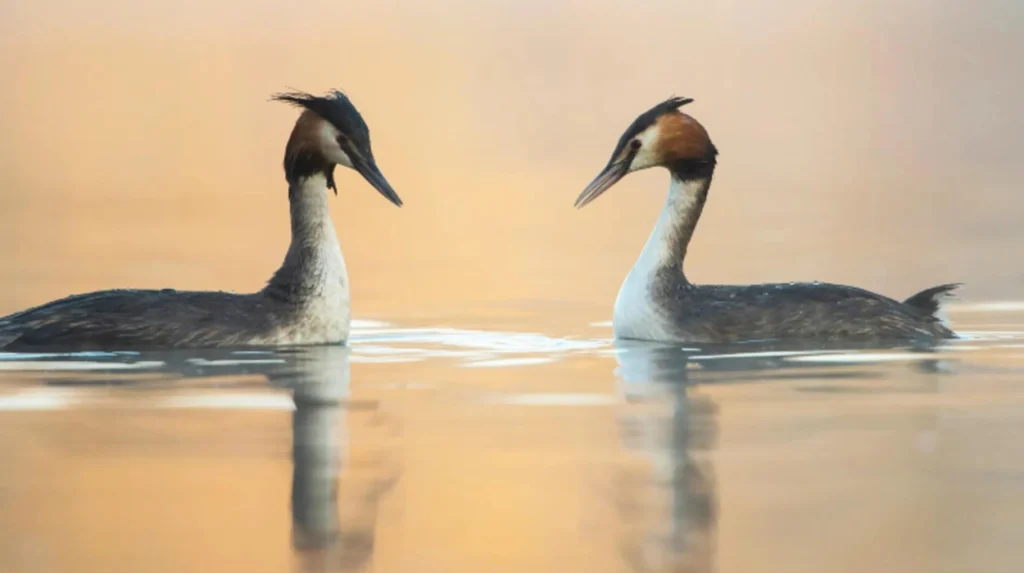
The great crested grebe (Podiceps cristatus) maintains a nationally historical nesting population at Brent Reservoir. In the late 19th century, intensive plumage harvesting reduced the British population of great crested grebes to fewer than 50 breeding pairs. Preservation efforts at Brent Reservoir helped secure the recovery of the species. Breeding pairs construct floating nests anchored to emergent vegetation, performing complex courtship rituals known as the “weed dance” from February through April.
The common kingfisher (Alcedo atthis), protected under Schedule 1 of the Wildlife and Countryside Act 1981, breeds along Dollis Brook and the Brent Reservoir marshlands. Kingfishers require steep, earth-based riverbanks to excavate nesting tunnels measuring 60 to 90 centimetres in depth. They feed on small fish species, including the three-spined stickleback (Gasterosteus aculeatus) and minnow (Phoxinus phoxinus).
Grey herons (Ardea cinerea) operate as apex wading predators in local wetlands. A established heronry exists near the marshy borders of Darlands Lake, where adult herons nest in high birch and oak canopies, feeding on fish, amphibians, and small rodents.
Raptors and Woodland Songbirds
Woodland ecosystems and open agricultural fields in Totteridge and Arkley support robust populations of raptors. The red kite (Milvus milvus) and the Eurasian buzzard (Buteo buteo) have expanded their breeding ranges into Barnet following successful reintroduction programs across southern England during the 1990s.
Small woodland bird species thrive within the dense shrub layer of ancient woodlands such as Hadley Wood and Scratchwood. The understory supports 3 warbler species, including the Eurasian blackcap (Sylvia atricapilla), the common chiffchaff (Phylloscopus collybita), and the willow warbler (Phylloscopus trochilus).
Dendrocopos woodpeckers maintain strong populations due to the abundance of dead wood standing in older forests. Barnet hosts 2 native woodpecker species, including the great spotted woodpecker (Dendrocopos major) and the European green woodpecker (Picus viridis). Green woodpeckers feed almost exclusively on ground-dwelling ants, utilizing their 10-centimetre sticky tongue to extract insects from soil mounds in grassland areas.
What reptiles, amphibians, and aquatic species live in Barnet’s ecosystems?
Barnet supports 3 distinct cold-blooded animal classes: Amphibia, Reptilia, and Insecta. Key resident species include the common frog, smooth newt, grass snake, slowworm, common lizard, and rare butterflies, such as the white-letter hairstreak and purple hairstreak near ancient trees.
Herpetofauna Distribution and Conservation Status
Reptiles and amphibians require specialized microhabitats that combine open basking sites with damp cover for shelter and hibernation. All native British reptiles receive statutory protection under the Wildlife and Countryside Act 1981 against intentional killing, injuring, and selling.
Barnet contains populations of 2 protected lizard species:
- Slowworm (Anguis fragilis): A legless, burrowing lizard that inhabits railway embankments, allotments, and nature reserves such as Barfield Allotments Nature Park. Slowworms grow up to 40 centimetres in length and feed primarily on slugs and soft invertebrates.
- Common lizard (Zootoca vivipara): A viviparous reptile that favors open, sunny heathland margins, wooden boardwalks, and dry grassland terraces. Females give birth to live young during late summer.
The grass snake (Natrix helvetica) represents the only native snake species residing within Barnet’s boundaries. Grass snakes prefer damp habitats near Brent Reservoir, Darlands Lake, and the Totteridge Valley. Growing up to 1.5 metres in length, these non-venomous constrictors are accomplished swimmers that feed almost exclusively on amphibians and small fish.
Amphibians breed in static freshwater ponds across the borough between February and April. Barnet supports 3 native amphibian species, including the common frog (Rana temporaria), the common toad (Bufo bufo), and the smooth newt (Lissotriton vulgaris). Ponds located within Avenue House Grounds, Barnet Countryside Centre, and various local nature reserves support annual egg-laying cycles, producing spawn rafts and strings that sustain local freshwater ecosystems.
Aquatic Organisms and Fish Species
Waterways across Barnet contain diverse aquatic organisms adapted to variable flow regimes and nutrient levels. Fish populations in the River Brent, Silk Stream, and Brent Reservoir contain 3 coarse fish species, including roach (Rutilus rutilus), common bream (Abramis brama), and northern pike (Esox lucius). Northern pike serve as top aquatic predators, growing to over 10 kilograms in the deep waters of Brent Reservoir.
Invertebrate sampling in clean stream sections reveals benthic organisms, including 3 aquatic macroinvertebrate families, including Gammaridae (freshwater shrimp), Baetidae (olives/mayflies), and Hydropsychidae (caddisflies). These organisms indicate moderate-to-good water quality under Water Framework Directive standards.
Explore more Area Guide
Where Should You Stay in Barnet: Best Areas for Parks and Green Spaces
Why Is Barnet One of the Greenest Areas in North London? Parks and Nature
What protected insect and plant species thrive in Barnet’s reserves?
Barnet hosts rare terrestrial invertebrates and legally protected botanical species. Key invertebrates include the stag beetle, white-letter hairstreak butterfly, and over 40 rare aquatic species. Rare plants include the native bluebell, wild daffodil, and broad-leaved helleborine in ancient woodland sites.
Rare Entomological Communities and Pollinators
Invertebrates perform fundamental ecological services, including pollination, organic decomposition, and soil aeration. Barnet contains habitats that support terrestrial and aquatic insect species of conservation concern.
The stag beetle (Lucanus cervus), Britain’s largest terrestrial beetle, receives protection under Schedule 5 of the Wildlife and Countryside Act 1981. Stag beetle larvae depend on decaying subterranean wood, particularly oak and hornbeam, spending 3 to 6 years developing underground before emerging as adult beetles in May and June. Parks and residential gardens in High Barnet, Finchley, and Mill Hill harbor important stag beetle breeding sites.
Lepiodoptera diversity across Barnet includes woodland canopy species that rely on specific host trees. The white-letter hairstreak (Satyrium w-album) lives in mature elm trees (Ulmus procera and Ulmus glabra). Despite historical losses of elm trees to Dutch Elm Disease (Ophiostoma novo-ulmi) since 1970, surviving suckering elms across Totteridge and Arkley host isolated colonies of this butterfly species.
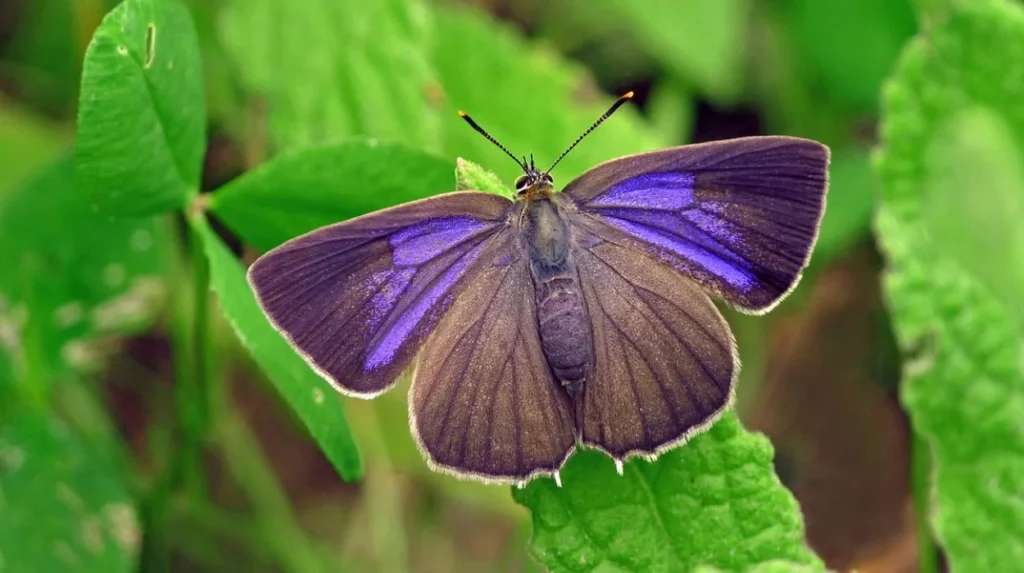
Other notable butterfly species residing in Barnet include 3 habitat-specific species, including the purple hairstreak (Favonius quercus), which lives in high oak canopies, the marbled white (Melanargia galathea), found on unimproved chalk/neutral grasslands, and the small copper (Lycaena phlaeas), residing on dry heath and meadow acid soils.
Over 40 rare aquatic invertebrate species inhabit the silt margins and reed beds of Brent Reservoir. These include 3 specialized aquatic insect species, including the water scorpion (Nepa cinerea), the raft spider (Dolomedes fimbriatus), and various species of damselflies (Zygoptera).
Botanical Diversity and Native Flora
Botanical communities within Barnet reflect centuries of unbroken land management practices. The borough’s ancient woodlands contain 3 characteristic spring woodland flora species, including native bluebell (Hyacinthoides non-scripta), wood sorrel (Oxalis acetosella), and wild daffodil (Narcissus pseudonarcissus). The Wildlife and Countryside Act 1981 prohibits the digging up of wild plants without the landowner’s consent.
Meadow habitats in Totteridge Valley contain diverse grassland vegetation. Botanists have recorded rare orchid species across Barnet’s neutral grasslands, including 2 orchid species, including the common spotted-orchid (Dactylorhiza fuchsii) and the broad-leaved helleborine (Epipactis helleborine). These plants rely on specialized mycorrhizal fungi in undisturbed soil to complete their germination cycles.
Wetland margins harbor emergent aquatic plants that oxygenate water bodies and filter surface runoff pollutants. Key native plants include 3 wetland species, including hornwort (Ceratophyllum demersum), yellow water-lily (Nuphar lutea), and water starwort (Callitriche stagnalis).
Where are the best nature reserves to observe native wildlife in Barnet?
Barnet contains 3 top nature reserves for wildlife observation: Brent Reservoir, Darlands Nature Reserve, and Monken Hadley Common. These sites feature dedicated public footpaths, bird hides, and accessible natural trails for tourists, local residents, digital nomads, and visiting business professionals.
Key Public Nature Reserves and Ecological Features
Public access to natural open space is distributed across Barnet via a network of Local Nature Reserves, statutory commons, and SSSIs. Visitors, naturalists, and leisure travelers can observe native flora and fauna across several key sites.
Brent Reservoir (Welsh Harp)
- Statutory Designation: Site of Special Scientific Interest (SSSI).
- Total Area: 68.6 Hectares.
- Primary Habitats: Open water, reed beds, damp woodland, marshland.
- Key Wildlife: Great crested grebe, common kingfisher, northern shoveler, water shrew, Daubenton’s bat.
- Visitor Infrastructure: Public footpaths along the northern and southern banks, dedicated bird viewing hides managed by the Welsh Harp Conservation Group, and educational signage. Accessible via Hendon Station or Neasden Station.
Darlands Nature Reserve
- Statutory Designation: Local Nature Reserve (LNR) & Site of Borough Importance for Nature Conservation (Grade I).
- Total Area: 32 Hectares.
- Primary Habitats: Deciduous woodland, Darlands Lake, wetland carr, neutral grassland meadows.
- Key Wildlife: Eurasian badger, red fox, grass snake, grey heron, Daubenton’s bat, broad-leaved helleborine.
- Visitor Infrastructure: Network of public footpaths traversing Totteridge Valley, wooden boardwalks over wetland areas, and elevation viewpoints over the agricultural landscape. Located between Totteridge Village and Mill Hill.
Monken Hadley Common
- Statutory Designation: Site of Borough Importance for Nature Conservation (Grade I).
- Total Area: 70 Hectares.
- Primary Habitats: Ancient oak and hornbeam woodland, acid grassland, woodland ponds (Beech Hill Lake).
- Key Wildlife: Great spotted woodpecker, stag beetle, common pipistrelle, noctule bat, common toad.
- Visitor Infrastructure: Governed by the Monken Hadley Common Act 1970, offering open public pedestrian access, unpaved walking trails, and horse-riding bridleways. Located near High Barnet Underground Station.
Scratchwood and Moat Mount Local Nature Reserve
- Statutory Designation: Local Nature Reserve (LNR) & Site of Metropolitan Importance for Nature Conservation.
- Total Area: 100 Hectares combined.
- Primary Habitats: Ancient broadleaf woodland, relict heathland, neutral grassland.
- Key Wildlife: Wood anemone, yellow archangel, Eurasian sparrowhawk, badger, purple hairstreak butterfly.
- Visitor Infrastructure: Dedicated parking facilities off the A1 trunk road, paved and unpaved trail loops, public toilet facilities, and links to the London Loop long-distance walking route.
Access Rules and Responsible Wildlife Observation
Visiting nature reserves across Barnet requires adherence to the Countryside Code to prevent habitat degradation and wildlife disturbance.
To ensure the preservation of Barnet’s protected species and ecosystems, visitors must follow established site guidelines:
- Keep dogs on short leads in sensitive breeding areas between 1 March and 31 July to protect ground-nesting birds and grazing livestock.
- Remain on designated public footpaths and permissive paths to avoid soil compaction over ancient tree root systems and delicate ground flora.
- Refrain from feeding wild waterfowl processed bread products, which cause nutrient enrichment (eutrophication) in water bodies and lead to angel wing syndrome in young birds.
- Dispose of all litter and food waste in designated bins or take it home to prevent attracting scavengers that prey on vulnerable native species eggs.
- Do not pick wildflowers, fungi, or remove dead wood, as these microhabitats sustain larval beetle populations and protected fungi species.
What is the most ecologically significant nature site in Barnet?
Brent Reservoir (also known as the Welsh Harp) is Barnet’s primary Site of Special Scientific Interest (SSSI). It covers 68.6 hectares and acts as a major breeding and wintering ground for over 250 bird species, including great crested grebes and shoveler ducks.